Katherine Priddy – The Eternal Rocks Beneath

Prepare to be transported into the stories told by Katherine Priddy on her debut album, ‘The Eternal Rocks Beneath’. The folk artist does not just tell her tales. She makes you feel them too. Her stirring soundscapes are enough to stir the imagination, give cause for reflection, and transform the poetic form into lyrics that are ever so pleasing on the ear. Her versatile vocals ensure a deft interpretation of each song on the album, melding effortlessly with the music. It ensures a strong bond to the folk tradition even as Priddy expands beyond its borders, into other genres, like Americana. Such cross-fertilisation of genres affirms hers as a wholly contemporary sound.

The opening track ‘Indigo’ is wonderfully mellow in tone, with playful lyrics that cast back to Priddy’s childhood. It is suitably hypnotic too, the transition from tweeting birds to swirling music giving the impression of a journey into another world; in this case, a world of distant memory, suddenly coloured by the harmonies of Priddy, the floating strings and the gentle drumbeats of the band. ‘Wolf’ continues such ethereality, its mix of high-rise vocals and soaring sounds making it the most atmospheric song on the album. It is closely followed by ‘Icarus’, Mikey Kenny’s fiddle helping to recreate the ascent/descent of the title character of popular Greek myth to great effect.

‘Eurydice’ is the second Greek myth to be reinterpreted by Priddy. It is appositely darker than its predecessor however, echoing the melancholic instrumentation of the theme to BBC4 series The Bridge. Katherine Priddy’s vocals are as memorable here as the Choir of Young Believers are there, her voice so intimately bound up with the music as to be sewn into it. This is true on every track of the album, where the touching poignancy of ‘About Rosie’ and the doomed romanticism of ‘The Spring Never Came’, for example, are deftly conveyed in the versatile vocals that weave themselves inextricably into the instrumental composition.

This harmonious blend of voice and instrument is surely what contributes to the richness of the lyrics. There are so many wonderful lines that are so strikingly erudite as to read like a book of quotations, evidence of Katherine’s love for literature and poetry. Phrases like “your troubles are old for a body so young”; “chains on the heart are the hardest to break”, and “even ocean waves must bow down to the shore” melt in the mouth as they are sung. She has a wisdom beyond her years, encased in music that is evocative in its imagery. ‘The Isle of Eigg’ paints a picture of contented isolation in the Hebrides whilst ‘Letters From a Travelling Man’ is suitably bouncy in its life-on-the-road story.

‘Ring O’ Roses’ could easily be placed loch-side, gazing up into the misty mountains of a Scottish terrain. Or come further South, to the far North of England, and a foggy day on Tyneside could be conjured up such is the arrangement reminiscent of The Unthanks. In fact, the music of Rachel and Becky, straddling as it does the traditional and modern, acoustic and sonic, is a suitable comparison for the line that Katherine Priddy walks here as she draws in a range of elements to make ‘The Eternal Rocks Beneath’ a very contemporary folk album. The final track, ‘The Summer has Flown’, simply underlines this definition, with poetic descriptions, told in plaintive tones, that are caught up in the transcendent rise of the musical arrangement, creating some truly atmospheric storytelling that ends, as the album began, with the simple sound of birdsong. It adds a beautiful finishing touch to an album that is sure to shine on its release.

To stream the album, click here; and to purchase, click here.


Originally written for Belles & Gals and published on 23rd June 2021.

Featured Image (C) John Fell

An Interview with Katherine Priddy

Katherine Priddy is a folk artist with a penchant for lyrics and storytelling, whose debut album, ‘The Eternal Rocks Beneath’, is due for release on June 25th. In this interview, she tells us what we can expect from the record, as well as a little bit more about herself, her musical journey, and the one female artist she would love to write with.

Hi Katherine! Would you like to introduce yourself to our readers by telling us a bit about yourself and where you’re from?

Hello! My name is Katherine Priddy and I am a musician based in Birmingham, UK. I’ve been writing and performing my own songs on the guitar for the past few years and now I am on the cusp of releasing my debut album ‘The Eternal Rocks Beneath’ on the 25th of June. A long time coming!

When did you first become interested in music, and who were your musical influences growing up?

I have always enjoyed listening to music and grew up in a household where music was often on the stereo, though it took me a long time to realise I could actually make it myself and even longer to realise I could become an actual musician. My parents listened to a really eclectic mix of music, from Irish folk music like Planxty and Christy Moore, through to English folk artists such as Nick Drake and John Martyn, then a whole heap of strange progressive rock and metal to boot. I think the common thread throughout the music I enjoyed most as a child was the storytelling aspect – I have always focused in on the lyrics when I listen to songs. I think its important to listen to a wide variety of music in order to really feed your creativity.

Could you tell us a bit about your journey as a musician so far?

As I said, I’ve always enjoyed listening to music and was in the school choir and school orchestra as a child, but it was in my pre-teens that I began teaching myself guitar and first started trying to write my own songs. My school encouraged me to enter The Next Brit Thing competition, despite the horror I felt at singing in front of people, and I ended up getting to the finals in the 02 arena – that was my first gig outside of my village. After that, I started supporting artists such as Vashti Bunyan, Scott Matthews and John Smith, before heading off to University to focus on studying English. It wasn’t until I finished my studies that I began to take my music really seriously and headed into the studio for the first time to release my debut EP ‘Wolf.’ The release went so much better than I could have hoped for, and things have been growing since then really in terms of gigs and festival performances. I am now very excited to be releasing my debut album, after 2 years of recording and waiting, and feel very ready to take on this next chapter.

You’re debut EP, ‘Wolf’, got an incredible reception on its release. Why do you think it struck such a chord with listeners?

That’s a tricky question – I don’t know about other musicians, but I find it quite difficult to listen to my music objectively and work out why it may strike a chord with those who listen to it. But I do know that people enjoyed the lyrical aspects of the song, which is really important to me. I’d like my songs to be able to stand alone as poems, or stories. I also had great fun experimenting in the studio and bringing in other musicians for the first time, so I think the EP came as a bit of a surprise to those who had always seen me perform solo. It has a really full sound, with lots of harmonies and textures.

You’re latest single, ‘Icarus’, came out on June 6th. Could you tell us a bit about the story behind the song?

There are two songs on the album based loosely around Greek Myths – Eurydice and Icarus. I’ve always enjoyed mythology – the stories are absolutely ripe for the picking, with all the colourful characters and passion and cautionary tales. Icarus was a man who wanted to be able to fly and so made wings from wax and feathers. However, he ended up flying too close to the sun and met his doom. I’ve used the story as a jumping off point for exploring the consequences of never being satisfied with your lot and always wanting more.

What can we expect from your debut album ‘The Eternal Rocks Beneath’?

10 self-penned tracks featuring contributions from a sweeping string section, some brass, double bass, drums, electric guitar, banjo and accordion, as well as a couple of more stripped back numbers, with just guitar and fiddle. I wrote a lot of these songs during my teens and early 20s and there’s a real theme of nostalgia and childhood that travels through the record, especially in tracks such as ‘Indigo’ and ‘The Summer Has Flown’.  For those who have seen me perform live, there’ll be some familiar songs, though perhaps with slightly new arrangements, as well as a couple of surprises. I think the one constant throughout all ten songs is a focus on story-telling lyrics and a use of harmonies and soft, atmospheric layers. I am really proud of how it has all come together and it feels like the perfect culmination of my musical endeavours so far!

What has life been like in lockdown? What opportunities and challenges have you faced as a musician in particular?

It has definitely been difficult, though there have been some really positive and hopeful moments that have shone through for me. I was actually hoping to release this record last year, but I chose not to put it out at the start of the pandemic as that wasn’t how I wanted to remember my debut album release and I wanted to feel like I had given it the best chance possible. The waiting was hard, and losing a year’s worth of gig bookings and carefully laid plans was heartbreaking, but I made the decision to focus on building my online audience through a series of live streams, online festival performances and collaborations with other musicians. Despite shielding my Dad and being in total lockdown, I was able to perform as part of Philadelphia Folk Festival Online, which is not something that would have come about otherwise, and my Nick Drake collaboration with Jon Wilks, Lukas Drinkwater and Jon Nice was played on BBC Radio 2. I was also totally blown away by the outpouring of support from those who follow my music – it made a huge difference to my morale. It doesn’t look as though we’re quite out of the woods yet, but I’m really hoping for the return of some live music this summer. Live performance is my favourite part of this job and it seems there’s still an appetite for it!

Finally, if you could pick one female Folk/Americana/Country music artist to write a song with, who would it be and why?

Ahhhh you’ve saved the hardest question ‘til last! I think if I had to chose, it would be Joan Baez. I grew up listening to her music and her lyrics and songwriting are just beautiful. It would be a dream come true to write and sing a duet with a voice that has been such a constant in my life.

Thank you so much for your time!


Originally conducted for and published on Belles & Gals on June 17th 2021.

Featured Image (C) John Fell

An Interview with Fflur Dafydd

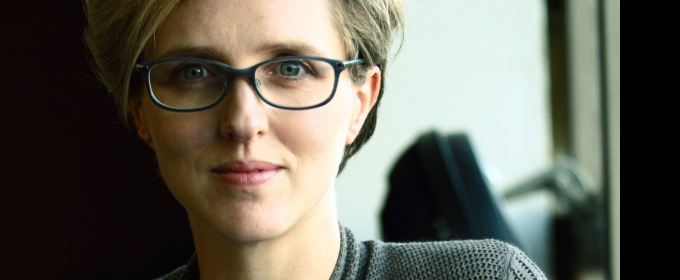
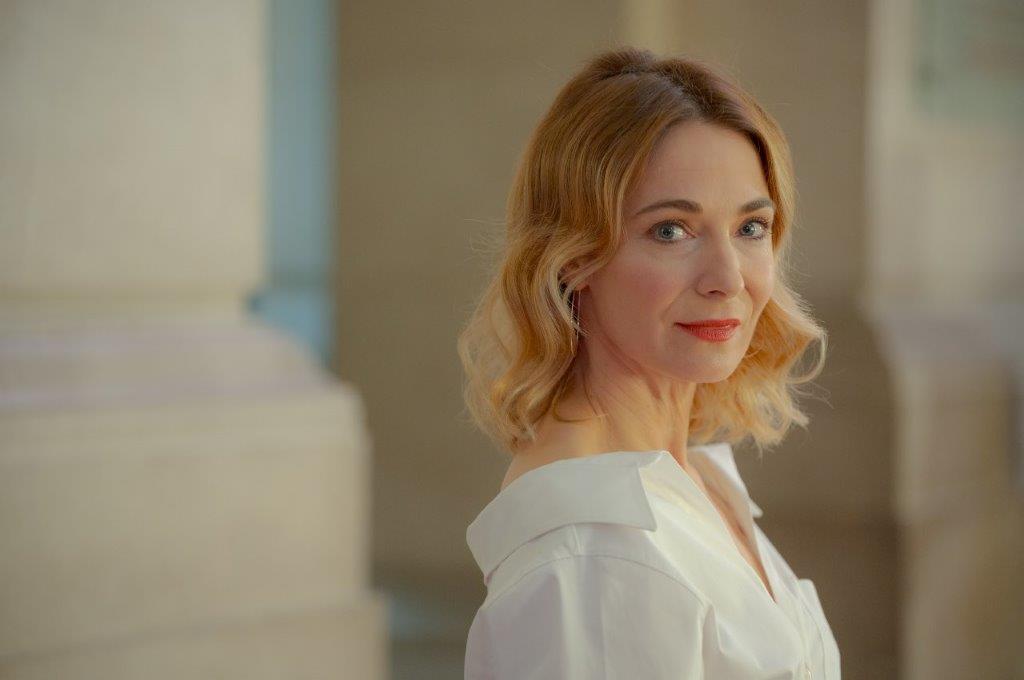
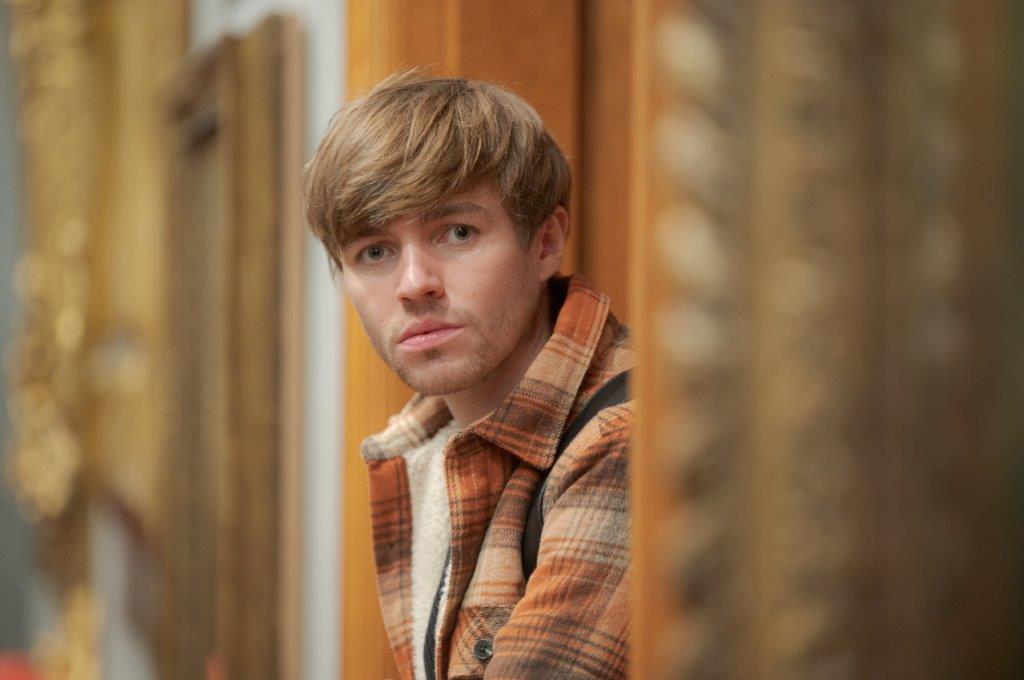
In this latest interview, I chat to screenwriter Fflur Dafydd. The chat takes place in the form of a podcast, the second in a trial series in conversation with Welsh creatives. Fflur talks about her latest series, Yr Amgueddfa, as well as the writing process, her creative journey, Welsh identity, memory, and Welsh TV drama.

To listen to the interview, click here.

To find out more about Fflur, visit her website here, or follow her on social media @fflurdafydd.

You can watch the whole series of Yr Amgueddfa on BBC iPlayer here.

This is interview was conducted with the support of Get the Chance. Get the Chance supports volunteer critics like Gareth to access a world of cultural provision. We receive no ongoing, external funding. If you can support our work please donate here. Thanks.

For the Grace of You Go I – Theatr Clwyd

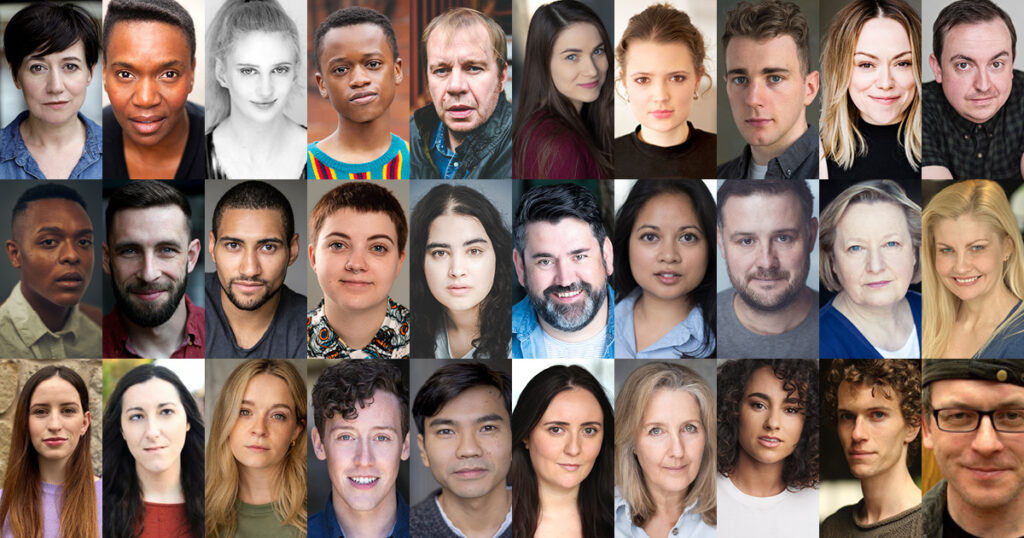
There is a sadness and deep sense of injustice behind the humour and surrealism of For the Grace of You Go I. Due to begin just before the pandemic hit, Alan Harris’ play may be long overdue but its delay has proved timely. Beneath the strange veneer of a storyline in which a man puts out a hit on himself lies a sobering analysis of the inequalities that coronavirus has exposed in society over the past 18 months. It makes for a darkly comic play that is both hugely entertaining yet deeply unsettling.

Its colourful set, of luminescent pink, green and yellow walls, belies the broken and struggling lives of its characters. They do reflect the dreaminess of their existence though. Jim (Rhodri Meilir), employed to put pepperoni on pizza as part of a government scheme, imagines himself as Employee of the Month – complete with giant rosette and accomplished chef’s hat – in one of several cartoonish scenes projected onto the walls. In reality, he is a thorn in his line manager Irina’s side. Played by Remy Beasley, she is under constant pressure to meet targets, and Jim’s daydreaming does nothing to help matters. Though work gives him a sense of purpose, she is forced to let him go. His only solace is found in a monthly film club where he meets new guy Mark (Darren Jeffries), whose obsession with American action movies makes him the perfect partner in Jim’s movie-styled life. After watching the 1990 Finnish film I Hired a Contract Killer, Jim decides that he wants to take the place of its protagonist and asks Mark to do the honours in killing him. It may sound rather far-fetched but there is a serious underbelly to its hyperbole and other-worldliness.

Jeffries gives an assured performance as Mark, whose Mancunian swagger hides a far more vulnerable masculine existence. He is terrific opposite Rhodri Meilir, who brings a beautiful innocence to the troubled Jim, their exchanges pacy and lively throughout to give a slightly unnerving edge to the funny and ironic dialogue. Beasley is wonderfully on-edge as the hassled Irina, maintaining a brilliant balance between sanity and breakdown such that her character fizzes both in dialogue and action like a loosely-corked bottle of pop. The pressures on all three are palpable in their different ways; and they give rise to the much bigger issues at play. Harris comments on mental health, consumerism, capitalism and the political system without ever being preachy. He achieves this through the disabling use of humour and by intimately tying the issues to the narrative. As a result, they ooze naturally out to offer a searing indictment on the oppressive systems and privileged attitudes in existence within society, tempered frequently by the comic form.

I had expected to be overwhelmed as I walked through the doors of Theatr Clwyd for the first time in 18 months. But though it felt special to enter the building to a familiarly warm welcome, made more so by the beaming sun as it flooded in through the windows; to give a knowing smile to the recognisable pictures on the stairs up to the Emlyn Williams theatre; and to be greeted by the same ever-delightful staff who were courteous and helpful as I got into a bit of confusion over my ticket number, it was the reminder of the importance of theatre, as a medium that can speak truth to power, that really made its mark. That importance has not gone away over the course of the pandemic. If anything, it has grown stronger and become more vital than ever. But having become acutely aware of this once-unspoken assumption outside of the context of its physical space and place, For the Grace of You Go I was the first opportunity for what had become apparent through the screen to be embodied within the bricks and mortar to which theatre most truly belongs. As such, Alan Harris’ already-powerful message struck an even deeper chord than it might have in pre-Covid times. If had something to say then, it most definitely needs to be heard now.


Originally written for and published on Get the Chance on 13th June 2021.

Featured Image (C) Theatr Clwyd

Biddy Ronelle – D.R.I.N.K

You won’t get many heavier rock anthems in the sphere of country music this year than ‘D.R.I.N.K’. Biddy Ronelle is drawing on her roots for this party track that she hopes will provide the soundtrack to a lockdown-free summer. But even if restrictions remain, there is still plenty of hardcore head-banging that can take place (against a brick wall or otherwise) such is the metal-inspired sound of this latest single. It will also be her last as a solo artist, as she moves with trusted band member and producer Stu Magru et al into a new era as Biddy and The Bullets. This next chapter is already opening as the last one closes if ‘D.R.I.N.K’ is anything to go by though. There are echoes of Iron Maiden in its intro, early Pink in the vocals, and a hint of Kezia Gill in the catchy and powerfully delivered chorus. Much like her EP ‘Aftershocks’, Biddy manages to present a contemporary sound that allows for clarity of lyrics, honouring country music’s songwriting tradition whilst at the same time being unafraid to go all-out with the instrumentation. ‘D.R.I.N.K’ is a sure-fire sign that the next stage in Biddy Ronelle’s career is going to be a good one.

Click here to listen on Spotify.


Originally written for and published on Belles & Gals on 12th June 2021.

Featured Image (C) Biddy Ronelle

An Interview with Country singer-songwriter Rae Sam

In this latest interview*, I chat to Welsh Country singer-songwriter Rae Sam. The chat takes place in the form of a podcast, the first in a trial series, in conversation with Welsh creatives*. Rae talks about her debut album, The Great Escape, as well as songwriting, mental health, Welsh identity, and faith.

Click here to go through to the original article where this episode is published.


*Originally conducted for and published on Get the Chance on June 7th 2021.

Featured Image (C) Rae Sam Music

The Pact – BBC

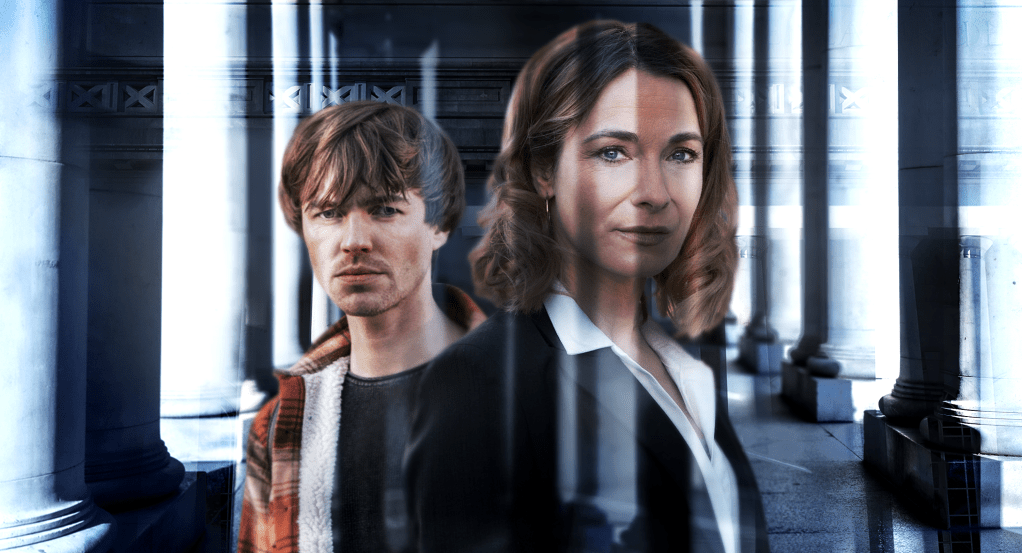
There is a moment during the final episode of BBC1 drama The Pact when its writer, Pete McTighe, attempts to deconstruct the truth. Julie Hesmondhalgh’s character Nancy, one of the four women caught up at the centre of a murder investigation, begins a Shakespearean dialogue with her priest (Mark Lewis-Jones), telling him that we all wear masks and play parts. No one is ever truly themselves, she admits. “I’ve come to realise that it’s the absence of truth that holds us together”. When Father Martin responds to her “cynical worldview”, I’m inclined to agree with him. But I do wonder if McTighe has still necessarily muddied the waters to offer a critique of truth as a negative construct: sometimes dangerous, potentially destructive, and capable of being subverted by something greater than itself.

This critique plays out in the central narrative of the drama. After brewery boss Jack Evans (Aneurin Barnard) is found dead in the woods, having been innocently left there by four friends in a humorous act of revenge for his snide comments the night before, the group endeavour to create a cover story so as not to be implicated in the subsequent investigation. They attempt to absolve themselves of the situation, thinking about the possible ramifications should their involvement be uncovered. They are driven by fear of where the truth might lead, and attempt to abscond it by living a lie. What takes shape over the course of six episodes is a fascinating interplay between truth and lie. It is at its most dynamic in episode five when Anna (Laura Fraser) reveals to her husband, police officer Max (Jason Hughes), what really happened. In doing so, she makes him complicit; forced to choose between his personal and professional commitments. It becomes a choice between telling the truth or living the lie; and in choosing the latter, the lie becomes the truth that drives the lie. In other words, he acknowledges the destructive consequences that the truth poses to his family, and so seeks to avert this risk entirely by becoming entangled, like the rest, in a web of deceit.

Anna (Laura Fraser) and Max (Jason Hughes)

Ordinarily, one might assume that McTighe is telling a simple story of corruption. However, I believe he presents a rather deft commentary on the nature of friendship. I think it goes to the heart of what Nancy means when she describes “the absence of truth that holds us together”. For the lie which Anna, Nancy, Louie (Eiry Thomas) and Cat (Heledd Gwynn) concoct, which some of their nearest and dearest are eventually drawn into, becomes the basis for which trust between them is built.  The Pact is not so much an exercise in secrecy then as trust. It may be that the lie wins but only as an expression of self-sacrifice. Nancy gives of herself in an act of grace that saves the guilty Tamsin (Gabrielle Creevy), complicating the typical formula of the crime drama where the mystery murderer is finally unveiled and given their comeuppance. There is no good and evil as solidly defined categories here. Instead, everyone falls short in their own way, having to pay penance for their actions on the night of Jack’s death, to paraphrase Nancy. Her response is, perhaps not surprisingly, steeped in a theology of sin and atonement which, though far from straightforward, still leaves plenty of food for thought on the place of justice and truth.

When I came to The Pact, I was expecting to comment on its place within the landscape of Welsh TV drama. It is certainly an interesting addition to the canon, with its strong Welsh cast supplemented by a scattering of British stars representing a Wales with fluid borders; a community with a recognisably local identity but peppered with the accents of Scots and English settlers. It is not quite the bilingualism of a Bang or Hinterland but neither is it a homogenously accented whole. It has given Eiry Thomas an opportunity to take on a role that sees her come into her own, her star turn opposite heavyweights like Eddie Marsan (Arwel) and Hesmondhalgh announcing her as an accomplished lead. Rakie Ayola is superb as deadpan detective DS Hammond, her commanding presence softened beautifully by her dry wit and no-nonsense comment. Meanwhile, Abbie Hern makes her debut acting role as Tish a memorable one, her performance opposite Heledd Gwynn making her one to watch for the future. However, for all its stunning shots of the landscape, its subtly effective music and excellent cast, it is the narrative themes that have really drawn me into this drama and kept my interest throughout. The Pact has been a thought-provoking crime thriller which has left me with something to think about.

Click here to watch the series.


Originally written for and published on Get the Chance on June 6th 2021.

Featured Images (C) BBC

Wildwood Kin – Homegrown Sessions EP

Having hugely enjoyed Wildwood Kin’s livestream from a farm in Devon back in October 2020, I was delighted to see the release of ‘Homegrown Sessions’, an EP with five tracks recorded straight from the show. It manages to capture the light and ethereal nature of their sound which made their stripped back online set such a pleasure to listen to when it first aired.

It was especially pleasing to find ‘Dakota’ among the songs selected, their version of Stereophonics’ hit single having always gone down a storm at their live gigs. They capture the expansiveness of the original well whilst delivering it in a much softer tone. Such gentleness of spirit runs throughout this record, and I would expect nothing less from the alt-folk trio. Their three-part harmonies are always a pleasure to listen to, and come through clearly and obviously here which, given the acoustic nature of their set, is perhaps no surprise. The recording quality may not be the best, but in spite (or perhaps because) of this, the rawness of their live performance comes through well. It is especially evident on ‘The Author’, where the amplified vocals resonate around the barn in which they play, capturing something of the rurality of their setting. But each song has its moments, the general effect being less all-encompassing atmospherically and more pinpointed lyrically.

Dakota’ is certainly the stand-out track on ‘Homegrown Sessions’ but it is great to be able to relive something of that magical Autumn evening through the whole EP once more.

Click here to listen and/or purchase the EP.


Originally written for and published on Belles & Gals on June 1st 2021.

Featured Image (C) Wildwood Kin

The Merthyr Stigmatist – Sherman Theatre

The beauty of The Merthyr Stigmatist lies in its contemporary gospel message. “Why shouldn’t God send a miracle to Merthyr Tydfil?” is the strapline. One would be hard-pressed to come up with an answer at this play’s ending. Writer Lisa Parry carries something into her production which feels like its been formed in the fire of direct experience. She uses Catholic theology and Jesus’ paradoxology to give it added form and meaning. It is a narrative which challenges the narrative – the narrative that seeks to define us; made by those in power which can silence us, if we let it; that Parry attempts to rewrite in this excellent two-woman show.

Bethan McLean makes an impressive professional debut as schoolgirl Carys, who claims to have the stigmata: Christ’s wounds from the cross. Challenging her at every turn is her science teacher, Sian, enigmatically played by Bethan Mary-James. The two riff off one another to great effect, Parry’s deft dialogue translating into a fascinating piece of ambiguous characterisation in their hands. The result is a one-hour piece which refuses to take sides. One is never entirely sure whether the fervent beliefs of Carys are a sign of mental ill health or the readily dismissive Sian is not masking some kind of deep trauma. What is clear is the passion that comes through in their exchange, as they wrestle with a sense of identity and purpose. Both McLean and Mary-James bring a bitter sense of the reality that their respective characters are facing. As a result, though the stigmata may present as a possible actual event in the narrative, its symbolic position at its centre is what’s most important here.

This is where The Merthyr Stigmatist really shows itself to be a story for our time. For it challenges the assumptions made by the establishment, told to us in our overriding cultural narrative, that in order to make something of ourselves we must leave our small, local, tight-knit communities behind; we must swap them for a university education in towns and cities where regeneration and chic, café-culture living represent a professionalism which indicates success; and if, for some reason, we don’t quite get on and have to return to our native home, we must become some kind of saviour to the next generation, repeating the same mantra to them, and thus becoming part of the false and disempowering system that does anything but allow young people like Carys to be proud of where they come from if only those in power would just stop and listen – really listen – to what they have to say*.

The Merthyr Stigmatist succeeds in deconstructing this established narrative, subverting the notion of salvific agency in the process. In the end, it is Carys who saves Sian, not the other way around. Yet neither is Carys left completely unchanged by her encounter with Sian. This is where I sense the theological dimension of Parry’s play coming to the fore, as the themes of interdependence (the power of community) and empowerment (self-confidence and self-belief) break through. The result is not only the championing of a repressed voice of the Valleys but also a tapping into an emerging zeitgeist with regards Welsh identity. In this way, Parry uses the local to also touch upon a national concern, namely how Wales sees itself, in the context of the UK and the world. It is a conversation already happening to which, I think, this play can certainly contribute. As such, those in power would do well to listen – really listen – to what it has to say. For it is speaking a truth that, sadly, remains unheard.

Click here to view the play for yourself.

*This paragraph has been rewritten as a poem, which you can view by clicking on the link at the bottom of the originally published article, for Get the Chance, here.


Featured Images (C) Sherman Theatre

Keeping Faith – BBC/S4C

There is a moment in the final series of Keeping Faith when Eve Myles becomes Celia Imrie. The transformation is extraordinary. There is no CGI or special effects; rather, just Eve Myles doing what Eve Myles does best. It’s why we’ll miss her as Faith, the gutsy, emotional, steely and vulnerable lawyer who has been through the ringer, so to speak, over three series of the hit Welsh drama. Throughout that time, Myles has more than embodied the character. She has become her. And in this, her final swansong, Imrie has matched her star quality as Faith’s cold, manipulative and deliciously deceitful mother, Rose. Together, the two of them have simply sparkled onscreen. Their sparring matches have been so emotionally explosive that they have enthralled and exhilarated in equal measure. The introduction of Faith’s backstory has been a stroke of genius by the show’s creator, Matthew Hall, and these two acting heavyweights have helped to make it so. However, they are by no means the sole contributors to its success.

What made the first series of Keeping Faith so hugely popular was not just the superb acting talent of Eve Myles but the strong cast of characters that surrounded her. Keeping Faith has always been, at its heart, a drama about family. It is to Hall’s credit that he has managed to retain this as the central focus, the effect being, in this final series, a real depth to those supporting characters, whose arcs are as important to and invested in by the audience as Faith’s. Catherine Ayers deserves special mention for her heartrending portrayal of Lisa’s alcoholism, the scene at her first AA meeting being one of many powerful moments in this final series. The quiet resolve grown in Tom by Aneirin Hughes is another that has been beautiful to watch, with the presence of strong women, such as Suzanne Packer’s Delyth, being key to this change. I have loved watching Demi Letherby and Lacey Jones grow in their roles as Alice and Megan respectively, each bringing a different temperament that perfectly matches the stubbornness and fragility of Faith herself. Then there is the warm and gentle manner of Steve, who is played to perfection by Mark Lewis Jones, opposite the increasingly jealous and controlling Evan, played by Bradley Freegard. These two men have been magnificent, circling around the magnetic Myles with performances that have helped steer the romantic element away from soppy sentimentality, and ensured that the depiction of a relationship breakdown has been studiously honest and suitably dramatic. Such significant attention to detail has been the difference in ensuring that Keeping Faith has not just been engaging drama but has won the devotion of many fans too.

This devotion has also been generated, in no small part, by its memorable soundtrack. Amy Wadge was rightfully recognised for her musical contribution to the original series, with ‘Faith’s Song’ proving incredibly popular even outside of the series’ run. It returns in this final instalment with a greater appreciation than its more intrusive presence in series two. There is a mixture of recognisable favourites and brand-new compositions, all of which complement the action onscreen. It is in the final scenes though that the emotional weight of the title track in particular is laid heavily on the shoulders of the audience. The complete absence of music in the last episode before this point contributes to the tear-jerking moments that follow. The appearance of Osian (Keogh Kiernan) – having survived the operation that Faith fights so hard for in this series – Alice’s poignant speech, and the intimacy of Faith and Lisa as they walk across the beach to the sea, is enough to get the lip quivering. But it’s the presence of that iconic yellow coat, now firmly worn by Faith, and accompanied by her song, that really starts the waterworks off. It ensures a truly satisfying end to a show that has changed the face of Welsh drama, and been taken to the hearts of so many in Wales and beyond.

From its humble beginnings as Un Bore Mercher on S4C to its primetime slot on Saturday night BBC1, Keeping Faith has been a juggernaut of a drama. It is rare that I get on my hobby horse but I think it’s important, given the constant criticism levelled at its news output, that the future of the BBC and its licence fee is not debated on such a narrow-minded understanding of the corporation to the detriment of gems such as this. Keeping Faith demonstrates the BBC’s commitment and ability to produce quality Welsh drama that is made in Wales, for the people of Wales, but with the potential to reach beyond Wales too. It may not always get it right (see Pitching In) but without it, there is little evidence to suggest that the commercial channels will step up to the mark. The Pembrokeshire Murders (ITV) may represent a rare foray into Welsh representation. However, its risk-taking (a true story crime drama) leaves a lot to be desired. Keeping Faith is unlikely to have been made without the backing of the BBC & S4C. Could its success herald the possibility of a sea-change? I doubt it. But whatever happens, we will always be grateful for Faith Howells. So thank you, Matthew Hall. Thank you, Eve Myles.

Click here to watch the whole series.


Originally written for and published on Get the Chance on May 3rd 2021.

Featured Images (C) BBC