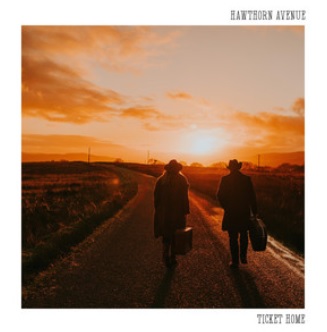
Simplicity sometimes makes for the best songs. Hawthorn Avenue’s new single, ‘Ticket Home’, may have only a one-line chorus, but there’s something about its arrangement that captivates. The combination of tambourine, banjo, drums and guitar somehow work together to create a vibrant sound over which the duo’s gently flowing vocals sail. This extends to the song’s verses as well, which celebrate the perseverance, support and presence of another on the lost, lonely, hard and sometimes painful journey called life. They build subtly as the song progresses, from an intro that is reminiscent of ‘I Could Use a Love Song’ (Maren Morris) but without veering into pop territory, remaining ever-faithful to a distinct Americana sound that is as satisfying as the sunset on the cover image. This comes to define the beauty of this lovesong to some extent, the harmonies of Laura and Marcus contributing to a winning formula that is anything but complicated. It prepares the way for what is sure to be a charming new EP, if this title track is anything to go by.
Originally written for and published on Belles & Gals on July 26th 2022.
For such a highly-anticipated Welsh drama, Y Golau seemed to run the well-worn tracks of what has become the genre’s favoured train: the psychological thriller. Given its all-star Welsh cast, I expected something much more original and distinctly different from previous Welsh noirs like Hidden and The Pact. As a result, I felt underwhelmed by its decision to present yet another murder mystery, complete with the same familiar tropes as its predecessors. Not that there was anything inherently wrong with the production. It just simply didn’t thrill and engross in quite the way that it might have done had it not been in the guise of similar series that had gone before.
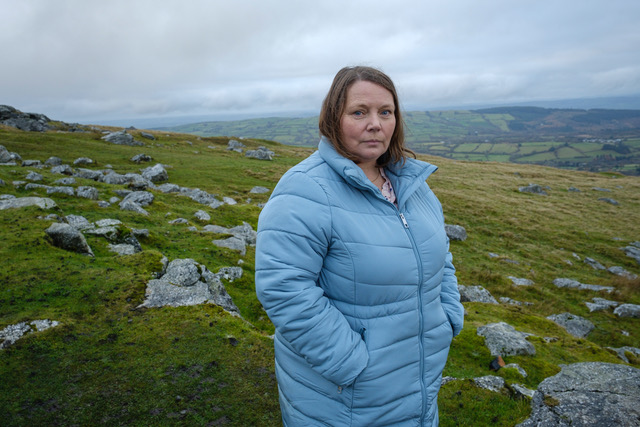
Joanna Scanlan as Sharon (photo by Alistair Heap)
The typically rural setting and small-town cast of characters is one thing; but the desolate landscape, solemn music, and gloomy figures present yet another side to Wales that panders to the bleak and pedantic detail of the crime subgenre. Iwan Rheon plays the haunted convict who is released from prison having served a sentence for the murder of the daughter of Joanna Scanlan’s haunted mother. He returns to the town that is still haunted by the events of 18 years previously, his presence disturbing an uneasy peace which is exacerbated further by the re-appearance of Alexandra Roach’s journalist, who is looking for a story. The three of them give ample performances for what are very rare appearances in a Welsh-language outfit. Yet none command the kind of screen presence that has come to be expected of them. In particular, the animated spark that enlivens Scanlan and Roach’s appearance’ in No Offence is largely absent here. Instead, vacant stares obtrude their presentations such that it becomes difficult to make a significant emotional connection to their characters.
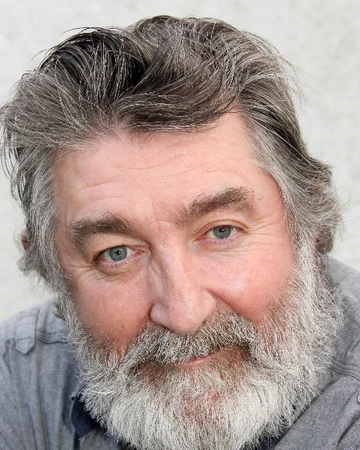
Ifan Huw Dafydd
It is Ifan Huw Dafydd that gives the best performance here. He strikes a menacing veneer over his character Huw that is justifiably unsettling. It is no surprise that his growing presence onscreen and involvement in the central narrative coincides with the more compelling and intriguing parts of the drama. If anything, the return of his estranged daughter Shelley (played by Rhian Blythe) is the catalyst for the twists and turns that follow in the final two parts of the series. This is where Y Golau becomes gripping in a way that its shortcomings, up until this point, can be forgiven. It enters a similar phase to that of Yr Amgueddfa, whereby its web of disparate characters start to become interconnected, drawing the various strands of the narrative together to create a big grand finale. But whereas Fflur Dafydd manages to maintain interest in the opening episodes in spite of the expositional setting up of the story, Regina Moriarty’s script doesn’t possess the same hooks with which to retain the audience’s attention. The result is a requirement to persevere in order to be rewarded rather than being kept sufficiently entertained throughout.
In the end, Y Golau aims a bit too high. Issues of abuse and power are dealt with admirably. The final episode ensures the series ends strongly. But I expected more from this drama, not least because of the roster of Welsh stars that appear in its cast. Scanlan, Roach, Rheon, Hannah Daniel, Aneirin Hughes and Sian Reese-Williams, all lend it an air of quality that meant expectations were high. To then find a characteristic S4C offering in the mould of an Ed Talfan production that didn’t quite utilise the talent involved left me slightly dissatisfied. As a result, Y Golau lit up the screen but wasn’t a roaring success.
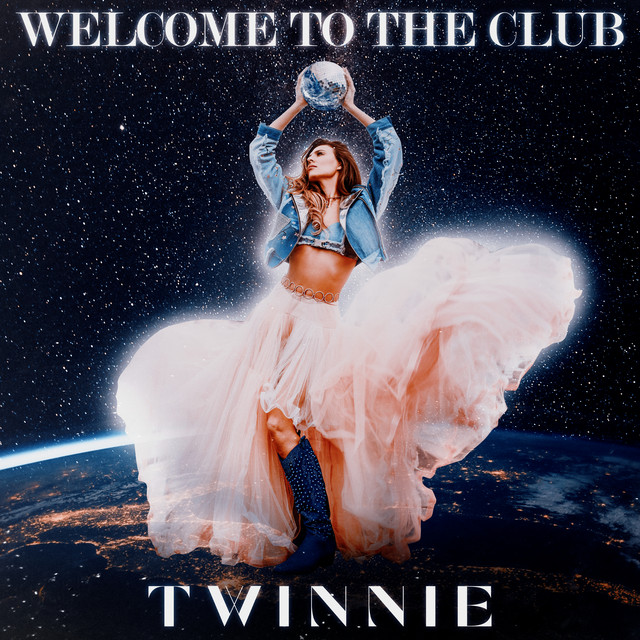
When Twinnie says, “I am either trying to break your heart, make you dance or both at the same time”, she means it. One need only listen to her new EP ‘Welcome to the Club’ if further proof were needed. She wraps loneliness, heartbreak and regret in catchy rhythms, pop-fuelled beats, and feelgood vibes that require you to dance through the hard times. It is another deeply personal record from the British Country music sensation whose debut album ‘Hollywood Gypsy’ contained the same profound emotion as in this latest offering. The only difference is, Twinnie confided in our recent interview with her, that the album “was an insight into who I am [whereas] ‘Welcome to the Club’ is a statement of what I am about”.
The title track tells us that Twinnie is an artist who is inclusive, inviting the outsiders; the broken, the burdened; the lost and the lonely into a space where “worries disappear”. This is the place for those who don’t feel like they belong to get caught up in the powerful sound of a song with a powerful message. Draped in luxurious country-pop tones, it both reflects her own feelings of insecurity and uncertainty while speaking to a universal experience of searching for acceptance and embracing personal identity.
Her penchant for clever lyricism coupled with infectious rhythm continues into ‘One Heart’. The song throws you into some delightful strumming of an acoustic guitar before exploding into a chorus that is big and bold in its presentation. It rises from the kind of sound associated with a Shires song to feeling, by the end, like a Carrie Underwood production. Twinnie’s vocals burst with emotion but always remain softly restrained rather than breaking out into a powerhouse performance. It means that the song retains a heartrending core so that, even as it makes you want to dance, there remains a pain present within it.
Third track ‘Something or Somebody’ definitely invites the listener to the dancefloor. It contains some seriously likeable guitar riffs and the kind of cheerfully happy “woohoos” that would make Thomas Rhett jealous. Twinnie copies his brand of country-pop down to a tee here, once more inviting the listener to relate to specific experiences that speak to universal feelings of loneliness and regret: for “We’ve all got something or somebody that we’re trying to quit”.
It is not easy to quit listening to Twinnie though such is her ability to convey truth and honesty through her songwriting. The final song on the EP, ‘Dying Inside’, is a real root-and-branch example of what she’s about. Through some gorgeously-crafted lines cut into an expansive and atmospheric soundscape, we hear the two sides of a story in which “to everybody else it looks like / I’m alive but I’m dying inside”. The pathos of the narrative marries perfectly with the music to continue Twinnie’s winning formula of outpoured emotion with absorbing sound. It is this combination that ensures ‘Welcome to the Club’ sits comfortably alongside ‘Hollywood Gypsy’ as a record that seeks real connection with her listeners.
It is a welcome addition to her already-incredible catalogue of music.
Originally written for and published on Belles & Gals on June 13th 2022.
You wait forever for a song about singleness and then two come along in quick succession. The latest, ‘Plane Tickets’, by Beth Keeping, comes hot on the heels of ‘When’s It Gonna Happen’ from Tenille Townes. But whereas the latter reaches for some kind of romantic ideal, Keeping remains firmly focused on her experience of being single. Both tracks allude to friends getting married and, in Beth’s case, “starting families”, leading to feelings of being “left behind” and being “the odd out”. Tenille Townes addresses this situation by questioning and imagining a day when she will meet her match. Beth Keeping, on the other hand, heads straight for the departure lounge, “going somewhere I can turn it off”. Her logic is simple: “lonely can’t find me when I’m filling my time with buying plane tickets”. Escapism is the key to “not counting the heartaches”.
The song is as much about being fed up with the old adage that “we’ve all got to find the piece we’re missing” though as it is with trying to combat the loneliness that can come with living the single life. As a result, Keeping veers off in a completely different direction to Tenille, and turns up the pop production to boot. ‘Plane Tickets’ captures much more of an RnB sound than country, making it similar to a Rachel Jane track rather than a Vic Allen record. It holds to the principles of honest storytelling and vulnerability of Nashville songwriting in that sense more than being defined as country music per se. But it is this honesty and openness that fans of Country will appreciate from Beth Keeping, whose partnership with producer Kaity Rae continues to yield excellent results.
Originally written for and published on Belles & Gals on 31st May 2022.
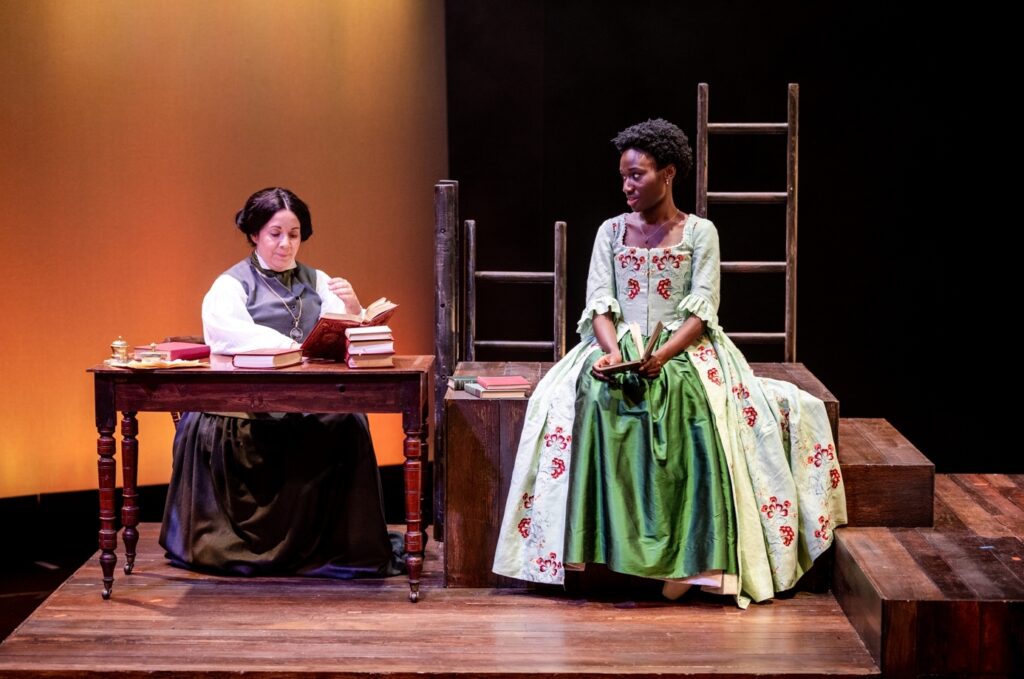
If Katie Elin-Salt was in any doubt then the opening night of Celebrated Virgins was a moment to feel assured. Her excellent play, telling the story of the Ladies of Llangollen, was received by way of rapturous applause at its conclusion. And deservedly so. For this exploration of the relationship between Sarah Ponsonby and Lady Eleanor Butler, for the first time from their points of view, is full of heart, humour and hope.
(C) FfotoNant
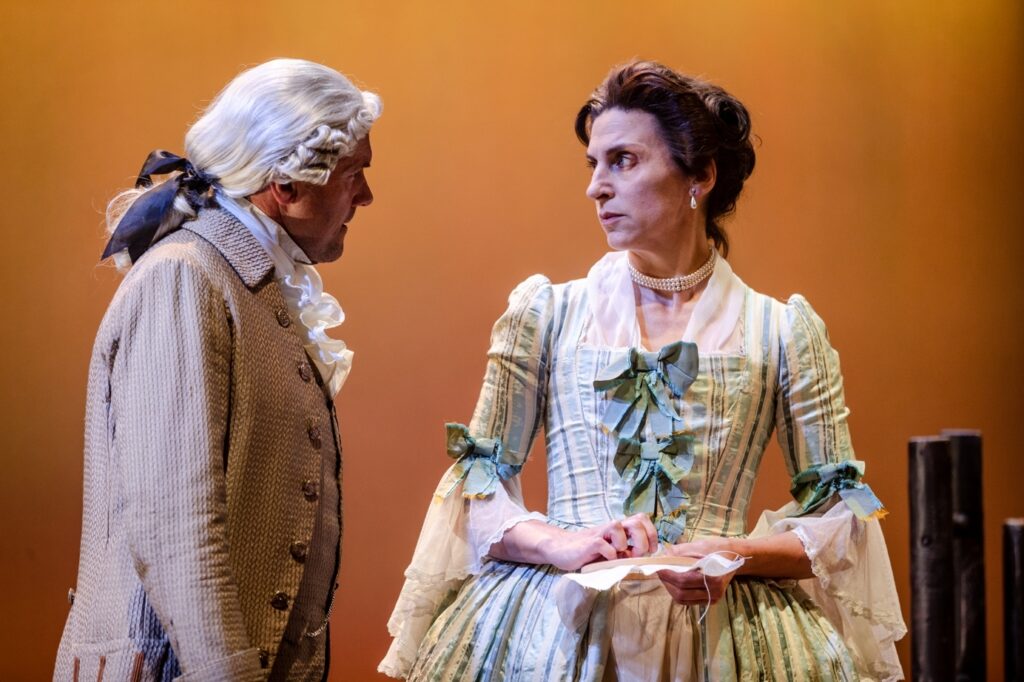
It is to all intents and purposes a costume drama. Yet it is also much more than that. The whole creative team have worked hard to ensure that this is a truly immersive experience. The audience is transported immediately back in time thanks to the glorious attention to detail. From the dark oak wood stage to the corseted costumes, the realism of the props to the flute- and mandolin-infused soundtrack, the representation of the story’s 18th century setting is second to none. But it really comes to life under the direction of Eleri B. Jones, who utilises all of these elements within the intimacy of Theatr Clwyd’s new performance space, The Mix, to create a show that feels both authentic and contemporary. Such is the vibrancy that Jones injects into Elin-Salt’s script that the audience does not simply see the characters on stage; they come to share in their experience. This ensures maximum empathy, which is also a strength of the first-person narrative.
Katie Elin-SaltEleri B. Jones
In placing Sarah (Heather Agyepong) front and centre from the beginning, Elin-Salt ensures that this first-person perspective remains the focus throughout. She subtly reveals the ways in which wealth and patriarchy attempt to take over her story through Sarah’s adoptive parents William (Seán Carlsen) and Lady Betty (Emma Pallant). An incident with the former, which rightly comes with a trigger warning, is a particularly visceral moment that is deeply uncomfortable to witness. Yet from or in spite of these moments, the quiet strength of Sarah persists in both determining her own self-defined path as well as forging a relationship with Eleanor (Victoria John). From their first meeting, it is clear that there is a spark between them. Agyepong and John allow the two to bounce off one another with ease, the dialogue zipping between them with a playfulness that captures the gentle blossoming of romance. There is a montage early on that is wonderfully cinematic that contributes enormously to the beautiful development of their love. Both characters have their vices and virtues, and both actors tease these out in ways that strengthen their relationship. For example, the prim and proper façade of Eleanor is broken at times by a vulnerability and fear, brought about by Sarah’s emergent steeliness from behind a more sensitive and considerate guise. They open one another’s eyes and hearts not only to themselves but others. It is lovely to watch, and draws admiration aplenty.
(C) FfotoNant
Emma Pallant is deserving of special mention for her star turn as the Ladies’ housekeeper Mary. Her monologue at the beginning of act two is hilariously unbecoming, gutturally frank, but also delightfully poignant. It’s a real scene stealer which will also strike a particular chord with listeners of The 98% podcast. For Katie Elin-Salt’s sardonic wit and truth-filled personality can’t help but burst through the pages of the script here. They are delivered masterfully by the exuberant Pallant who appears to relish the chance to address the audience with this most excellent of dialogue. It is but one instance in what is a superb whole: a story that Elin-Salt declares “has taken nearly 300 years for it to be put on a stage”. This may be a bewildering fact, but on this evidence, I should think that it was just waiting for the right person to come along to tell it.
Originally written for and published on Get the Chance on 25th May 2022.
Both Paige Wolfe and Katy Hurt have made a wish this weekend. On the one hand, their wishes are very different. Yet at the heart of both of their new singles lies the theme of acceptance. In the case of Katy’s‘Wish I Could Give You Up’, it is acceptance for the journey she has been on as a musician. Having come through the criticism, identity crisis, and doubt, she realises that being an artist is “in my blood”. There is something inherent within her that impels her to keep on singing and songwriting no matter how difficult or painful the creative life can be. It’s why the description “hurts so good” will resonate with those who, like Hurt, continue to make art. It captures the love-hate, high-low, gift-curse nature of embodied creativity.
Paige unpacks a similar kind of dichotomy in the context of a broken relationship. ‘Wish You Love’ is a demonstration of separation without bitterness; for a break-up to not become a fall-out but a friendship. She admits that “I took a shot at your heart/ just to see if you had one” but, in reflecting on long phone conversations, shared moments, and “actions said words without speaking”, she acknowledges that there were good things in their relationship which deserve to be remembered. She doesn’t throw the whole away but instead wants to “forget about it/ not about us”, and therefore “I wish you love”. There is acceptance that it didn’t work out, and we can choose to respond with love when that happens, not hate.
The soulful RnB vibes contribute to this largely positive message, with an infectious hook at the beginning that draws you in and makes the song instantly memorable. ‘Wish I Could Give You Up’ displays the same, though this track is much more guitar heavy, with a significant drumbeat in contrast to the electronic beats of ‘Wish You Love’. Both have a beautiful simplicity about them – Hurt’s in the lyrics and composition, Wolfe’s in the vocal and production. The former definitely has Nashville-level quality while the latter is knocking firmly at the door of contemporary UK female pop hits. This is not just wishful thinking. Both are deserving of mention. Both necessitate repeated listening.
Originally written for and published on Belles & Gals on May 26th 2022.
Absolute Radio Country has been celebrating its first birthday this month, with presenters coming together to share some of their favourite songs and highlights in a special show to mark the occasion. Since its evolution from Country Hits Radio to become part of the Absolute family twelve months ago, the station seems to have gone from strength-to-strength. When we* sat down to chat to two of its current presenters, Baylen Leonard and Lou Nash, this growth in popularity appears to be (at least in part) down to its ability to reach new audiences that might not have previously considered country music as a genre worth listening to. Certainly, Nash thinks that there is still a “perception that country music is old-fashioned” and “so we’re helping to break down those barriers” by playing more contemporary and modern stuff from across the spectrum.
That spectrum is a wide one, which Baylen Leonard is all too keen to celebrate. For anyone who has listened to his ‘Front Porch’ show on a Sunday afternoon will know that “one of the joys is being able to play all these different sounds”. He thinks that this has been of real benefit in making people realise that actually “they do love country music in some way”. Whether it’s more traditional, pop, blues, or roots, this “broad church” as Nash terms it allows audiences a way into the genre which, in turn, also opens up opportunities for artists to become part of the country music industry. Nash cites Sam Hunt as an example of how wide the borders now are, incorporating hip-hop as part of Country’s modern sound while “collaborations between solid country artists and those of other genres have helped country music gain more attention and wider recognition”.
Photo Credit: Marco Vittur
Baylen Leonard is under no illusion as he admits that “country is still quite niche [in the UK] but it’s amazing to be able to see it break through”. When asked what his highlights from Absolute Radio Country’s first year on air have been, it is this emergence of country music into the national consciousness that strikes a particular chord. Yes, interviewing Dolly Parton would be a highpoint in anyone’s career but, for him, it was walking into a barbershop and hearing country music playing on the radio that really made an impact. He also recounts “walking into my dentist and them having Absolute Radio Country on because, they said, ‘It’s the one station that plays music that we can all agree on’”. This is when you begin to understand country music’s appeal, and perhaps why it continues to gain new fans with each year that passes.
It’s not just the exportation of country music from across the pond that is of note in the last few years. The emergence of Absolute Radio Country as a station has come at a time when the UK has developed its own country music “ecosystem”. Leonard believes that ARC is “right at the heart of it”, alongside C2C which Nash declares is “not like a festival in many ways”. It was her first time attending the event in 2022, and she found the experience both strange – “It’s the middle of winter, you’re indoors at the O2, and your surrounded by all these crazy super-fans in cowboy hats and boots” – but “so brilliant”. When asked whether she’d spotted anyone on the outside stages that might be the next breakthrough act, she cites as many British artists as US ones. Twinnie, Jade Helliwell and Jess Thristan all get a mention alongside Brittney Spencer and Breland. This could be seen as evidence that the genre is slowly expanding after finding a place in the UK through acts like The Shires, Ward Thomas, and The Wandering Hearts, which both Nash and Leonard mention when asked about the scene here. Kezia Gill is also a name that rolls immediately off Leonard’s tongue when talking about the best of British, while Lou Nash suggests Jake Morrell as one of her top picks.
Not only has Absolute Radio Country been supporting the UK scene and helping to push country music out into wider society since its launch, it has also been showcasing the brand-new talent coming out of Nashville. Baylen Leonard gets particularly excited when describing the upward trajectory that Morgan Wade has been on, and how the station “has been there from the very beginning of her journey, playing her on the first show of the first day”. She has subsequently been playlisted and featured in a special Songwriters Round alongside another up-and-coming female artist in Callista Clark. Lou Nash on the other hand speaks passionately about Tenille Townes, describing her as “a wise old owl” who has “taken everything your nan taught you [as a child] and put it into a song”. Apart from Kelsea Ballerini, Townes is the one person Nash would love to sit down with for an in-depth interview.
Photo Credit: Marco Vittur
Interviews have been an important part of Absolute Radio Country’s content, particularly in the form of documentaries. Lou Nash’s highlight of the station’s first year has been its series on ‘Women of Country: Through the Decades’. She compliments Ashley McBryde on her excellent presenting skills, and commends the way the six shows reveal the fascinating stories of some of the female trailblazers in the genre. It went some way, she believes, to “addressing some of the polarity that exists in the US”, which most people here in the UK “don’t realise the extent of the issue”. This could be true of race too, which is perhaps why Baylen Leonard felt it a deeply personal responsibility to work on ‘Our Own Country’, a series which will be returning in the near future, focusing this time on LGBTQ+ artists in country music. Documentaries like these, Leonard argues, are important “because it’s [part of the] conversations that were having in society”.
If this a taste of what’s to come over the coming months, then Absolute Radio Country is going to continue to win new listeners across the UK. After twelve months, it seems that Baylen Leonard, Lou Nash, et al, have firmly cemented Absolute Radio Country as a radio station that is here to stay.
Click here to listen to ARC’s special anniversary episode. Listen to Absolute Radio Country on DAB, online, via the Absolute Radio mobile app or voice-activated device.
Interviews originally undertaken and article originally written for Belles & Gals (published May 26th 2022)
Rachel Walker Mason is not a name familiar to many but her reputation extends far and wide within the music industry. The award-winning Bristol-based songwriter has penned songs for artists right across the spectrum, including country music. But she has saved three for herself which have just been released as the EP ‘Colour Me Violet’. Taking on a strong folk ethic, merging at times with soft pop, it is an intimate affair telling three stories of different relationships.
The first, ‘Magpie Heart’, is a love letter to her husband. It contains a striking second verse, beautiful in its imagery, in which she talks about them dancing together to Radiohead while holding their as-yet unborn baby in each other’s arms. The closeness of their relationship is captured perfectly; the magpie metaphor spoken of playfully as they steal the hearts of one another.
The second, ‘Pieces of You’, is more fragile. This gentle piano piece with conspicuous drumbeat describes a fractured and breaking relationship in which “I don’t know how to hold these pieces of you / without my own hands bleeding”. It resembles ‘Bruised and Burned’ by Jess Setterfield insofar as it describes being hurt by the brokenness of another. Yet here there remains the hint of a determination to keep going rather than let go; of one last chance on the brink of giving up. If it is the subject of ‘Grey Man’ however, then that chance has already gone.
This final song on the EP describes the results of a controlling relationship that is sobering yet holds a quiet power. Rachel Walker Mason sings in almost-soprano range vocals that “I’m wasted in your wasteland”, and challenges the draining effect of this person by positively affirming that “I’ll be kaleidoscope, carousel, painted shell / Might as well wave me goodbye”. The soft delivery of these words as part of the delicacy that imbues this whole track makes them gently authoritative. It underlines the intention of the record which, for Walker Mason, is “to show others who might be struggling in their relationships that they deserve love for being just who they are.” I think she achieves this with ‘Colour Me Violet’, and more.
Originally written for and published on Belles & Gals on May 15th 2022.
Anne Wilson is a name that may not have reached the ears of most country music fans thus far. Yet her southern upbringing and admiration for the genre runs through the core of her debut album ‘My Jesus’. The title track has already proved to be somewhat of a breakthrough hit for Wilson, recording over 13 million streams since its release in 2021. Given that it has just been nominated for Top Christian Song at the Billboard Music Awards, placing her alongside the likes of Carrie Underwood, Hillary Scott and Dolly Parton as past nominees, it shouldn’t be too long before this 19-year-old from Kentucky advances into the mainstream.
The album demonstrates a wide variety of influences, and slides along the breadth of country music with ease. The opening track ‘Scatter’ affords her a booming entrance after a short prelude that builds the anticipation nicely before announcing itself in heavy rock style. It then settles into a recognisable Southern Blues rhythm, complete with deep twang, hand claps, and the odd toll of a bell. It is very different from the title track, which changes the pace and mood quickly with its soft piano and reflective vocals. It leans unreservedly into elements of Contemporary Christian Music whilst also showcasing the sounds of Modern Country. It is this tightrope that Wilson seems to walk most keenly, which is no surprise given that these are the two musical wells that she draws most of her inspiration from. ‘Devil’ and ‘Hey Girl’ reveal that she is happy to step off that line when she wants to however. The sonic rock of the former creates a lovely bit of Southern Gothic while the RnB touches on the latter contribute to the unapologetic message that is very Maren Morris in tone.
Sandwiched in between these two songs is what could be regarded as the best song on the album. ‘Sunday Sermons’ is storytelling at its finest, and represents Wilson’s personal faith testimony. It is to her what ‘Woman at the Well’ is to Olivia Lane and ‘Something in the Water’ is to Carrie Underwood. Its infectious country-pop rendering ensures that it’s as memorable as both of those hits, with the additional burst of electric organ at the end of the fabulous chorus line contextualising those “heart-stirring, Spirit-moving Sunday sermons” nicely. It prepares the way for a couple of tracks that borrow from scriptural references. ‘Mansions’ presents a particular image of heaven that is community-oriented whilst ‘This House’ also directly covers part of an old hymn made familiar to Wilson’s generation by the band Hillsong.
The album then takes a little break from its Gospel focus to first celebrate mothers and then reflect on a loved one. ‘Mamas’ features Hillary Scott of Lady A, whose vocals add a gentle touch and marry well with Wilson’s own. Together, they produce not a rip-roaring declaration a la Gabby Barrett so much as to say that “Jesus and my Mama love me” through an ambling guitar-led reflection on a few relatable attributes, including “arms to fall into”, “phone calls saying ‘Don’t forget/ I’m always in your corner’”, and “the heart that makes a house a home”. This home is treasured on ‘No Place Like Home’ in respect of its reminiscences on childhood days spent with her brother. It is a heartfelt and touching tribute to her older sibling who was tragically killed in a car accident at the age of 23, and represents country music’s innate ability to be a channel through which to process pain. What makes this song extra special is the way in which Wilson communicates hope and light amidst her experience, the final verse bringing a tear to the eye such is its poignancy and utter tenderness.
Wilson returns to reflect on the core of her faith and beliefs on the last part of the album. ‘God Thing’ is close to evangelical in its telling, both in terms of its lyrical content and guitar arrangement. Meanwhile, ‘That’s What We Need’ is a rousing call to Christian love while ‘Something About That Name’ has more in common with church worship than country music. Its familiar refrain, complete with choir and big drums section, means that, like the rest of the album, this is not trailblazing. Anne Wilson is far from being a one-hit wonder however. There is some good solid stuff to be found on this debut record which contains some beautiful instances of personal songwriting mixed with music that holds commercial and popular appeal. She may be on the edges right now but ‘My Jesus’ is sure to cause some sort of stir in Nashville. Country-Gospel at its finest.
It doesn’t take long to listen to Tenille Townes’ new EP and realise that its title is full of irony. Far from putting on a disguise or pretending to be someone else, ‘Masquerades’ presents a new level of honesty for the Canadian singer-songwriter. She moves from observational storyteller to highly personal introspection, removing the mask to become decidedly vulnerable but incredibly relatable in the process. Fans have already responded positively to the single releases that form part of this 7-track collection. And they will not be disappointed to find similar on the remaining songs, which all feature Tenille’s inimitable vocal style and broad country-pop brushstrokes.
‘When You Need It’ ft. Wrabel is a delightfully delicate opener. It is a touching take on friendship that immediately lifts the soul. Touching on issues around mental health and wellbeing, it acknowledges the darkness whilst offering companionship. It values the simple things, like “just to hold your hand and say ‘Keep breathing’”, in times of greatest difficulty. Lines like “When the sun comes up and you don’t see it” really capture the sense of hopelessness metaphorically while the simple refrain of the chorus, “I’ll be there when you need it”, conveys the transformative effect of presence succinctly.
The presence of another, or rather their absence, is the subject of ‘When’s It Gonna Happen’, an infectious country-pop song about singleness previously reviewed here, and ‘The Sound of Being Alone’. The imagery that Tenille uses on this third track is as haunting as the atmosphere created by the strings and singular beats of the music. The ticking clock, rain on the window, the washing machine, and the silent phone help paint an almost ghostly picture of the single life that is tempered by the question “is it a bad thing that I’m good on my own?” It is the kind of wondering which hangs neatly in the air thanks to Tenille’s courageous ability to voice her experience and thus challenge convention.
‘Villain in Me’ does this on an intensely personal level. The acoustic recording of this song only adds to its sense of intimate revealing of the darker parts of Tenille’s self. She admitted when releasing this as the lead single that “this song terrifies me”. But by delving deep into the uncomfortable and hidden depths of herself she has struck a chord with fans appreciative of this exposé. Its brooding and reflective nature is reminiscent of an Emmylou Harris or Mary Chapin Carpenter record. It is beautifully moody. Meanwhile, ‘Shared Walls’ adds a touch of pop production to the acoustic guitar to make it more of a slow-tempo Swift-style track. This duet with Breland pushes that longing for connection back to the forefront, not only in the lyrics but through the high vocals. It is mysteriously enchanting.
The EP ends with the anthemic ‘Same Road Home’, a thoughtful crowd-pleaser that confidently delivers its universalist message, and ‘Light in Your Eyes’, a gently romantic driving song that captures a Glen Campbell/John Denver-esque sound. Both seem to veer away from the introspective quality of the earlier songs and back toward the classic observational material of ‘The Lemonade Stand’. This makes them no less welcome however on an EP whose success lies in its heart-on-sleeve approach. ‘Masquerades’ may have been made in the grip of lockdown but its material speaks of a state of being that goes beyond the pandemic experience. This is why it will last, and why Tenille Townes continues to gain a reputation as one of Nashville’s best.
Originally written and published on Belles & Gals on April 21st 2022.