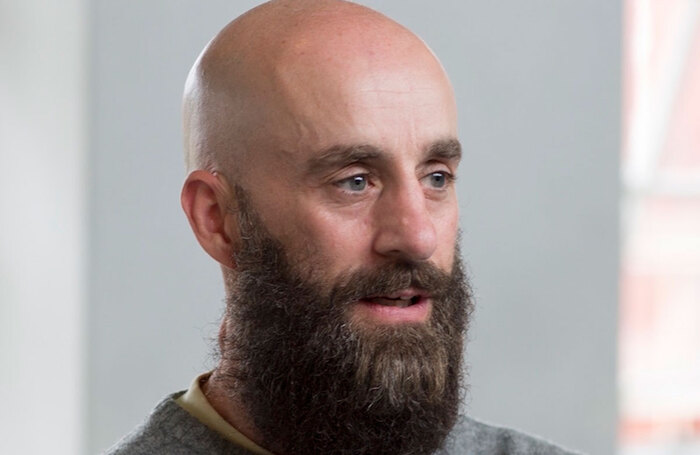
Katy Hurt is back with new music, and it expresses much of what we’ve been through over the last 18 months. ‘Face to Face’ is an ode to that universal feeling of separation and need for connection that we’ve all experienced, in different ways, throughout the pandemic. The line “We’re supposed to be closer than ever before / but somehow we’re further away” is a beautiful summary of the tension between hardship and hope; of being grateful for the technology to keep in touch but longing for that physical contact that cannot be replaced. You can feel the emotional pull as Katy sings so poignantly about a desire to see family, friends and fans again, against a backdrop of nostalgia-fuelled instrumentation. It is baptism by full immersion into traditional country music with a 1940s Vera Lynn touch.
The opening thirty seconds of gentle acoustic guitar, the introduction of gramophone-evoking vocals, and the gradual fade out at the end make it feel like a journey through an old technicolor movie soundtrack. Not to say that there isn’t a contemporary feel a la Kacey Musgraves, with the delicacy of ‘Dandelion’ and the atmosphere of ‘Golden Hour’ coming through. As such, ‘Face to Face’ is escapist without being escapism. It is a track with lyrics that are relatable and music that is otherworldly. Katy Hurt once again manages to surprise and delight with music that touches the heart even as it takes you out of yourself. Another tender tune from this shining star.
Originally written for and published on Belles & Gals on August 25th 2021.
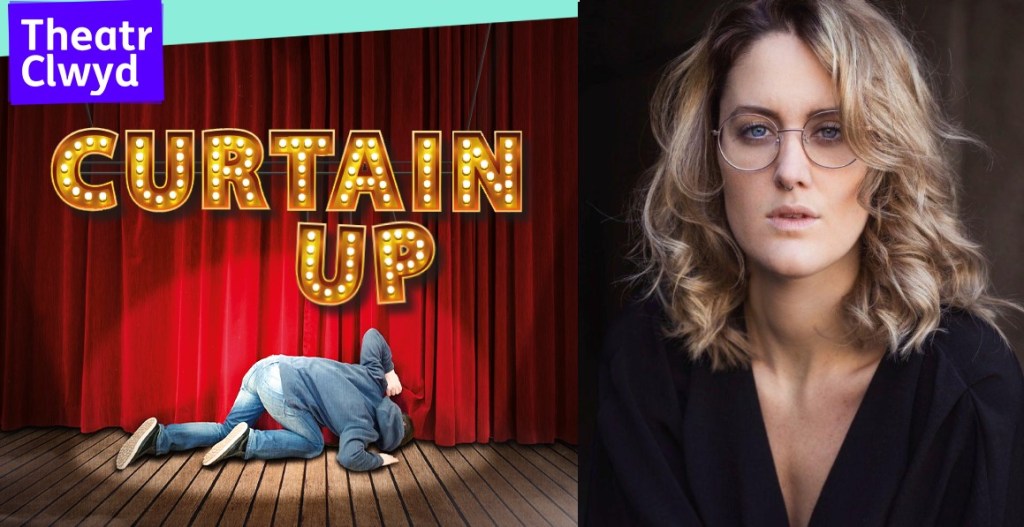
Curtain Up is a celebration of creativity, live theatre, and Welsh talent.
Over the course of three weeks, three companies, comprising of ten actors each, will perform 15 new plays – five each week – by 15 Welsh playwrights. That’s 15 voices with 15 very different stories to tell.
Associate Director Francesca Goodridge took some time out of her busy schedule preparing for week one to tell us a bit more about this exciting new project from Theatr Clwyd.
How would you describe Curtain Up?
It’s like a conveyor belt of theatre. So we start week one with a group of ten actors who work on five new plays, about 10-15 minutes long each, written by five playwrights who were specifically commissioned for this project. They have one week of rehearsals, one week of tech, and then open the following week. Meanwhile, during their tech week, a second company of ten actors come in and start rehearsing another five plays, with the third group of ten actors coming in to rehearse another five plays a week after. So that’s 15 new playwrights that have been commissioned for a project involving 30 actors in total.
How did the idea first come about?
It was borne from a series of conversations that Tamara (Artistic Director) and Liam (Executive Director) were having during lockdown with freelancers. They just asked, ‘What can we do to support you guys? What do you need?’ and the general consensus was that creative people can only live when they’re being creative – we’re just such strange beings, aren’t we, that nothing else really feeds our soul – and so Tamara and Liam came up with this concept, this conveyor belt of theatre, which allows us to give as many freelancers as possible the opportunity to be creative. It gives 15 writers a paid commission to write something after what might have felt like an age; to write something that is going to be seen, and hear people saying their words. It gives actors a space where they can just play and learn lines and be silly again. And it allows design, stage management, lighting, all of these freelance jobs, an opportunity to use their craft again after so long; to be creative on a huge scale.
And I’ve heard there is an opportunity for the audience to get involved as well…
So not only do the audience have the opportunity to see five new plays each week but the really good thing about Curtain Up is that an audience member can come every night and see something different. We’ve cast it in such a way that two actors learn every role, and at the start of the show we “rock, paper, scissors” it to see which actor will do which show that night and what part they are going to play. (So that’s the fun and excitement we’ve really been missing; the chance to not just be creative in rehearsal but for that to still live and breathe in the production.) Also, the writers were asked to include an unspecified prop in their play so the actors don’t know what that prop will be. The audience chooses the props at the start of the night and the actors are only handed the prop as soon as the play starts so there’s some improvisation: they have to react differently, which can change the course of the play. It’s all about having spontaneity again and feeling that excitement of live theatre. Every night is super-charged because things change, props change, the costumes change, an actor might do the scene opposite one actor one night and then do the scene opposite a totally different actor the next, so every night it’s something different.
Has it felt like an explosion of creative energy being back on stage after so long?
I think everyone has felt the same, me included. On day one, going into a rehearsal room and thinking, ‘Oh my gosh, can I even do this anymore? I haven’t done this for so long. Can I still do this?’ But I feel so lucky right now to be sat on a stage, and it’s the same for the whole company, not just the actors but stage management too, to be able to do the things that we love and we’ve really missed. I think an explosion is a great way of putting it because I think that’s what it will feel like every night. It is going to be different; and I think, in a world where nothing really feels steady at the minute, it’s kind of nice to have that little bit of tension on stage as well, that little bit of no one knows what’s going to happen, and the excitement and energy that comes from that.
Was it a conscious choice to perform the plays in the round?
It was a conscious decision because it’s about bringing people together again and, ultimately, the reason why this project is so special is because we aren’t flying in sets or have a huge budget. What is at the heart of it is storytelling and actually hearing stories again, which is what I’ve missed so much. I think being in the round is so much like sitting around a campfire and telling a story – that is where we come from and how we tell stories. It also allows the actors to have real fluidity. They can move; and with it being double cast, it opens the space and it becomes like a big playing field for them. We want the audience to feel like they’re in this bubble and to feel like we are all united again in being together.
How important do you think it is that there is such a diverse range of writers with such a diverse range of stories to tell here?
You can’t tell a story the same, and what is so exciting about this is having five stories from five writers with five different backgrounds – totally different people, totally different identities, with totally different upbringings, from totally different homes – so every single play is different. One of the plays is set on a spaceship, for example, and then for another we’re in someone’s living room. And that is the beauty of theatre: that we are transposed from place to place and we totally believe that. It’s so imaginative.
But though each of the play’s are different, each of the five writers was given a theme – so the first one is new beginnings, the second is finding feet, and so on – so that every night has got an arc that will take us through the night. So although the audience will see five different stories each week, they will have gone on a journey on the night through these themes. And to add to the diversity, we have some Welsh language stories too, which was a bit of a logistical challenge to make sure that four of the actors were Welsh speakers, but it’s been really great to have these Welsh language plays as well and to have Welsh language theatre included. I know that this was one of the most important things for Tamara and Liam, to make sure that it was truly diverse and was championing many different voices in Wales.
How excited are you about the writing talent coming out of Wales at the moment, and the opportunity that something like this affords them?
The thing that excites me most is working with a writer and sitting down to work on a new play and having that seed of an idea and seeing it through. It is one of the best things in the world. But aside from these sorts of opportunities, what Curtain Up has done is given 15 people a chance to write – how many of these writers may have come out of lockdown and lost their love for it, or not had the opportunity to do it, or were working elsewhere and had no time to fit it in – so as much as it’s about wanting to commission new writers, it’s also about giving people time and space to just write, without them feeling like they have to come up with anything. Yes, this is a commission, but more than that it has given them a bit of time and a bit of space to just do what they love. If that then ignites something in them to then write something else, great. But it’s about letting people have time and space to just do what they love without having to produce something all the time; where there’s no pressure to write. That’s hard when it’s something you might be doing alongside another job because you need to live. So, yeah, I think more of that would be great because that is where some of the best work is made, when there’s no pressure to have something in by a deadline, as you can make what you want when you have time and space.
The new single from Daisy Chute is terribly beautiful. ‘Secondhand Heart’ could be described as a tragic love story, told in the most delicate way. The strings of the guitar are plucked so gently, Daisy’s vocals meandering alongside them so naturally, as to give the track a dream-like quality. Snippets of jazz and touches of classical composition combine to add to this otherworldly feel. One can really sense the mystery, the risk at the centre of this song’s story, of embarking on a new relationship but carrying into it the baggage from previous ones.
There is a genuine touch of fate about it all, as Daisy laments that “we’ve met before and loved before and lost before today”. As much as the soundscape captivates, the lyrics plunge one into the despair, contained in the lines “right from the start/ my secondhand heart/ tore us apart”. It is heart-rending stuff, conveyed in exquisite fashion. No wonder the accolades keep on coming for Daisy. If ‘Secondhand Heart’ is this good, then her upcoming EP ‘Songs of Solace’ is sure to be pure gold.
Originally written for and published on Belles & Gals on 6th August 2021.
Caitlin Mae is like a phoenix rising from the ashes on her debut EP ‘Perspective’. The Welsh artist has laid bare her pain and anguish over four tracks but has also introduced hope and healing into them too. Therein is contained a heady mixture of raw feeling and mature reflection as Caitlin looks to exorcise the demons of her past through acceptance and change. The EP feels like a form of therapy as a result.
Opening track ‘Country Eyes’ contains a cleverly-written chorus that captures a real sense of despair; though ultimately, in the bridge, it is tempered with hope. Even the fiery and vengeful anger of ‘Gasoline’, underscored by heavy rock, feels like a form of release. The line “I ain’t gonna stick around to punish you myself” is the epitome of this. Such a decision – to stop wasting time putting out someone else’s fire and instead, channelling one’s energy into something positive elsewhere – holds much merit. It also represents the central theme of this EP: letting go and moving on.
‘Take My Demons’ may shift gear temporally, tonally, and musically from the previous two tracks. However, contained in Mae’s high, almost strained vocals is again this sense of journeying from one state to another. It is displayed most completely in the line “rising from your hate/ I build a better fate”. The light synth and RnB vibes may work to understate the story being told here. On the other hand, they accentuate a quiet resilience forged in the midst of suffering which builds character and hope. This is not to be underestimated.
It reveals itself most wonderfully in the final track on the EP, ‘Slam the Door’. There are echoes of early Taylor Swift in both its sound and storytelling, demonstrating the real potential for Caitlin Mae to grow into an accomplished musician. The line “darkness very rarely wins” sums up beautifully the overarching feeling on this record. It is one of many instances where Caitlin Mae’s lyrical ability can already be seen to be blossoming. In fact, this is probably her greatest strength. She tells her story, her truth, so honestly and unapologetically that her experience has the power to positively affect the listener. It does so in such a way that ‘Perspective’ becomes a kind of serenity prayer, as Caitlin Mae comes to accept the things she cannot change, courageously changes the things she can, and demonstrates the wisdom to know the difference. Watch her soar in popularity with this EP as a result.
Two of my screenwriting heroes went head-to-head a couple of weeks ago. On BBC1, the master of social realism, Jimmy McGovern, brought us the incredible Time; and on S4C, thriller-extraordinaire Fflur Dafydd gave us the heritage-crime drama Yr Amgueddfa. The former may have been getting all the plaudits but the latter has not been without its supporters. The most prominent, Russell T Davies, has been shouting about it in the Radio Times no less. And deservedly so. For Fflur Dafydd has again created a drama that is well written, intricately woven, gradually builds tension, and offers plenty of twists and turns.
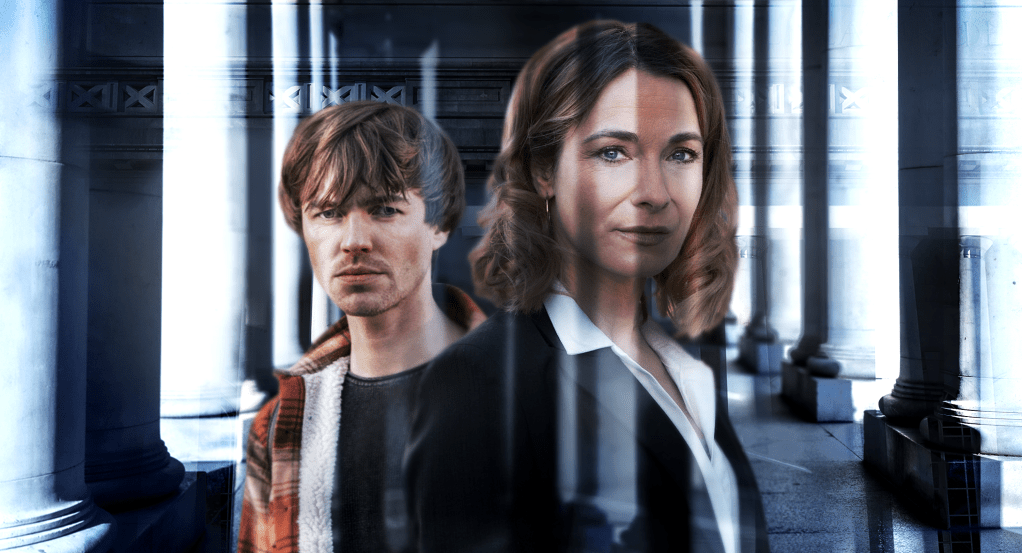
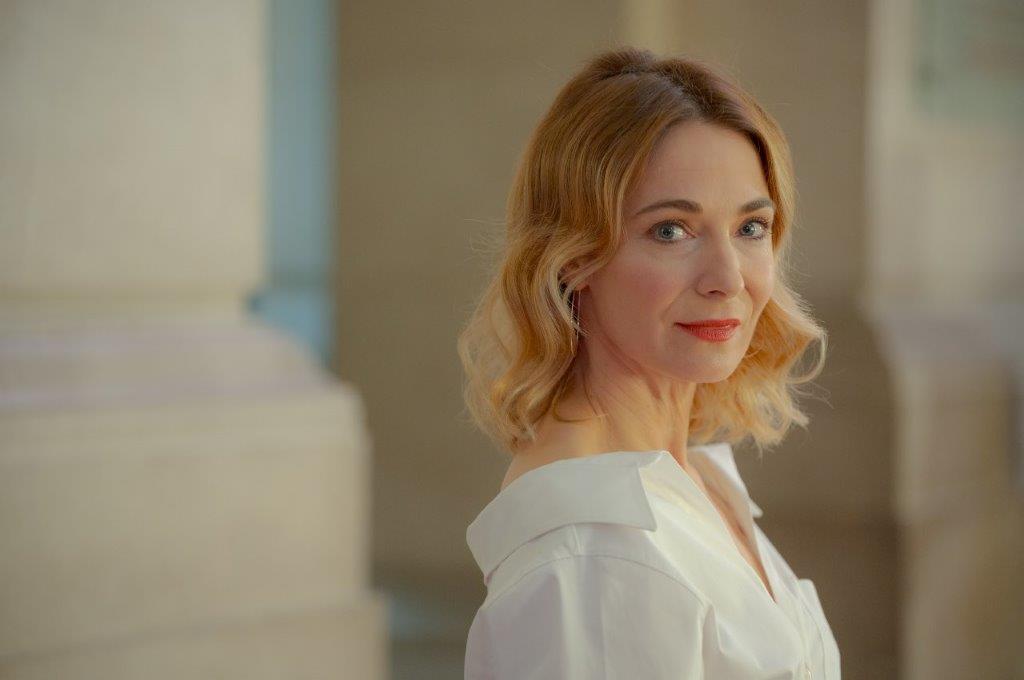
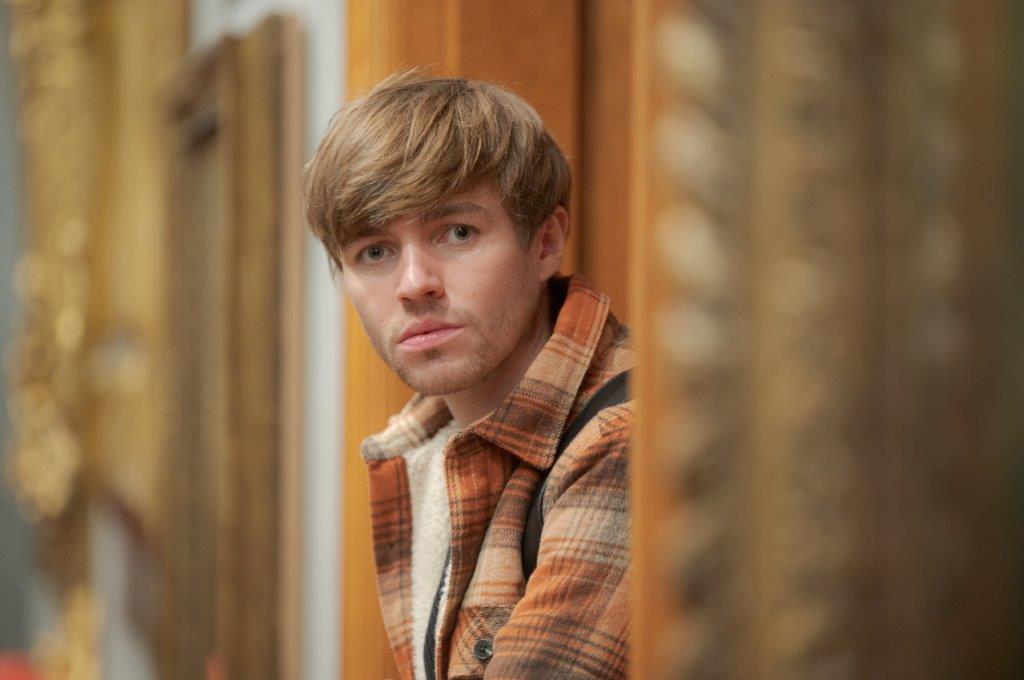
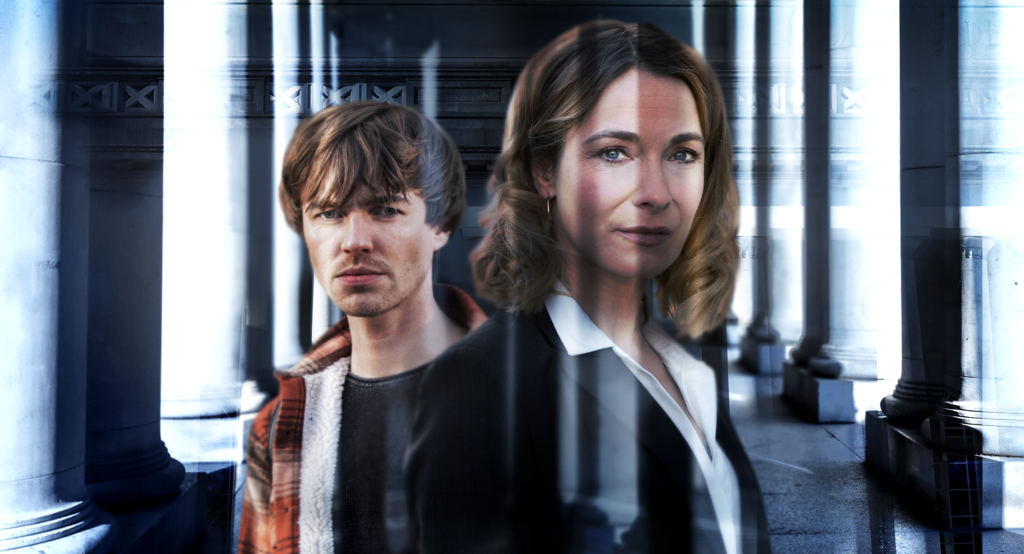
At first, it appears that Della (Nia Roberts) is the main character in the show. The opening scene sees her deliver her first speech as newly-appointed Director of the National Museum of Wales. The focus on her and her family gives the impression that these characters are going to be the bedrock of the series. And in some sense, they are. All have their own intriguing storylines that help flesh the drama out, making it a patchwork of stories that all, somehow, end up connecting as the series progresses. But the appearance of a mysterious young man called Caleb (Steffan Cennydd) in the grand entrance hall of the Museum in those first few moments, and his obvious attraction to Della, acts a bit like a red herring as, far from being the antagonist, he emerges over the course of six episodes as an empathetic protagonist.
It is testament to the clever writing of Fflur Dafydd and Steffan Cennydd’s subtle performance that Caleb is imbued with an ambiguity that keeps the viewer guessing his real motives throughout. One minute he appears vulnerable and fragile; the next, suspicious and manipulative. He seems to be seducing Della at one point, earning her trust to gain access to files from the Museum. Then, at another turn, he seems genuinely in love with her and self-loathing in his actions. Dafydd really plays with our perceptions of the character, as she does with so many here. This is what she is best at: subverting our expectations and playing with the objectivity of truth. Cennydd, for his part, ensures that this is achieved through minimal expression that is precise in its execution; and a deceptive amount of flat emotion that keeps us wondering who he is and what his intentions are.
Nia Roberts may be formidable in the role of Della, but it is Cennydd as Caleb that emerges as the most fascinating person in Yr Amgueddfa. It may not be as high-octane as its sister production, Y Llyfrgell, but it is as absorbing in its mystery and suspense. The fabulous sets and expansive scenes may have been a result of Covid protocols but they also give the impression of a sleek and modern Wales that is far removed from the rural stereotype. Fflur Dafydd has again collaborated with producer Paul Jones to create a series that is full of colourful characters, none of whom are wasted, all caught up in their own well-written subplots that gradually feed into the grand narrative. It has clearly struck a chord with viewers given its extended run on Clic and BBC iPlayer. So if you haven’t seen it yet, make it a priority for your summer viewing. You won’t regret it.
Originally written for and published on Get the Chance on July 20th 2021.
Prepare to be transported into the stories told by Katherine Priddy on her debut album, ‘The Eternal Rocks Beneath’. The folk artist does not just tell her tales. She makes you feel them too. Her stirring soundscapes are enough to stir the imagination, give cause for reflection, and transform the poetic form into lyrics that are ever so pleasing on the ear. Her versatile vocals ensure a deft interpretation of each song on the album, melding effortlessly with the music. It ensures a strong bond to the folk tradition even as Priddy expands beyond its borders, into other genres, like Americana. Such cross-fertilisation of genres affirms hers as a wholly contemporary sound.
The opening track ‘Indigo’ is wonderfully mellow in tone, with playful lyrics that cast back to Priddy’s childhood. It is suitably hypnotic too, the transition from tweeting birds to swirling music giving the impression of a journey into another world; in this case, a world of distant memory, suddenly coloured by the harmonies of Priddy, the floating strings and the gentle drumbeats of the band. ‘Wolf’ continues such ethereality, its mix of high-rise vocals and soaring sounds making it the most atmospheric song on the album. It is closely followed by ‘Icarus’, Mikey Kenny’s fiddle helping to recreate the ascent/descent of the title character of popular Greek myth to great effect.
‘Eurydice’ is the second Greek myth to be reinterpreted by Priddy. It is appositely darker than its predecessor however, echoing the melancholic instrumentation of the theme to BBC4 series The Bridge. Katherine Priddy’s vocals are as memorable here as the Choir of Young Believers are there, her voice so intimately bound up with the music as to be sewn into it. This is true on every track of the album, where the touching poignancy of ‘About Rosie’ and the doomed romanticism of ‘The Spring Never Came’, for example, are deftly conveyed in the versatile vocals that weave themselves inextricably into the instrumental composition.
This harmonious blend of voice and instrument is surely what contributes to the richness of the lyrics. There are so many wonderful lines that are so strikingly erudite as to read like a book of quotations, evidence of Katherine’s love for literature and poetry. Phrases like “your troubles are old for a body so young”; “chains on the heart are the hardest to break”, and “even ocean waves must bow down to the shore” melt in the mouth as they are sung. She has a wisdom beyond her years, encased in music that is evocative in its imagery. ‘The Isle of Eigg’ paints a picture of contented isolation in the Hebrides whilst ‘Letters From a Travelling Man’ is suitably bouncy in its life-on-the-road story.
‘Ring O’ Roses’ could easily be placed loch-side, gazing up into the misty mountains of a Scottish terrain. Or come further South, to the far North of England, and a foggy day on Tyneside could be conjured up such is the arrangement reminiscent of The Unthanks. In fact, the music of Rachel and Becky, straddling as it does the traditional and modern, acoustic and sonic, is a suitable comparison for the line that Katherine Priddy walks here as she draws in a range of elements to make ‘The Eternal Rocks Beneath’ a very contemporary folk album. The final track, ‘The Summer has Flown’, simply underlines this definition, with poetic descriptions, told in plaintive tones, that are caught up in the transcendent rise of the musical arrangement, creating some truly atmospheric storytelling that ends, as the album began, with the simple sound of birdsong. It adds a beautiful finishing touch to an album that is sure to shine on its release.
To stream the album, click here; and to purchase, click here.
Originally written for Belles & Gals and published on 23rd June 2021.
Katherine Priddy is a folk artist with a penchant for lyrics and storytelling, whose debut album, ‘The Eternal Rocks Beneath’, is due for release on June 25th. In this interview, she tells us what we can expect from the record, as well as a little bit more about herself, her musical journey, and the one female artist she would love to write with.
Hi Katherine! Would you like to introduce yourself to our readers by telling us a bit about yourself and where you’re from?
Hello! My name is Katherine Priddy and I am a musician based in Birmingham, UK. I’ve been writing and performing my own songs on the guitar for the past few years and now I am on the cusp of releasing my debut album ‘The Eternal Rocks Beneath’ on the 25th of June. A long time coming!
When did you first become interested in music, and who were your musical influences growing up?
I have always enjoyed listening to music and grew up in a household where music was often on the stereo, though it took me a long time to realise I could actually make it myself and even longer to realise I could become an actual musician. My parents listened to a really eclectic mix of music, from Irish folk music like Planxty and Christy Moore, through to English folk artists such as Nick Drake and John Martyn, then a whole heap of strange progressive rock and metal to boot. I think the common thread throughout the music I enjoyed most as a child was the storytelling aspect – I have always focused in on the lyrics when I listen to songs. I think its important to listen to a wide variety of music in order to really feed your creativity.
Could you tell us a bit about your journey as a musician so far?
As I said, I’ve always enjoyed listening to music and was in the school choir and school orchestra as a child, but it was in my pre-teens that I began teaching myself guitar and first started trying to write my own songs. My school encouraged me to enter The Next Brit Thing competition, despite the horror I felt at singing in front of people, and I ended up getting to the finals in the 02 arena – that was my first gig outside of my village. After that, I started supporting artists such as Vashti Bunyan, Scott Matthews and John Smith, before heading off to University to focus on studying English. It wasn’t until I finished my studies that I began to take my music really seriously and headed into the studio for the first time to release my debut EP ‘Wolf.’ The release went so much better than I could have hoped for, and things have been growing since then really in terms of gigs and festival performances. I am now very excited to be releasing my debut album, after 2 years of recording and waiting, and feel very ready to take on this next chapter.
You’re debut EP, ‘Wolf’, got an incredible reception on its release. Why do you think it struck such a chord with listeners?
That’s a tricky question – I don’t know about other musicians, but I find it quite difficult to listen to my music objectively and work out why it may strike a chord with those who listen to it. But I do know that people enjoyed the lyrical aspects of the song, which is really important to me. I’d like my songs to be able to stand alone as poems, or stories. I also had great fun experimenting in the studio and bringing in other musicians for the first time, so I think the EP came as a bit of a surprise to those who had always seen me perform solo. It has a really full sound, with lots of harmonies and textures.
You’re latest single, ‘Icarus’, came out on June 6th. Could you tell us a bit about the story behind the song?
There are two songs on the album based loosely around Greek Myths – Eurydice and Icarus. I’ve always enjoyed mythology – the stories are absolutely ripe for the picking, with all the colourful characters and passion and cautionary tales. Icarus was a man who wanted to be able to fly and so made wings from wax and feathers. However, he ended up flying too close to the sun and met his doom. I’ve used the story as a jumping off point for exploring the consequences of never being satisfied with your lot and always wanting more.
What can we expect from your debut album ‘The Eternal Rocks Beneath’?
10 self-penned tracks featuring contributions from a sweeping string section, some brass, double bass, drums, electric guitar, banjo and accordion, as well as a couple of more stripped back numbers, with just guitar and fiddle. I wrote a lot of these songs during my teens and early 20s and there’s a real theme of nostalgia and childhood that travels through the record, especially in tracks such as ‘Indigo’ and ‘The Summer Has Flown’. For those who have seen me perform live, there’ll be some familiar songs, though perhaps with slightly new arrangements, as well as a couple of surprises. I think the one constant throughout all ten songs is a focus on story-telling lyrics and a use of harmonies and soft, atmospheric layers. I am really proud of how it has all come together and it feels like the perfect culmination of my musical endeavours so far!
What has life been like in lockdown? What opportunities and challenges have you faced as a musician in particular?
It has definitely been difficult, though there have been some really positive and hopeful moments that have shone through for me. I was actually hoping to release this record last year, but I chose not to put it out at the start of the pandemic as that wasn’t how I wanted to remember my debut album release and I wanted to feel like I had given it the best chance possible. The waiting was hard, and losing a year’s worth of gig bookings and carefully laid plans was heartbreaking, but I made the decision to focus on building my online audience through a series of live streams, online festival performances and collaborations with other musicians. Despite shielding my Dad and being in total lockdown, I was able to perform as part of Philadelphia Folk Festival Online, which is not something that would have come about otherwise, and my Nick Drake collaboration with Jon Wilks, Lukas Drinkwater and Jon Nice was played on BBC Radio 2. I was also totally blown away by the outpouring of support from those who follow my music – it made a huge difference to my morale. It doesn’t look as though we’re quite out of the woods yet, but I’m really hoping for the return of some live music this summer. Live performance is my favourite part of this job and it seems there’s still an appetite for it!
Finally, if you could pick one female Folk/Americana/Country music artist to write a song with, who would it be and why?
Ahhhh you’ve saved the hardest question ‘til last! I think if I had to chose, it would be Joan Baez. I grew up listening to her music and her lyrics and songwriting are just beautiful. It would be a dream come true to write and sing a duet with a voice that has been such a constant in my life.
Thank you so much for your time!
Originally conducted for and published on Belles & Gals on June 17th 2021.
In this latest interview, I chat to screenwriter Fflur Dafydd. The chat takes place in the form of a podcast, the second in a trial series in conversation with Welsh creatives. Fflur talks about her latest series, Yr Amgueddfa, as well as the writing process, her creative journey, Welsh identity, memory, and Welsh TV drama.
To find out more about Fflur, visit her website here, or follow her on social media @fflurdafydd.
You can watch the whole series of Yr Amgueddfa on BBC iPlayer here.
This is interview was conducted with the support of Get the Chance. Get the Chance supports volunteer critics like Gareth to access a world of cultural provision. We receive no ongoing, external funding. If you can support our work please donate here. Thanks.
There is a sadness and deep sense of injustice behind the humour and surrealism of For the Grace of You Go I. Due to begin just before the pandemic hit, Alan Harris’ play may be long overdue but its delay has proved timely. Beneath the strange veneer of a storyline in which a man puts out a hit on himself lies a sobering analysis of the inequalities that coronavirus has exposed in society over the past 18 months. It makes for a darkly comic play that is both hugely entertaining yet deeply unsettling.
Its colourful set, of luminescent pink, green and yellow walls, belies the broken and struggling lives of its characters. They do reflect the dreaminess of their existence though. Jim (Rhodri Meilir), employed to put pepperoni on pizza as part of a government scheme, imagines himself as Employee of the Month – complete with giant rosette and accomplished chef’s hat – in one of several cartoonish scenes projected onto the walls. In reality, he is a thorn in his line manager Irina’s side. Played by Remy Beasley, she is under constant pressure to meet targets, and Jim’s daydreaming does nothing to help matters. Though work gives him a sense of purpose, she is forced to let him go. His only solace is found in a monthly film club where he meets new guy Mark (Darren Jeffries), whose obsession with American action movies makes him the perfect partner in Jim’s movie-styled life. After watching the 1990 Finnish film I Hired a Contract Killer, Jim decides that he wants to take the place of its protagonist and asks Mark to do the honours in killing him. It may sound rather far-fetched but there is a serious underbelly to its hyperbole and other-worldliness.
Jeffries gives an assured performance as Mark, whose Mancunian swagger hides a far more vulnerable masculine existence. He is terrific opposite Rhodri Meilir, who brings a beautiful innocence to the troubled Jim, their exchanges pacy and lively throughout to give a slightly unnerving edge to the funny and ironic dialogue. Beasley is wonderfully on-edge as the hassled Irina, maintaining a brilliant balance between sanity and breakdown such that her character fizzes both in dialogue and action like a loosely-corked bottle of pop. The pressures on all three are palpable in their different ways; and they give rise to the much bigger issues at play. Harris comments on mental health, consumerism, capitalism and the political system without ever being preachy. He achieves this through the disabling use of humour and by intimately tying the issues to the narrative. As a result, they ooze naturally out to offer a searing indictment on the oppressive systems and privileged attitudes in existence within society, tempered frequently by the comic form.
I had expected to be overwhelmed as I walked through the doors of Theatr Clwyd for the first time in 18 months. But though it felt special to enter the building to a familiarly warm welcome, made more so by the beaming sun as it flooded in through the windows; to give a knowing smile to the recognisable pictures on the stairs up to the Emlyn Williams theatre; and to be greeted by the same ever-delightful staff who were courteous and helpful as I got into a bit of confusion over my ticket number, it was the reminder of the importance of theatre, as a medium that can speak truth to power, that really made its mark. That importance has not gone away over the course of the pandemic. If anything, it has grown stronger and become more vital than ever. But having become acutely aware of this once-unspoken assumption outside of the context of its physical space and place, For the Grace of You Go Iwas the first opportunity for what had become apparent through the screen to be embodied within the bricks and mortar to which theatre most truly belongs. As such, Alan Harris’ already-powerful message struck an even deeper chord than it might have in pre-Covid times. If had something to say then, it most definitely needs to be heard now.
Originally written for and published on Get the Chance on 13th June 2021.
You won’t get many heavier rock anthems in the sphere of country music this year than ‘D.R.I.N.K’. Biddy Ronelle is drawing on her roots for this party track that she hopes will provide the soundtrack to a lockdown-free summer. But even if restrictions remain, there is still plenty of hardcore head-banging that can take place (against a brick wall or otherwise) such is the metal-inspired sound of this latest single. It will also be her last as a solo artist, as she moves with trusted band member and producer Stu Magru et al into a new era as Biddy and The Bullets. This next chapter is already opening as the last one closes if ‘D.R.I.N.K’ is anything to go by though. There are echoes of Iron Maiden in its intro, early Pink in the vocals, and a hint of Kezia Gill in the catchy and powerfully delivered chorus. Much like her EP ‘Aftershocks’, Biddy manages to present a contemporary sound that allows for clarity of lyrics, honouring country music’s songwriting tradition whilst at the same time being unafraid to go all-out with the instrumentation. ‘D.R.I.N.K’ is a sure-fire sign that the next stage in Biddy Ronelle’s career is going to be a good one.