In this latest interview*, I chat to Welsh Country singer-songwriter Rae Sam. The chat takes place in the form of a podcast, the first in a trial series, in conversation with Welsh creatives*. Rae talks about her debut album, The Great Escape, as well as songwriting, mental health, Welsh identity, and faith.
Clickhereto go through to the original article where this episode is published.
*Originally conducted for and published on Get the Chance on June 7th 2021.
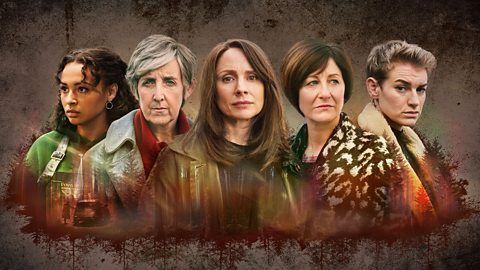
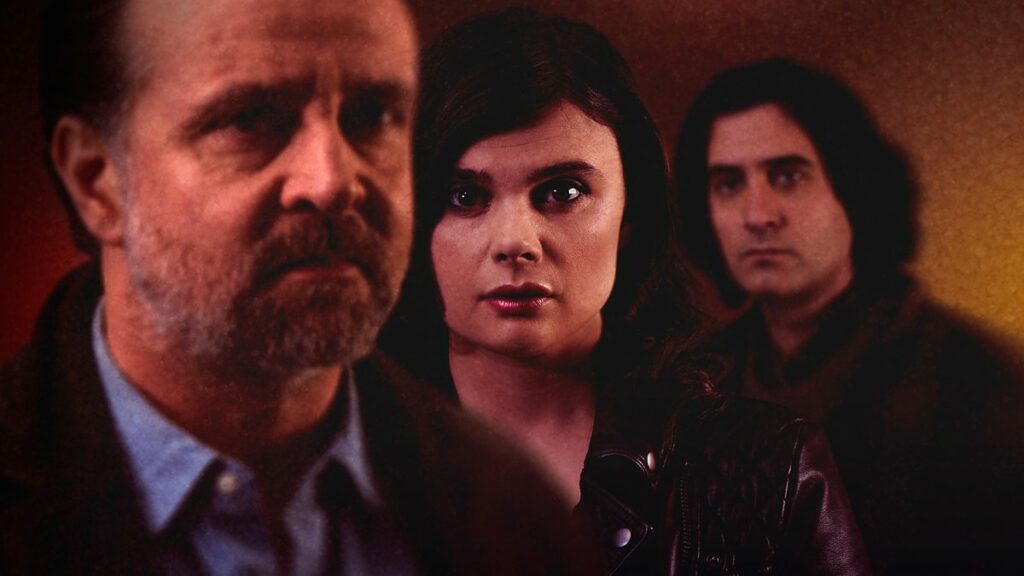
There is a moment during the final episode of BBC1 drama The Pact when its writer, Pete McTighe, attempts to deconstruct the truth. Julie Hesmondhalgh’s character Nancy, one of the four women caught up at the centre of a murder investigation, begins a Shakespearean dialogue with her priest (Mark Lewis-Jones), telling him that we all wear masks and play parts. No one is ever truly themselves, she admits. “I’ve come to realise that it’s the absence of truth that holds us together”. When Father Martin responds to her “cynical worldview”, I’m inclined to agree with him. But I do wonder if McTighe has still necessarily muddied the waters to offer a critique of truth as a negative construct: sometimes dangerous, potentially destructive, and capable of being subverted by something greater than itself.
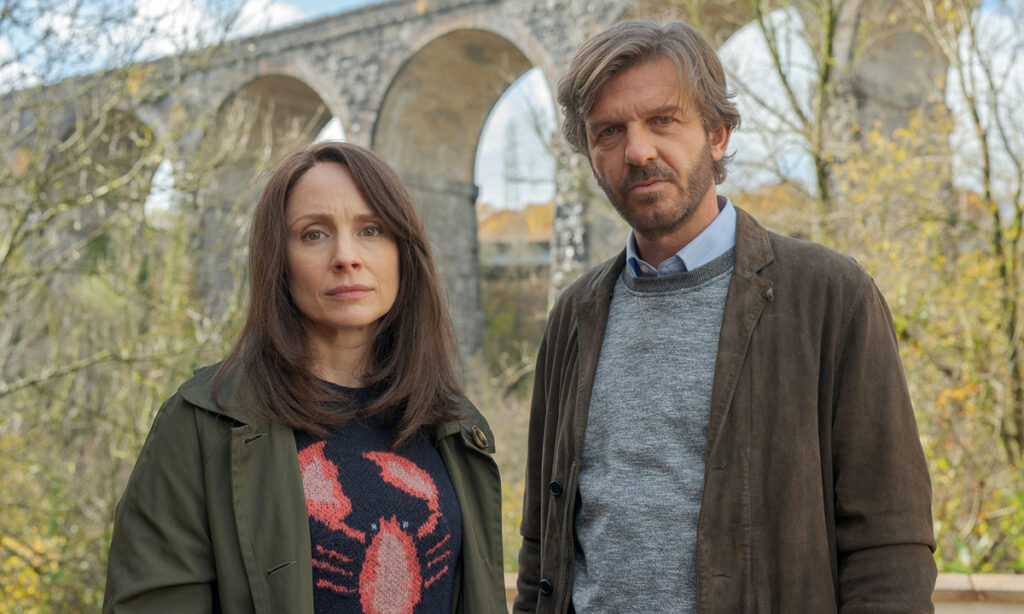
This critique plays out in the central narrative of the drama. After brewery boss Jack Evans (Aneurin Barnard) is found dead in the woods, having been innocently left there by four friends in a humorous act of revenge for his snide comments the night before, the group endeavour to create a cover story so as not to be implicated in the subsequent investigation. They attempt to absolve themselves of the situation, thinking about the possible ramifications should their involvement be uncovered. They are driven by fear of where the truth might lead, and attempt to abscond it by living a lie. What takes shape over the course of six episodes is a fascinating interplay between truth and lie. It is at its most dynamic in episode five when Anna (Laura Fraser) reveals to her husband, police officer Max (Jason Hughes), what really happened. In doing so, she makes him complicit; forced to choose between his personal and professional commitments. It becomes a choice between telling the truth or living the lie; and in choosing the latter, the lie becomes the truth that drives the lie. In other words, he acknowledges the destructive consequences that the truth poses to his family, and so seeks to avert this risk entirely by becoming entangled, like the rest, in a web of deceit.
Anna (Laura Fraser) and Max (Jason Hughes)
Ordinarily, one might assume that McTighe is telling a simple story of corruption. However, I believe he presents a rather deft commentary on the nature of friendship. I think it goes to the heart of what Nancy means when she describes “the absence of truth that holds us together”. For the lie which Anna, Nancy, Louie (Eiry Thomas) and Cat (Heledd Gwynn) concoct, which some of their nearest and dearest are eventually drawn into, becomes the basis for which trust between them is built. The Pact is not so much an exercise in secrecy then as trust. It may be that the lie wins but only as an expression of self-sacrifice. Nancy gives of herself in an act of grace that saves the guilty Tamsin (Gabrielle Creevy), complicating the typical formula of the crime drama where the mystery murderer is finally unveiled and given their comeuppance. There is no good and evil as solidly defined categories here. Instead, everyone falls short in their own way, having to pay penance for their actions on the night of Jack’s death, to paraphrase Nancy. Her response is, perhaps not surprisingly, steeped in a theology of sin and atonement which, though far from straightforward, still leaves plenty of food for thought on the place of justice and truth.
When I came to The Pact, I was expecting to comment on its place within the landscape of Welsh TV drama. It is certainly an interesting addition to the canon, with its strong Welsh cast supplemented by a scattering of British stars representing a Wales with fluid borders; a community with a recognisably local identity but peppered with the accents of Scots and English settlers. It is not quite the bilingualism of a Bang or Hinterland but neither is it a homogenously accented whole. It has given Eiry Thomas an opportunity to take on a role that sees her come into her own, her star turn opposite heavyweights like Eddie Marsan (Arwel) and Hesmondhalgh announcing her as an accomplished lead. Rakie Ayola is superb as deadpan detective DS Hammond, her commanding presence softened beautifully by her dry wit and no-nonsense comment. Meanwhile, Abbie Hern makes her debut acting role as Tish a memorable one, her performance opposite Heledd Gwynn making her one to watch for the future. However, for all its stunning shots of the landscape, its subtly effective music and excellent cast, it is the narrative themes that have really drawn me into this drama and kept my interest throughout. The Pact has been a thought-provoking crime thriller which has left me with something to think about.
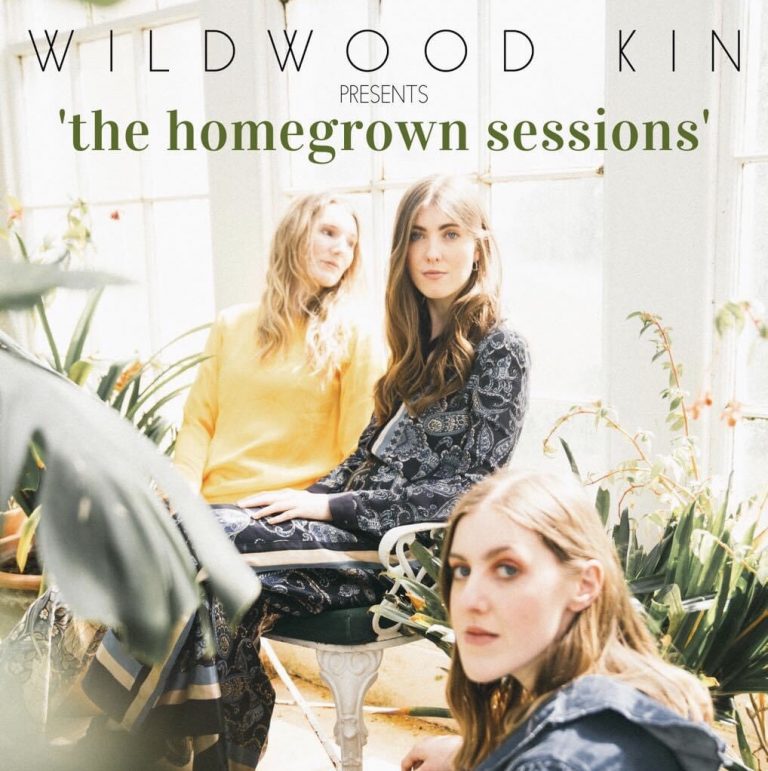
Having hugely enjoyed Wildwood Kin’s livestream from a farm in Devon back in October 2020, I was delighted to see the release of ‘Homegrown Sessions’, an EP with five tracks recorded straight from the show. It manages to capture the light and ethereal nature of their sound which made their stripped back online set such a pleasure to listen to when it first aired.
It was especially pleasing to find ‘Dakota’ among the songs selected, their version of Stereophonics’ hit single having always gone down a storm at their live gigs. They capture the expansiveness of the original well whilst delivering it in a much softer tone. Such gentleness of spirit runs throughout this record, and I would expect nothing less from the alt-folk trio. Their three-part harmonies are always a pleasure to listen to, and come through clearly and obviously here which, given the acoustic nature of their set, is perhaps no surprise. The recording quality may not be the best, but in spite (or perhaps because) of this, the rawness of their live performance comes through well. It is especially evident on ‘The Author’, where the amplified vocals resonate around the barn in which they play, capturing something of the rurality of their setting. But each song has its moments, the general effect being less all-encompassing atmospherically and more pinpointed lyrically.
‘Dakota’ is certainly the stand-out track on ‘Homegrown Sessions’ but it is great to be able to relive something of that magical Autumn evening through the whole EP once more.
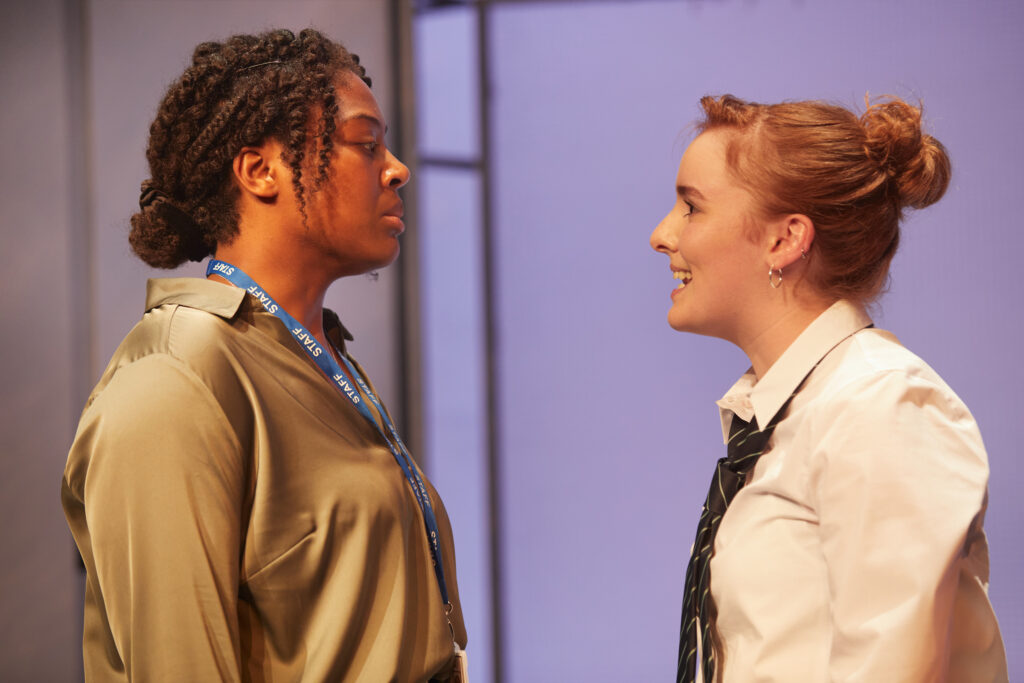
The beauty of The Merthyr Stigmatist lies in its contemporary gospel message. “Why shouldn’t God send a miracle to Merthyr Tydfil?” is the strapline. One would be hard-pressed to come up with an answer at this play’s ending. Writer Lisa Parry carries something into her production which feels like its been formed in the fire of direct experience. She uses Catholic theology and Jesus’ paradoxology to give it added form and meaning. It is a narrative which challenges the narrative – the narrative that seeks to define us; made by those in power which can silence us, if we let it; that Parry attempts to rewrite in this excellent two-woman show.
Bethan McLean makes an impressive professional debut as schoolgirl Carys, who claims to have the stigmata: Christ’s wounds from the cross. Challenging her at every turn is her science teacher, Sian, enigmatically played by Bethan Mary-James. The two riff off one another to great effect, Parry’s deft dialogue translating into a fascinating piece of ambiguous characterisation in their hands. The result is a one-hour piece which refuses to take sides. One is never entirely sure whether the fervent beliefs of Carys are a sign of mental ill health or the readily dismissive Sian is not masking some kind of deep trauma. What is clear is the passion that comes through in their exchange, as they wrestle with a sense of identity and purpose. Both McLean and Mary-James bring a bitter sense of the reality that their respective characters are facing. As a result, though the stigmata may present as a possible actual event in the narrative, its symbolic position at its centre is what’s most important here.
This is where The Merthyr Stigmatist really shows itself to be a story for our time. For it challenges the assumptions made by the establishment, told to us in our overriding cultural narrative, that in order to make something of ourselves we must leave our small, local, tight-knit communities behind; we must swap them for a university education in towns and cities where regeneration and chic, café-culture living represent a professionalism which indicates success; and if, for some reason, we don’t quite get on and have to return to our native home, we must become some kind of saviour to the next generation, repeating the same mantra to them, and thus becoming part of the false and disempowering system that does anything but allow young people like Carys to be proud of where they come from if only those in power would just stop and listen – really listen – to what they have to say*.
The Merthyr Stigmatist succeeds in deconstructing this established narrative, subverting the notion of salvific agency in the process. In the end, it is Carys who saves Sian, not the other way around. Yet neither is Carys left completely unchanged by her encounter with Sian. This is where I sense the theological dimension of Parry’s play coming to the fore, as the themes of interdependence (the power of community) and empowerment (self-confidence and self-belief) break through. The result is not only the championing of a repressed voice of the Valleys but also a tapping into an emerging zeitgeist with regards Welsh identity. In this way, Parry uses the local to also touch upon a national concern, namely how Wales sees itself, in the context of the UK and the world. It is a conversation already happening to which, I think, this play can certainly contribute. As such, those in power would do well to listen – really listen – to what it has to say. For it is speaking a truth that, sadly, remains unheard.
*This paragraph has been rewritten as a poem, which you can view by clicking on the link at the bottom of the originally published article, for Get the Chance, here.
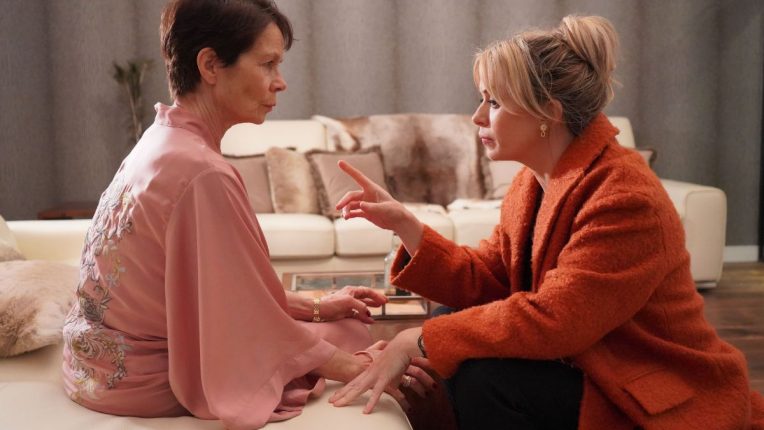
There is a moment in the final series of Keeping Faith when Eve Myles becomes Celia Imrie. The transformation is extraordinary. There is no CGI or special effects; rather, just Eve Myles doing what Eve Myles does best. It’s why we’ll miss her as Faith, the gutsy, emotional, steely and vulnerable lawyer who has been through the ringer, so to speak, over three series of the hit Welsh drama. Throughout that time, Myles has more than embodied the character. She has become her. And in this, her final swansong, Imrie has matched her star quality as Faith’s cold, manipulative and deliciously deceitful mother, Rose. Together, the two of them have simply sparkled onscreen. Their sparring matches have been so emotionally explosive that they have enthralled and exhilarated in equal measure. The introduction of Faith’s backstory has been a stroke of genius by the show’s creator, Matthew Hall, and these two acting heavyweights have helped to make it so. However, they are by no means the sole contributors to its success.
What made the first series of Keeping Faith so hugely popular was not just the superb acting talent of Eve Myles but the strong cast of characters that surrounded her. Keeping Faith has always been, at its heart, a drama about family. It is to Hall’s credit that he has managed to retain this as the central focus, the effect being, in this final series, a real depth to those supporting characters, whose arcs are as important to and invested in by the audience as Faith’s. Catherine Ayers deserves special mention for her heartrending portrayal of Lisa’s alcoholism, the scene at her first AA meeting being one of many powerful moments in this final series. The quiet resolve grown in Tom by Aneirin Hughes is another that has been beautiful to watch, with the presence of strong women, such as Suzanne Packer’s Delyth, being key to this change. I have loved watching Demi Letherby and Lacey Jones grow in their roles as Alice and Megan respectively, each bringing a different temperament that perfectly matches the stubbornness and fragility of Faith herself. Then there is the warm and gentle manner of Steve, who is played to perfection by Mark Lewis Jones, opposite the increasingly jealous and controlling Evan, played by Bradley Freegard. These two men have been magnificent, circling around the magnetic Myles with performances that have helped steer the romantic element away from soppy sentimentality, and ensured that the depiction of a relationship breakdown has been studiously honest and suitably dramatic. Such significant attention to detail has been the difference in ensuring that Keeping Faith has not just been engaging drama but has won the devotion of many fans too.
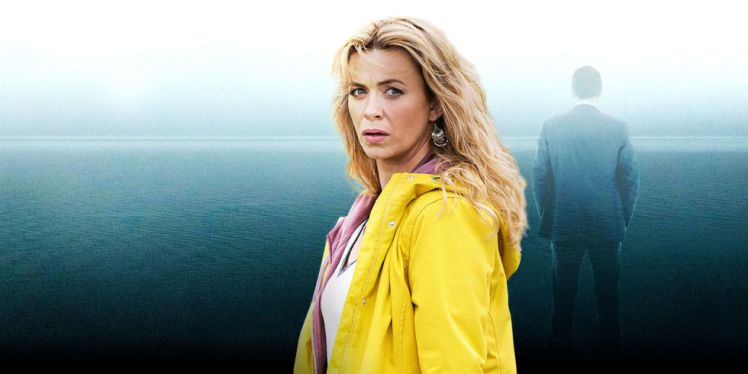
This devotion has also been generated, in no small part, by its memorable soundtrack. Amy Wadge was rightfully recognised for her musical contribution to the original series, with ‘Faith’s Song’ proving incredibly popular even outside of the series’ run. It returns in this final instalment with a greater appreciation than its more intrusive presence in series two. There is a mixture of recognisable favourites and brand-new compositions, all of which complement the action onscreen. It is in the final scenes though that the emotional weight of the title track in particular is laid heavily on the shoulders of the audience. The complete absence of music in the last episode before this point contributes to the tear-jerking moments that follow. The appearance of Osian (Keogh Kiernan) – having survived the operation that Faith fights so hard for in this series – Alice’s poignant speech, and the intimacy of Faith and Lisa as they walk across the beach to the sea, is enough to get the lip quivering. But it’s the presence of that iconic yellow coat, now firmly worn by Faith, and accompanied by her song, that really starts the waterworks off. It ensures a truly satisfying end to a show that has changed the face of Welsh drama, and been taken to the hearts of so many in Wales and beyond.
From its humble beginnings as Un Bore Mercher on S4C to its primetime slot on Saturday night BBC1, Keeping Faith has been a juggernaut of a drama. It is rare that I get on my hobby horse but I think it’s important, given the constant criticism levelled at its news output, that the future of the BBC and its licence fee is not debated on such a narrow-minded understanding of the corporation to the detriment of gems such as this. Keeping Faith demonstrates the BBC’s commitment and ability to produce quality Welsh drama that is made in Wales, for the people of Wales, but with the potential to reach beyond Wales too. It may not always get it right (see Pitching In) but without it, there is little evidence to suggest that the commercial channels will step up to the mark. The Pembrokeshire Murders(ITV) may represent a rare foray into Welsh representation. However, its risk-taking (a true story crime drama) leaves a lot to be desired. Keeping Faith is unlikely to have been made without the backing of the BBC & S4C. Could its success herald the possibility of a sea-change? I doubt it. But whatever happens, we will always be grateful for Faith Howells. So thank you, Matthew Hall. Thank you, Eve Myles.
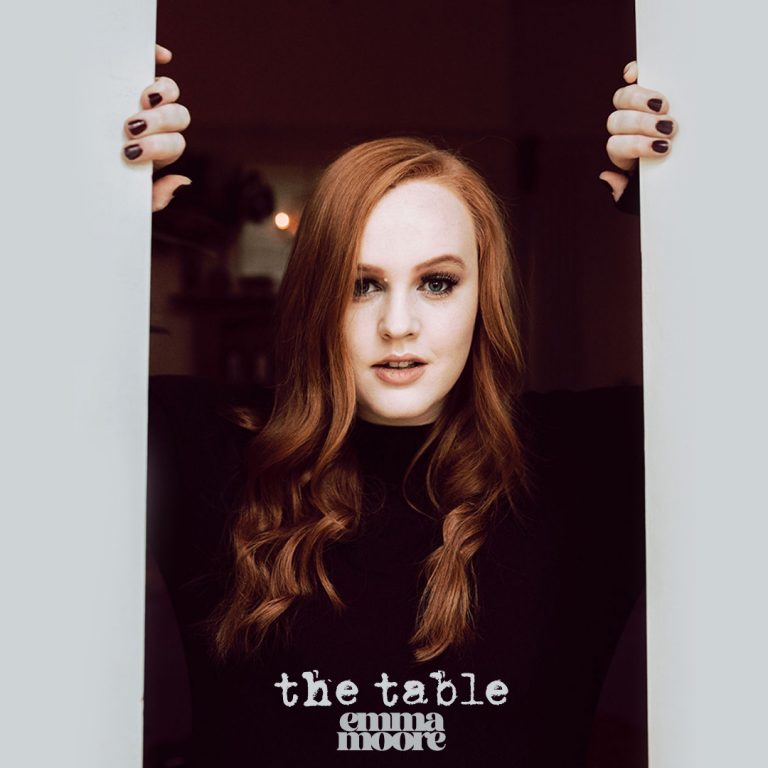
Emma Moore has always struck me as a real scholar of country music. So for her latest record, it wouldn’t surprise me if she had been studying the music of the Pistol Annies. The sass, satire and sweetness on her new EP, ‘The Table’, have all the hallmarks of a Miranda Lambert, Ashley Monroe and Angaleena Presley influence. Whether true or not, it reveals the measure of Emma’s success in putting together a six-track collection that packs a real feminist punch, full of strong messages, subversive tendencies, and unapologetic sentiment.
In opening track ‘Husbands or Kids’, Emma gets right down to business, laying down the gauntlet to those who believe that these are the only two options open to women. She challenges this notion head-on, through her declaration that “I’ll take option three”, this slightly tongue-in-cheek comment being characteristic of the whole song, with its rock-infused music beating home her point in style. ‘Late to the Table’ is no less forceful in its attempt to smash the normative ideal of two-point-four children, though it does so against a background of slow tempo sound. This can appear deceptive, the hypnotic guitars drawing you in at the same time as the lyrics are allowed to come to the fore. But it is important that the message of the song be heard because it is a perspective that is widely felt but rarely acknowledged. Such honesty is one of the strengths of ‘The Table’; its challenging of social taboos a pleasant surprise.
Third track ‘Waiting for You’ is one of the most beautiful songs I have heard in a long while. What makes it so is its complexity. It is full of seemingly contrasting feelings – hope and regret, humility and jealousy, love and loss – yet they perfectly represent the complicated affairs of the human heart. Again, Emma Moore lays everything on the table emotionally to capture a reality that is highly relatable, using a stripped back composition to give the song a mesmeric quality. Similarly, ‘When’ offers minimal instrumentation to give a fresh take on the traditional cheating song. What is used however appears to have been carefully chosen, the pedal steel pulling at the heartstrings as Emma tells the story of someone who has become the “other woman” in a relationship. She cleverly holds back the vocals, never venturing into full power ballad mode, which grants the song a subtle sadness that may not otherwise have been there. It is incredibly touching as a result.
The EP finishes with a belter of a song. ‘Match Made in Hell’ ensures that if she’s going, Emma Moore is going down in fiery flames of country-singed rock. It features two lines that deserve particular mention, “the only scripture I recall/ was written in a bathroom stall” aptly making it onto one of Emma’s associated merch t-shirts. These represent the overall ingenuity of the lyrics throughout ‘The Table’, which are sometimes humorous, sometimes rebellious, sometimes serious, but always genuine and never wasted or uninteresting. They capture an artist who feels unafraid and confident in her own voice. She knows what she wants to say and does so deftly through a genre that fits her like a glove. ‘The Table’ demonstrates how perfectly matched Emma Moore is to country music, and is certainly one of the best releases by a UK female artist on the scene so far this year.
Click here to listen or here to purchase the album.
Originally written for and published on Belles & Gals on May 3rd 2021.
Hannah Daniel gives an impressive performance in S4C’s latest drama series, Bregus. She is almost unrecognisable from her best known role to date, playing straight-faced, sharp-tongued lawyer Cerys in Keeping Faith. Instead, she takes on the character of high-flying surgeon Ellie, whose vulnerability and fragile mental state begin to unravel following the sudden death of her sister, Luce (played by Sara Gregory). Daniel manages to create a richly compelling personality, surrounding her with an air of mystery that is greatly enhanced by the use of camera, music and cinematography. In doing so, she makes the transition from supporting actor to leading lady with aplomb. No doubt awards will follow.
(C) KF SERIES 2 PROD LTD – Photographer: Rory Taylor
The series begins almost as a mirror image of Keeping Faith, with Daniel adopting the organised chaos of the married middle-class professional with kids first thing on a weekday morning. The initial picture that is painted is one in which everything appears perfect. Life is good. But then an unexpected twist turns everything upside down. Where Bregus then veers from Keeping Faith becomes more apparent, not least in the actions of Ellie, whose accompanying blank expressions could not be more different from the swirling emotion conveyed by Eve Myles as Faith. This is where Daniel excels in producing a sense of detachment both within the drama itself and from us, the audience. She becomes something of an enigma. The lingering close-ups, jarring soundtrack and surrealist techniques all contribute to this unknown element. But it is what surrounds the dialogue between Ellie and husband Mart that really unlocks the general feeling of unease that accompanies the strangeness of this drama.
It is not about what is said so much as what is not said that makes Bregus so intriguing. The surface dialogue contains such rich subtext that it is hard not to be gripped by the exchanges of Hannah Daniel and Rhodri Meilir in particular. Meilir is perfectly cast as the quietly controlling Mart. His ability to play a character with such threatening calmness is ideally suited here. There is always a sense of an ulterior motive behind his composed exterior which, like in his previous role as Bill in 35 Diwrnod, is never quite confirmed until the final episode. In the meantime, it is the suspicion that surrounds him that helps build tension here, with the revelation of his character’s true nature being even more powerful when it finally comes. It is in the final scenes that everything that has been bubbling underneath the surface is suddenly unleashed in explosive fashion. The dialogue then becomes explicit, so carefully crafted as to cut like a knife, and revealing Bregus as a beautifully feminist piece that is incredibly moving to say the least.
Bregus is this wonderful mix of mystery drama, psychological thriller and family psychodrama. At its heart is a wonderfully complex female character whose actions are often far removed from the stereotype. Hannah Daniel portrays Ellie exceedingly well as a mother, wife, friend and surgeon who is not immune to the challenges and external pressures that come with these roles. Her responses are often unexpected and at times surprising, which is partly what makes this drama so absorbing. Its sense of intrigue is elevated by music that is so resonant at times that it overwhelms; close-up shots that are so immersive that they enthral; and the use of surrealism such that one is never quite sure whether what Ellie is experiencing is real or not. It is in the subtlety of expression alongside the dialogue though that should be particularly commended. Daniel and Rhodri Meilir excel at this, though the rest of the cast have their moments too. It is in the mystery at the heart of these relationship dynamics that makes Bregus such a fascinating watch. And it is the vehicle through which Hannah Daniel finally announces herself as a solid and very capable lead.
Gospel albums can be a bit hit and miss, particularly if they feature well-known, well-trodden hymns. It can be difficult to find a fresh angle on songs that have been covered by so many. Carrie Underwood has managed to breathe new life into a dozen classics however on her latest album, ‘My Savior’. Released as a companion piece to her Christmas collection, it continues in much the same vein as ‘My Gift’ but with a softer tone: less grandeur, and more intimacy.
The opening instrumental, featuring Buddy Greene on harmonica, is raw and reflective. Solemn in tone and redolent of an earlier period, it both confirms and belies what is to come. Its simplicity continues on through many of the songs that follow whilst its traditionalism is given an updated aeration. So ‘Nothing but the Blood of Jesus’ is stripped back but up tempo; and ‘Blessed Assurance’ remains acoustically grounded even as Carrie belts out the odd power note. ‘Just as I am’ carries on this minimal instrumentation to great effect, creating a really touching version which draws out the theme of unconditional love at its heart extremely well. This is before we get a taste of old-school Country Gospel with ‘Victory in Jesus’. The introduction of the pedal steel is most welcome here, as are the drum brushes which give the track a real jazzy edge to an otherwise honky-tonk-flavoured sound. It is a moment when Sunday morning steps over country music’s famous binary into Saturday evening, Carrie then returning to the hallowed setting of the Church building for a duet with CeCe Winans on ‘Great is Thy Faithfulness’.
‘How Great Thou Art’ is a good indication of how much more intimate this album is compared to its festive counterpart. There is no grand vocal performance as per an earlier recorded version featuring Vince Gill. Instead, this is a tempered but no less heartfelt rendition that captures something of the sincerity with which Carrie has approached this project. ‘Because He Lives’ seems to display the reverence and passion that she has for these gospel standards from her childhood best, looking to honour the original whilst, in this case, producing a modern country sound around the lyrics. It leads to an altogether softer addition to her back catalogue, with ‘The Old Rugged Cross’ and ‘I Surrender All’ underlining this gentler approach. Again, both capture Carrie’s ability to bring a fresh, modern take on century-old classics, with a vocal that glides along with the minimal pop production to rest soothingly on the ear.
It is a staple of any Gospel album to include ‘Amazing Grace’, and Carrie chooses to end with it here. To find a new angle on a song that has been covered by countless artists is a challenge to say the least, and there is nothing particularly distinctive about this version. Carrie delivers it well, and with the addition of the harmonica, it becomes a nice bookend to the album. Greene adds a slight rough-and-ready feel with his playing which creates a nice contrast to the finely-polished chorus of the choir, the song displaying the kind of fusion between the traditional and contemporary that runs throughout ‘My Savior’. The result is an album on which Carrie Underwood manages to convey her faith in a way that is true to her and her music. She faithfully interprets these classic hymns for a new generation, creating a Gospel album that makes a lovely soundtrack to the Easter weekend.
The recent S4C series Fflam was a slow-burner. I came to it with much intrigue and anticipation given the concept and acting talent. The idea of a woman, Noni, seeing her dead husband, Tim, again, after years believing he had died in a fire, sounded like the perfect spark from which to ignite a gripping narrative. The fact that Gwyneth Keyworth (Bang, Craith/Hidden) and Richard Harrington (Hinterland, Poldark) played the lead roles only served to excite and offer high expectations. So it was with sadness and disappointment that I found myself ultimately underwhelmed by its delivery. It did manage to strike a few matches throughout its six, half-hour episodes. However, these failed to set alight a series that was full of promise but low on satisfaction.
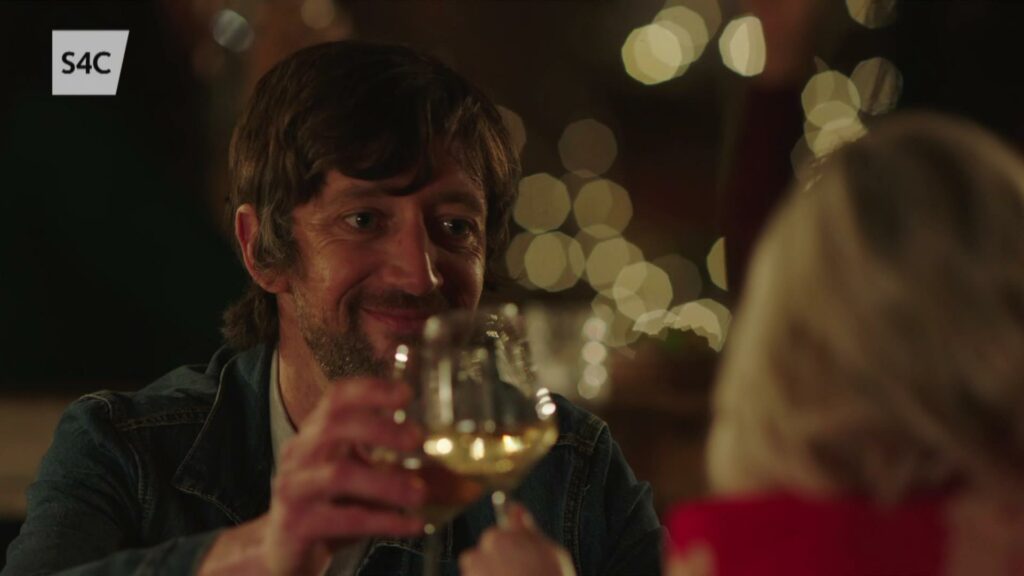
The performance of Keyworth was central to giving the drama a certain kudos that it may otherwise have lacked. Her ability to convey Noni’s internal emotions onscreen was akin to that of Eve Myles in Keeping Faith. The difference here though was the oft understated way that Keyworth did this. She demonstrated the conflict between grief and passion going on inside through very subtle expression which, nevertheless, with help from the camera and editing suite, was full of depth. Her appearances alongside Richard Harrington, particularly those in a restaurant over dinner, provided some of the most enjoyable scenes of the series. The gentle charisma that Harrington brought to his mysterious character, opposite the romantic infatuation that Keyworth successfully tempered as Noni, helped create a sense of ease. It led to a free-flowing script that meant their conversations appeared natural onscreen. These moments became absorbing as a result, giving some required fizz to a drama that, outside of them, felt a bit flat and unengaging.
I wonder whether the drama would have benefitted from having a more compressed narrative in which its central premise was played with a lot sooner and the final twist in the series was incorporated a lot earlier. This would have contributed to the retention of dramatic tension that, instead, bubbles up and then peters out at several points throughout the series. It is not helped by the fact that the characters of Deniz (Memet Ali Alabora), Ekin (Pinar Ögün), and Malan (Mali Ann Rees) were underserved by a subplot that lacked the same level of emotional investment as the main thread. And even in respect of the lead characters’ encounters, the pull-and-push of their developing relationship, though understandable in capturing Noni’s reticence, became increasingly frustrating. It simply took too long to progress, with the undesired effect being that, at points, the series felt like it was playing for time. By the time the revelations started to come out in episode five, they did not elicit the same degree of interest as they might otherwise have done had the narrative been pacier. As such, Fflam would have benefitted from an adaptation that condensed its source material into much more flavoursome half-hour chunks than we get here.
Overall then, Fflam has plenty of plus points to prevent it from being a damp squib even as it fails to set fire to the landscape of Welsh television drama. It is refreshing to see an image of Wales that is multicultural and inclusive played out onscreen, even if the presence of diverse characters only serve to circulate around a central narrative in which they play a limited part. Gwyneth Keyworth cements her status as one of Wales’ most exciting and talented screen actresses, with Richard Harrington and Mali Ann Rees again proving solid and reliable actors in their own right. If a second series is forthcoming, as expected, then Fflam has plenty of room for improvement. But it also still retains enough unrealised potential to warrant another chance.
In this interview, I chat to actor and director Eleri B. Jones.
Eleri is a graduate of the University of Manchester and Drama Centre London. She is currently undertaking a traineeship with Theatr Clwyd as an Assistant Director.
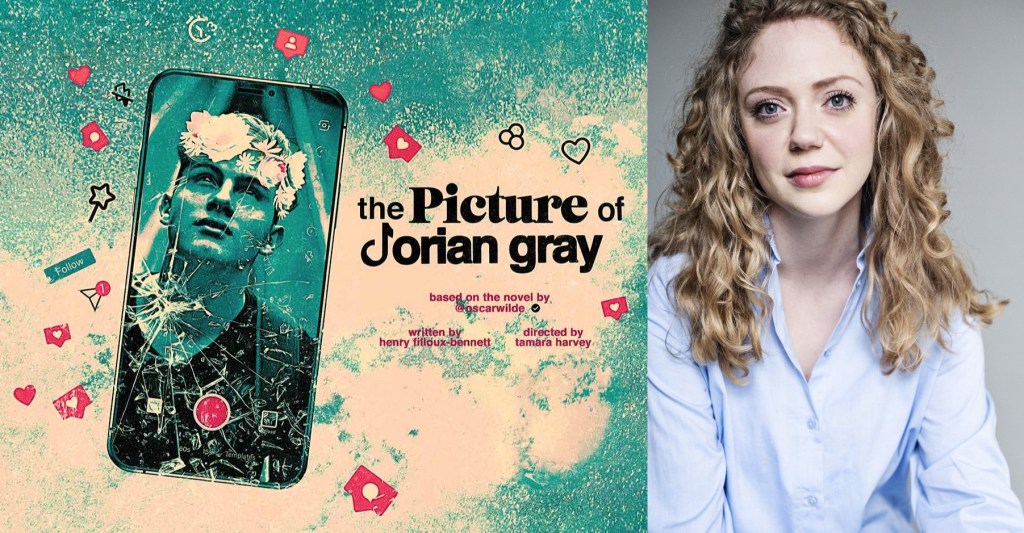
Here, she talks to us about the traineeship; her involvement in Clwyd’s latest production, The Picture of Dorian Gray; a collaborative project with the North East Wales archives*; and representation and the arts in Wales.
To find out more about The Picture of Dorian Gray, including how to purchase tickets, click here.
*Below is one of four videos produced by Theatr Clwyd in collaboration with the North East Wales Archives as part of the project ‘Women Rediscovered…’. To watch them all, click here to access their YouTube channel.
Originally conducted and published on Get the Chance on March 21st 2021.






 desperatelylostcity.com