One of the privileges in discovering new artists is witnessing their progression from early single releases to a later, more refined sound. Over the course of time, the raw material with which they start out matures into something that comes to represent their core identity. And it is this identity, once found, that allows them to stamp their unique contribution onto the world of music, with the confidence that they are being truly themselves. So it is with The Rising, whose journey over the last few years has been on a broad path, encompassing a breadth of genres, all of which have gone into making a sound that is truly theirs. There is no compromise on their latest EP ‘No Hope Without Love’. Instead, it features a wonderful blend of country, rock and pop elements, none of which seek supremacy but compliment each other beautifully.
The opening track ‘You Had It All’ contains a recognisably country-pop sound with a definite Lady A influence. The drums, evident throughout, create a catchy beat which, when joined by the guitars, especially in the chorus, makes for a really enjoyable listen. This continues into the second song on the EP, ‘Bruise You Left’, though the pop production is more evident. There is a flavour of Taylor Swift, from the ‘Red’ era, here, with Chantelle’s vocals proving adept at conveying both the heartbreak and acceptance that come from a failed relationship. It is a theme that seems to be ripe for exploration within UK Country right now, with Daisy Chute (‘Secondhand Heart’), Eleri Angharad (‘Blank Walls’) and Liv Austen (‘Don’t Regret a Single One’) all reflecting on how “the bruise you left will always hold up”, and how we might respond as a result.
The EP takes a rockier route with its third track, ‘Break the Chains’, a protest song about the events witnessed in the media in 2020. Given the racial injustice, climate crisis and populist politics that are no doubt included in this definition, it is perhaps no surprise that the lyrics call for a heaviness in the music to rouse the listener to action. It is certainly anthemic in tone, with the line “a sign from above/ there’s no hope without love” being particularly pertinent; challenging and inspiring at the same time. ‘Highway to the Lost & Found’ then turns the volume up further, with full on rock ‘n’ roll that encases reflections on life as an independent musician. It is very reminiscent of ‘Road I Call Home’ by Elles Bailey, the lively and dance-worthy music hiding a darker story of the physical and financial challenges of life on the road. The only thing that’s missing is a bit of piano, Jerry Lee Lewis style, the inclusion of which would ensure The Rising had a real hit on their hands.
The EP ends with a reimagined version of ‘You Had It All’. It is much more reflective than the original, with the piano accompanying the beautiful tones of Chantelle’s voice to deliver a solid ballad that again showcases the variety of The Rising’s sound. It seems that they can turn their hands to anything, though their choices are deliberate and play to their strengths. They certainly seem to know what those are now and are reaping the rewards. ‘No Hope Without Love’ feels like a statement of who they are. It marks a turning point in which The Rising go from potential stars to established act on the UK Country music scene. They are now most definitely ones to watch.
The EP is due for release soon. Meanwhile, click here to discover more music by The Rising.
Originally written for and published on Belles & Gals on24th September 2021.
Jess Setterfield has gone straight for the honesty button with ‘Bruised and Burned’. She hits one of country music’s hallmarks with this, her debut single, about a failed relationship that was her own. It is full of sadness in the genre’s own inimitable way, expressed touchingly through such poetic lyrics as “I’m holding onto broken pieces/ wondering why I’m still bleeding” and “I just want to be home/ but the house is ash and broken glass”. You can really feel the desperation in her words and their delivery at holding onto something that has already gone. The sense of hurt is alleviated only by the up-tempo chorus which blends pop production with the more recognisably country introduction. It leads to a sound akin to that of a Kelsea Ballerini or Liv Austen, placing Jess in the realm of candid yet catchy country-pop. ‘Bruised and Burned’ is certainly this. Reflective, emotional; a strong first single.
Originally written for and published on Belles & Gals on 8th September 2021.
If there was any doubting the strength of the UK’s country music talent then this year’s British Country Music Festival set the record straight. Back in Blackpool’s Winter Gardens after a two-year hiatus (for obvious reasons), the three-day event was a brilliant showcase for both established and emerging talent. There was plenty to enjoy across the three stages, from the acoustic sets in the Pavilion to the full-band experience in the Ballroom. And although slightly strange to be in a room full of unmasked people again, it still felt spacious enough to not be overwhelmed by the situation.
In fact, walking into the mid-sized Arena, to find Jack and Tim opening the festival, was not as daunting as I thought it was going to be. Perhaps it was the subdued lighting, the amiable atmosphere, or just the physical experience of being in a room with live music after so long; but whatever the reason, it felt rather homely. And with the blues/soul of Eddy Smith and The 507, the Irish folk/Americana of The Remedy Club, and the country/pop of Juna N Joey, I soon settled in.
Such diversity, even among these first four acts, was picked up by the Main Stage Host, Matt Spracklen, over the course of the weekend. The Absolute Country Radio presenter was full of admiration for the array of acts on display, highlighting the breadth of the scene, whilst also lauding the depth of the talent contained within it. Nowhere was this more evident than on the opening night, with Kezia Gill kicking things off in impressive style. Her powerhouse vocals, especially on songs ‘The Mess I Made’ and ‘Whisky Drinkin’ Woman’, could have filled the cavernous Ballroom ten times over. She truly is a class act, and surely a future headliner.
Whether her vocals burst an eardrum or not, it was difficult to engage in Holloway Road’s set. It was hard to hear the lyrics, especially during the first half, though their brand of country hip-pop seemed to go down well with the revellers at the front, preparing them nicely for the party atmosphere that came with Nathan Carter. The Irish superstar was on top form, transforming the Empress Ballroom into a rocking nightclub with country covers, including ‘King of the Road’ and ‘The Gambler’, and original hits ‘Temple Bar’ and ‘Wagon Wheel’. These latter songs definitely brought the house down after almost an hour and a half of shaking chandeliers and reverberating floorboards. His set was a complete delight.
I entered the Arena on Saturday lunchtime to discovered the lush tones of Demi Marriner. It is a name familiar to many at Belles & Gals but, to my own shame, this was the first time I’d actually heard her. And my immediate reaction was, “Where have I been?!” She is such a talent, and it was particularly special to hear the song ‘Mother’ being played in such an intimate atmosphere. I then hopped over to the Pavilion to support someone who I am much more familiar with: Eleri Angharad. The Swansea-based singer sprung a beautiful surprise though with acoustic versions of ‘New Sin’ and ‘Delete It’ from her latest EP, as well as an endearing version of Coldplay’s ‘Viva la Vida’. It was then back to the Arena to experience the almost uncategorizable sound of Robbie Cavanagh, whose song ‘Love Comes Quickly’ I had been looking forward to finally hearing live. And it was as tender as I’d hoped it would be.
Hayley McKay provided some lovely easy listening tunes for a late lunchtime, with ‘I Miss You’ being a particular highlight, before Jess Thristan took to the stage for her debut full-band show. Having been lucky enough to see her festival debut at Buckle & Boots back in 2019 with an acoustic set, I again felt honoured to be witnessing one of the UK’s brightest songwriting talents sing live. Including ‘The Old Me’, a personal favourite, she delivered a gorgeous half hour of music that was greatly appreciated by an adoring crowd. It set me up nicely for a trip back to the Pavilion for a Songwriters Round featuring Elles Bailey, Pete Riley, and Wildwood Kin. All three delivered spine-tingling moments that made it an hour to savour, their rapport between one another and with the audience full of good humour and generosity. ‘Halfway House’ (Elles), ‘Odd Shoes’ (Pete), and a never-before-heard song, ‘Sunrise’ (Wildwood Kin) were the best of an outstanding bunch of songs that could only have been followed by the kind of beautiful harmonies that Rosso produced. Still relative newcomers on the UK country scene, the Coventry-based duo seemed to hit a chord with festival-goers. And with their delightful mix of Celtic folk and Southern US sounds, it was not hard to hear why. New single ‘Found’ is well worth a listen, and ‘Pray’ is a beautiful country song. As is ‘Telephone’, one of a number of new, as-yet unreleased tracks from Bryony Sier. The Welsh singer was fantastic; far more self-assured in her performance than when I first saw her two years ago. And she has every reason to be, not only winning the crowd over with her bubbly personality but a set of songs that demonstrated real authenticity and her superb guitar-picking skills.
Another act receiving the credit they deserved were Morganway, showing again why they are considered one of the best live bands on the circuit. The vocals of SJ Mortimer have not diminished over lockdown, contributing to an electrifying performance that culminated in extended applause from a crowd who then got to witness another star in the making. Bailey Tomkinson has already received widespread recognition, not least from Brad Paisley. And her songwriting skills were evident in a 45-minute set that gave us a real flavour of her country pop-infused, rock-tinged sound. She is bound to be where Katy Hurt was in a few years’ time: opening the second night of BCMF in style. Katy’s stock as one of the UK’s top country acts is fast-rising. And in this, her first full-band show in 18+ months, you could sense her delight at being in front of a live audience again. Her performance was a pleasure to behold from my position at the front of the stage, with plenty of new material showcased, including already-fan favourite ‘Sounds Good in a Bar’. She really rocked out in this opening slot to make it sound good in a Ballroom too, preparing the way nicely for Elles Bailey, who blew the roof off with a super-charged set of incredible Blues. From the front, it was simply electric. Her band are a hugely talented bunch and her vocals are breath-taking. She is always worth seeing live, as are Wildwood Kin. They may have brought the temperature down after the heat generated by Katy and Elles, but their harmonies were as exquisite as ever. The Empress Ballroom was the perfect space to host their hauntingly-beautiful vocals. The set didn’t feel as free-flowing as some over the weekend, perhaps because Emily’s guitar gave up the ghost halfway through. However, covers of ‘Dakota’ and ‘Higher Ground’ got a decent response from the crowd. Meanwhile, ‘Time has Come’ and ‘Taking a Hold’ dealt a strong finish to day two of the festival.
Tim Prottey-Jones did his best to get the crowd going as they ambled in for the final day. His trademark good humour was peppered throughout, bringing a slight irony to what was a strange time for his set. It would have been enough to wake up the sleepiest of late-night revellers though, ‘Exit Wounds’ transforming the Ballroom from a hallowed hall into a rock venue. ‘Better Than This’ ensured an explosive start to a Sunday morning that then featured Americana/Roots band Fine Lines and perhaps the most traditional country act of the weekend, Martin Harley. He brought a lovely blues-infused sound to what was by now a generally subdued auditorium. There was a definite end-of-festival feel to the laid-back crowd, who seemed much quieter than the previous two days. It just so happened that this space created the perfect mood for what was to come though.
Candi Carpenter, one of only two US acts on the bill, and playing only a limited number of shows in the UK, came to the stage with just a guitar and a head full of songs. She left the stage an hour later to rapturous applause and with a new legion of fans. It takes something special to occupy such an expansive space and make it feel like the most intimate setting. Candi achieved that with one of the most incredible acoustic sets I’ve had the pleasure to witness. It is no wonder that the likes of Dolly Parton and Brandi Carlile rate her so highly. Her honesty and vulnerability shone through in songs as diverse in their subject matter as ‘Sex, Drugs and Country Music’, ‘Exorcist’, and ‘Skinny’. Such deeply personal experiences, introduced in good humour, and told with such passion and poignancy, seemed to strike a chord with those listening, and will surely do so with countless others once her album is released, as the queue to meet and greet her afterwards was still going strong at the end of Lisa McHugh’s closing set. McHugh, for her part, did what she does best: put on an entertaining show to bring down the curtain on this year’s festival. She did so with a real mix of country covers, Irish-flavoured country tunes, and modern sound sounds. The final song, Shania Twain’s ‘I Feel Like a Woman’, had the crowd bouncing along to ensure that proceedings ended as they had started on Friday night.
Never mind the future. The present is bright with UK Country Music talent.
Originally written for and published on Belles & Gals on 7th September 2021.
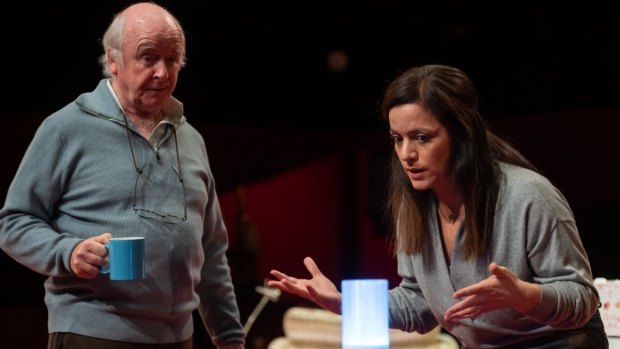
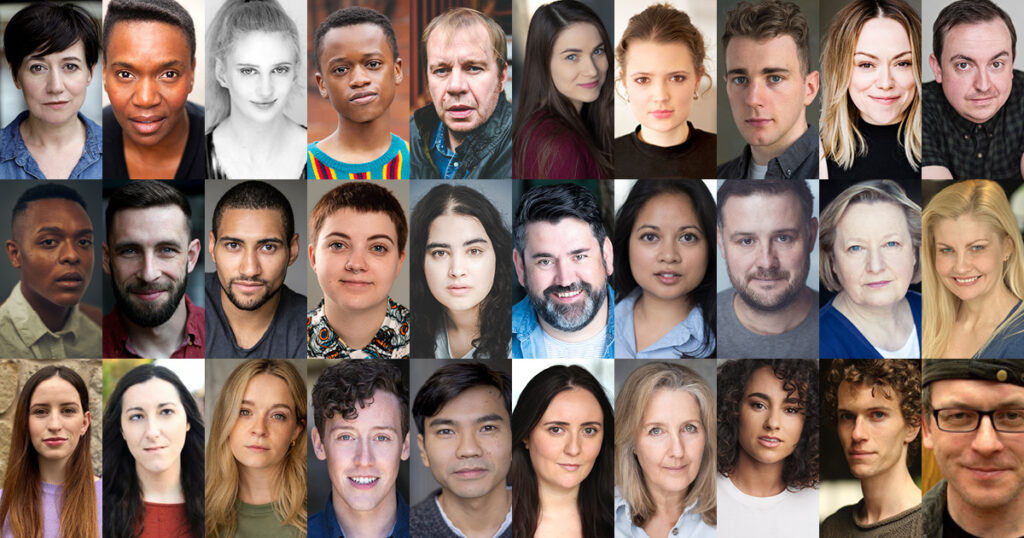
Curtain Up is a celebration. It is a celebration of creativity, imagination and Welsh talent. Over three fun-filled weeks, it has been the setting for a series of short plays that have all taken the notion of play to heart. And where better to host this menagerie of pure ingenuity than Theatr Clwyd. It has certainly delivered on its aim to make the world a happier place one moment at a time. Coming out of conversations with creative freelancers, Curtain Up has given writers the time and space to write again, actors the chance to perform on stage once more; and allowed stage managers, lighting technicians, and sound operators, to name but three, to return to what they do best. It is a reminder to all of us of the power and wonder of live theatre.
Oat Jenner’s smile said it all. It was the widest of smiles among the 10 actors taking part in the final week of plays. It seemed that he couldn’t contain his delight during both Normal Day and Seen, expressing the same euphoria felt by so many after so long. No wonder the excitement in the room was palpable. The opportunity presented to the audience at the start of the night, to choose which props would feature and who would play who, only heightened the sense of anticipation*. And with each week’s performance, the cast and crew delivered. It may not always have worked – the Cadbury’s Milk Tray in Kristian Phillips’ Trwsio: Repair was ripe for comic exploitation but came over rather dead in what was an otherwise touching story – but when it did, it produced chaos aplenty (see Sion Pritchard’s inventive use of a skipping rope in Just Another Blue Marble and the hilarious water spray face-off in In the End). Such fun.
There were moments of real depth alongside the humour. I found The Order of the Object by Lisa Parry to be a fascinating critique of both the religious and the secular; Jennifer Lunn’s Stop the Drop a deftly comic analysis of political power and influence, steeped in contemporary irony; and the symbol of a child’s pink and flowery wellington boot to be a potent symbol of subversive oppression in Alun Saunders’ Beginnings/Dechreuadau. It was left to Thieves by Mali Ann Rees to reduce me to tears, in a moving story of love, friendship and loss that was brilliantly written and wonderfully acted by Catrin Mai Edwards and Miriam O’Brien. Meanwhile, David Bower’s performance in Seen by Katherine Chandler was utterly mesmerising. What a storyteller he is, working his magic alongside Chloe Clarke in a tale of online dating, belonging, and love. And the improvisation of Sian Reese-Williams and John Carter in Life 2.0 was a masterclass, making it seem as though the prop chosen by the audience had been theirs to rehearse with all along.
To choose a favourite among this smorgasbord of 15 plays would be like picking your favourite child. They were all so very different, ranging from the virtual (The Ongoing Eternal Search for ‘Da’) to the real (Letting Go). The inclusion of the Welsh language in and amongst them was great to see, the surtitles accessible and undistracting. The way that they were weaved into Mari Izzard’s The Ongoing Eternal Search for ‘Da’ was cleverly done; and they held extra poignancy in Beginnings/Dechreuadau whilst adding superbly to the realism of Trwsio: Repair. If there was one play that really struck me though, it was Nine Point Two Minutes by Ming Ho. It shone a spotlight on some of the pressures of the healthcare system and its effect on both doctors and patients. It was so effective that the sense of injustice apparent in Ho’s narrative, pressed home through the fragility and passion of Llŷr Evans and Anita Reynolds in their roles respectively, was impossible to miss. It was but one of many highlights over the three weeks of Curtain Up.
Curtain Up has been the perfect opportunity to revisit the theatre safely again after lockdown. It has been an enjoyable pilgrimage to Theatr Clwyd every Wednesday night for the past couple of weeks for a fabulous evening of entertainment in the company of some of Wales’ finest. Its success must surely pave the way for similar shows in future, if only to continue supporting the very best in the nation’s emerging talent both on stage and off. I will miss this weekly trip to the theatre on a hill. But I am grateful to director Tamara Harvey et al for making it a return to savour. The words from Finding Your Feet by Samantha O’Rourke feel like the most fitting to end with here. They seem to sum up what has been the overwhelming response to Curtain Up from both creatives and audiences alike: “Thanks for being here. Thanks for listening. It means a lot”.
*This review is written in response to the Wednesday night performances over the production’s three-week period. Therefore, references to certain props and actors are made accordingly.
Originally written for and published on Get the Chance on September 6th 2021.
In this latest interview, I chat to Welsh singer-songwriter Eleri Angharad. It takes place in the form of a podcast, the third in a trial series in conversation with Welsh creatives. Eleri talks about her new EP, Nightclub Floor, as well as Swansea’s music scene, songwriting, her creative journey as a musician, and Welsh identity.
Katy Hurt is back with new music, and it expresses much of what we’ve been through over the last 18 months. ‘Face to Face’ is an ode to that universal feeling of separation and need for connection that we’ve all experienced, in different ways, throughout the pandemic. The line “We’re supposed to be closer than ever before / but somehow we’re further away” is a beautiful summary of the tension between hardship and hope; of being grateful for the technology to keep in touch but longing for that physical contact that cannot be replaced. You can feel the emotional pull as Katy sings so poignantly about a desire to see family, friends and fans again, against a backdrop of nostalgia-fuelled instrumentation. It is baptism by full immersion into traditional country music with a 1940s Vera Lynn touch.
The opening thirty seconds of gentle acoustic guitar, the introduction of gramophone-evoking vocals, and the gradual fade out at the end make it feel like a journey through an old technicolor movie soundtrack. Not to say that there isn’t a contemporary feel a la Kacey Musgraves, with the delicacy of ‘Dandelion’ and the atmosphere of ‘Golden Hour’ coming through. As such, ‘Face to Face’ is escapist without being escapism. It is a track with lyrics that are relatable and music that is otherworldly. Katy Hurt once again manages to surprise and delight with music that touches the heart even as it takes you out of yourself. Another tender tune from this shining star.
Originally written for and published on Belles & Gals on August 25th 2021.
Curtain Up is a celebration of creativity, live theatre, and Welsh talent.
Over the course of three weeks, three companies, comprising of ten actors each, will perform 15 new plays – five each week – by 15 Welsh playwrights. That’s 15 voices with 15 very different stories to tell.
Associate Director Francesca Goodridge took some time out of her busy schedule preparing for week one to tell us a bit more about this exciting new project from Theatr Clwyd.
How would you describe Curtain Up?
It’s like a conveyor belt of theatre. So we start week one with a group of ten actors who work on five new plays, about 10-15 minutes long each, written by five playwrights who were specifically commissioned for this project. They have one week of rehearsals, one week of tech, and then open the following week. Meanwhile, during their tech week, a second company of ten actors come in and start rehearsing another five plays, with the third group of ten actors coming in to rehearse another five plays a week after. So that’s 15 new playwrights that have been commissioned for a project involving 30 actors in total.
How did the idea first come about?
It was borne from a series of conversations that Tamara (Artistic Director) and Liam (Executive Director) were having during lockdown with freelancers. They just asked, ‘What can we do to support you guys? What do you need?’ and the general consensus was that creative people can only live when they’re being creative – we’re just such strange beings, aren’t we, that nothing else really feeds our soul – and so Tamara and Liam came up with this concept, this conveyor belt of theatre, which allows us to give as many freelancers as possible the opportunity to be creative. It gives 15 writers a paid commission to write something after what might have felt like an age; to write something that is going to be seen, and hear people saying their words. It gives actors a space where they can just play and learn lines and be silly again. And it allows design, stage management, lighting, all of these freelance jobs, an opportunity to use their craft again after so long; to be creative on a huge scale.
And I’ve heard there is an opportunity for the audience to get involved as well…
So not only do the audience have the opportunity to see five new plays each week but the really good thing about Curtain Up is that an audience member can come every night and see something different. We’ve cast it in such a way that two actors learn every role, and at the start of the show we “rock, paper, scissors” it to see which actor will do which show that night and what part they are going to play. (So that’s the fun and excitement we’ve really been missing; the chance to not just be creative in rehearsal but for that to still live and breathe in the production.) Also, the writers were asked to include an unspecified prop in their play so the actors don’t know what that prop will be. The audience chooses the props at the start of the night and the actors are only handed the prop as soon as the play starts so there’s some improvisation: they have to react differently, which can change the course of the play. It’s all about having spontaneity again and feeling that excitement of live theatre. Every night is super-charged because things change, props change, the costumes change, an actor might do the scene opposite one actor one night and then do the scene opposite a totally different actor the next, so every night it’s something different.
Has it felt like an explosion of creative energy being back on stage after so long?
I think everyone has felt the same, me included. On day one, going into a rehearsal room and thinking, ‘Oh my gosh, can I even do this anymore? I haven’t done this for so long. Can I still do this?’ But I feel so lucky right now to be sat on a stage, and it’s the same for the whole company, not just the actors but stage management too, to be able to do the things that we love and we’ve really missed. I think an explosion is a great way of putting it because I think that’s what it will feel like every night. It is going to be different; and I think, in a world where nothing really feels steady at the minute, it’s kind of nice to have that little bit of tension on stage as well, that little bit of no one knows what’s going to happen, and the excitement and energy that comes from that.
Was it a conscious choice to perform the plays in the round?
It was a conscious decision because it’s about bringing people together again and, ultimately, the reason why this project is so special is because we aren’t flying in sets or have a huge budget. What is at the heart of it is storytelling and actually hearing stories again, which is what I’ve missed so much. I think being in the round is so much like sitting around a campfire and telling a story – that is where we come from and how we tell stories. It also allows the actors to have real fluidity. They can move; and with it being double cast, it opens the space and it becomes like a big playing field for them. We want the audience to feel like they’re in this bubble and to feel like we are all united again in being together.
How important do you think it is that there is such a diverse range of writers with such a diverse range of stories to tell here?
You can’t tell a story the same, and what is so exciting about this is having five stories from five writers with five different backgrounds – totally different people, totally different identities, with totally different upbringings, from totally different homes – so every single play is different. One of the plays is set on a spaceship, for example, and then for another we’re in someone’s living room. And that is the beauty of theatre: that we are transposed from place to place and we totally believe that. It’s so imaginative.
But though each of the play’s are different, each of the five writers was given a theme – so the first one is new beginnings, the second is finding feet, and so on – so that every night has got an arc that will take us through the night. So although the audience will see five different stories each week, they will have gone on a journey on the night through these themes. And to add to the diversity, we have some Welsh language stories too, which was a bit of a logistical challenge to make sure that four of the actors were Welsh speakers, but it’s been really great to have these Welsh language plays as well and to have Welsh language theatre included. I know that this was one of the most important things for Tamara and Liam, to make sure that it was truly diverse and was championing many different voices in Wales.
How excited are you about the writing talent coming out of Wales at the moment, and the opportunity that something like this affords them?
The thing that excites me most is working with a writer and sitting down to work on a new play and having that seed of an idea and seeing it through. It is one of the best things in the world. But aside from these sorts of opportunities, what Curtain Up has done is given 15 people a chance to write – how many of these writers may have come out of lockdown and lost their love for it, or not had the opportunity to do it, or were working elsewhere and had no time to fit it in – so as much as it’s about wanting to commission new writers, it’s also about giving people time and space to just write, without them feeling like they have to come up with anything. Yes, this is a commission, but more than that it has given them a bit of time and a bit of space to just do what they love. If that then ignites something in them to then write something else, great. But it’s about letting people have time and space to just do what they love without having to produce something all the time; where there’s no pressure to write. That’s hard when it’s something you might be doing alongside another job because you need to live. So, yeah, I think more of that would be great because that is where some of the best work is made, when there’s no pressure to have something in by a deadline, as you can make what you want when you have time and space.
The new single from Daisy Chute is terribly beautiful. ‘Secondhand Heart’ could be described as a tragic love story, told in the most delicate way. The strings of the guitar are plucked so gently, Daisy’s vocals meandering alongside them so naturally, as to give the track a dream-like quality. Snippets of jazz and touches of classical composition combine to add to this otherworldly feel. One can really sense the mystery, the risk at the centre of this song’s story, of embarking on a new relationship but carrying into it the baggage from previous ones.
There is a genuine touch of fate about it all, as Daisy laments that “we’ve met before and loved before and lost before today”. As much as the soundscape captivates, the lyrics plunge one into the despair, contained in the lines “right from the start/ my secondhand heart/ tore us apart”. It is heart-rending stuff, conveyed in exquisite fashion. No wonder the accolades keep on coming for Daisy. If ‘Secondhand Heart’ is this good, then her upcoming EP ‘Songs of Solace’ is sure to be pure gold.
Originally written for and published on Belles & Gals on 6th August 2021.
Caitlin Mae is like a phoenix rising from the ashes on her debut EP ‘Perspective’. The Welsh artist has laid bare her pain and anguish over four tracks but has also introduced hope and healing into them too. Therein is contained a heady mixture of raw feeling and mature reflection as Caitlin looks to exorcise the demons of her past through acceptance and change. The EP feels like a form of therapy as a result.
Opening track ‘Country Eyes’ contains a cleverly-written chorus that captures a real sense of despair; though ultimately, in the bridge, it is tempered with hope. Even the fiery and vengeful anger of ‘Gasoline’, underscored by heavy rock, feels like a form of release. The line “I ain’t gonna stick around to punish you myself” is the epitome of this. Such a decision – to stop wasting time putting out someone else’s fire and instead, channelling one’s energy into something positive elsewhere – holds much merit. It also represents the central theme of this EP: letting go and moving on.
‘Take My Demons’ may shift gear temporally, tonally, and musically from the previous two tracks. However, contained in Mae’s high, almost strained vocals is again this sense of journeying from one state to another. It is displayed most completely in the line “rising from your hate/ I build a better fate”. The light synth and RnB vibes may work to understate the story being told here. On the other hand, they accentuate a quiet resilience forged in the midst of suffering which builds character and hope. This is not to be underestimated.
It reveals itself most wonderfully in the final track on the EP, ‘Slam the Door’. There are echoes of early Taylor Swift in both its sound and storytelling, demonstrating the real potential for Caitlin Mae to grow into an accomplished musician. The line “darkness very rarely wins” sums up beautifully the overarching feeling on this record. It is one of many instances where Caitlin Mae’s lyrical ability can already be seen to be blossoming. In fact, this is probably her greatest strength. She tells her story, her truth, so honestly and unapologetically that her experience has the power to positively affect the listener. It does so in such a way that ‘Perspective’ becomes a kind of serenity prayer, as Caitlin Mae comes to accept the things she cannot change, courageously changes the things she can, and demonstrates the wisdom to know the difference. Watch her soar in popularity with this EP as a result.
Two of my screenwriting heroes went head-to-head a couple of weeks ago. On BBC1, the master of social realism, Jimmy McGovern, brought us the incredible Time; and on S4C, thriller-extraordinaire Fflur Dafydd gave us the heritage-crime drama Yr Amgueddfa. The former may have been getting all the plaudits but the latter has not been without its supporters. The most prominent, Russell T Davies, has been shouting about it in the Radio Times no less. And deservedly so. For Fflur Dafydd has again created a drama that is well written, intricately woven, gradually builds tension, and offers plenty of twists and turns.
At first, it appears that Della (Nia Roberts) is the main character in the show. The opening scene sees her deliver her first speech as newly-appointed Director of the National Museum of Wales. The focus on her and her family gives the impression that these characters are going to be the bedrock of the series. And in some sense, they are. All have their own intriguing storylines that help flesh the drama out, making it a patchwork of stories that all, somehow, end up connecting as the series progresses. But the appearance of a mysterious young man called Caleb (Steffan Cennydd) in the grand entrance hall of the Museum in those first few moments, and his obvious attraction to Della, acts a bit like a red herring as, far from being the antagonist, he emerges over the course of six episodes as an empathetic protagonist.
It is testament to the clever writing of Fflur Dafydd and Steffan Cennydd’s subtle performance that Caleb is imbued with an ambiguity that keeps the viewer guessing his real motives throughout. One minute he appears vulnerable and fragile; the next, suspicious and manipulative. He seems to be seducing Della at one point, earning her trust to gain access to files from the Museum. Then, at another turn, he seems genuinely in love with her and self-loathing in his actions. Dafydd really plays with our perceptions of the character, as she does with so many here. This is what she is best at: subverting our expectations and playing with the objectivity of truth. Cennydd, for his part, ensures that this is achieved through minimal expression that is precise in its execution; and a deceptive amount of flat emotion that keeps us wondering who he is and what his intentions are.
Nia Roberts may be formidable in the role of Della, but it is Cennydd as Caleb that emerges as the most fascinating person in Yr Amgueddfa. It may not be as high-octane as its sister production, Y Llyfrgell, but it is as absorbing in its mystery and suspense. The fabulous sets and expansive scenes may have been a result of Covid protocols but they also give the impression of a sleek and modern Wales that is far removed from the rural stereotype. Fflur Dafydd has again collaborated with producer Paul Jones to create a series that is full of colourful characters, none of whom are wasted, all caught up in their own well-written subplots that gradually feed into the grand narrative. It has clearly struck a chord with viewers given its extended run on Clic and BBC iPlayer. So if you haven’t seen it yet, make it a priority for your summer viewing. You won’t regret it.
Originally written for and published on Get the Chance on July 20th 2021.