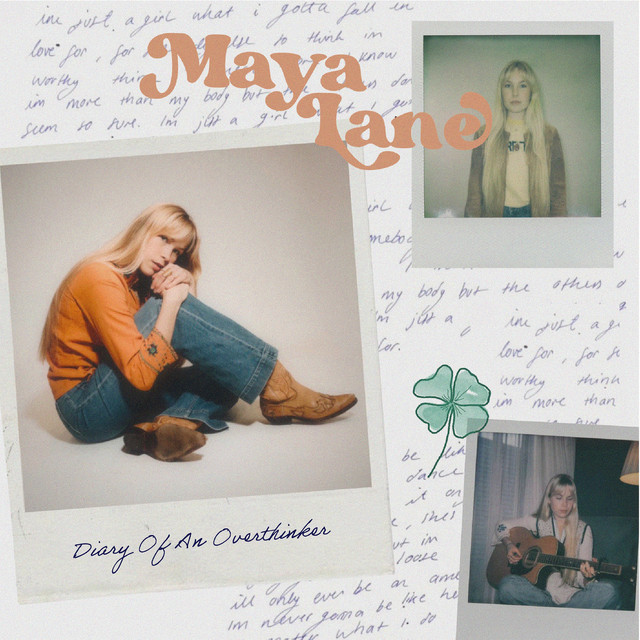
Taking a leaf out of Maya Lane’s book requires introspection and vulnerability. On ‘Diary of an Overthinker’, she opens up all of the pages to expose her deepest self. The result is an EP filled with wisdom, understanding, and acknowledgement of what it means to be human.
The precedent is set right from the opening line. “Me and my ego are falling out” encapsulates a highly original perspective from which to tell a story of a fraught relationship. ‘Bump Into Me’ contains various contradictions which brilliantly demonstrate the inability to escape the self. Add in a soaring pop production which enables a transcendental quality and the song carries with it a relevance that has the power to affect the listener greatly.
‘Heart for a Heart’ changes tack somewhat, not only in its Americana-style performance but in its thematic resonance. The first of two songs to tackle the issue of heartbreak, it is a revenge song of dramatic consequence. “I’ll follow you home with my lights turned off / and if you’re not alone I don’t think I’ll stop” darkly captures the extent of the hurt wrought in the protagonist that now wants to be let out. It is a far cry from ‘My Friends Were Right’ – a sad and fragile statement whose electrifying chorus consumes the central point that “I’m never going to get love” in this relationship. Despairing acceptance of the situation reigns here, as it does to some degree on ‘Never Be Like Her’. Except comparison is the source of such wrenching emotion. “No matter what I do / she does it better” is as helpless as it is hopeless. The Dido-like sound only contributes to its despondency.
The acoustic rendering of ‘Just a Girl’ belies its disruptive ability. Forget the opportunities for heartbreak mentioned earlier and instead grasp at the possibility of wholeness as an individual. Heteronormative coupledom is replaced by the genuine question “what I gotta fall in love for?” Each line delivers a soft but significant blow to the evangelists of romance; the rustic quality of the chorus assuring and assertive. In contrast, ‘Four Leaf Clover’ holds onto uncertainty, wrapped up in a dreamy piano and bouncy percussion. They speak to a more positive outlook for the future in spite of the hesitancy of the present.
This is what makes ‘24F’ a most suitable ending. For the self-examination within at the start of this EP now happens without. A sense of perspective from above is given which takes life as a whole, with “all the little mountains climbed / and all the lows that made the highs”. When it was originally released as a single, I wrote that “her upcoming EP is going to be one that will speak rather deeply into the hearts of those who listen”. What is perhaps more endearing is that she has delved deep into her own in order to do so.
Her unashamed exploration of humanity from a personal level, complete with thoughtful lyrics and carefully-crafted musical choices, makes ‘Diary of an Overthinker’ (without overthinking it) one of the best EPs of 2024.
Like what you read? Support me in supporting the work of artists and creators by donating to my tip jar here.
Walking into Strawberry Fieldsand hearing Motel Sundown sing about Memories, Dreams and Reflections felt a bit like a sign. I had been regrettably late up to that point, thanks to Sunday afternoon traffic and cancelled trains. But then to catch such a chorus floating on the breeze as I ventured into the place made famous by The Beatlescaused a rethink. For their words made me think back to the journey I used to do to Calderstones Park, just over the road, every week for a time. And with it a sense of gratitude that I had been able to retrace my steps. To take again the number 86 bus to Allerton Road and walk up to The Reader before carrying on to this newly-discovered destination.
Suddenly, the calm serenity of the place washed over me, along with the harmonies that Motel Sundowndeliver so well. My fifteen-minute delay then paled into insignificance and I was caught up in their tender and percussive musical style, thankful for the opportunity to simply be here as the memories continued to swirl. The trio always remind me of Fleetwood Mac. Listen to ‘Waterfall’ for instance and there are definite echoes of ‘Landslide’ within it. And as Robert Johnson’s harder vocal meets the softer sounds of Karen Turley and Naomi Campbell on ‘Eldorado’, comparisons with The Wandering Heartscome instantly to mind. Their set is over far too soon, completed by the slightly ironic ‘Winter Sun’, on a glorious June day in a chilly, shady clearing.
If any of the hugely appreciative crowd were finding it cold then Katy Hurt’s brand of Country-Rock was just the antidote. ‘The Kiss’ is very Shania in many ways whilst the cameras pointed and a few heads started to bang once ‘Revved Up’ got going. ‘See Ya Later’ offered a barnstorming finish to the afternoon but not before some of her more thoughtful songs commanded attention too. Upcoming single ‘Oh Girl’ was a beautifully reflective ballad, all the more so in such an intimate outdoor space as this. Meanwhile, ‘Unfinished Business’ held its usual spine-tingling poignancy, even as it held new meaning for me, causing me to shed a tear beneath the tall trees swaying over an empathetic sun.
For their first foray into one-off events, Black Deer Live seem to have struck gold. With plenty more to come right across the UK, this appears to be an exciting next adventure, branching out from their annual Festival walls. And as they look to new horizons so I looked back on those memories, dreams and reflections that began earlier in the day. To consider how far I’ve come in the last few years. To remember how anxious I was when first coming to Calderstones. And how attending live gigs like this has become such a natural and pivotal part of my life.
I came for the music but it seems Strawberry Fields wanted to give me something different and unexpected.
To find out more about Black Deer Live and their planned shows over the course of this year, click here.
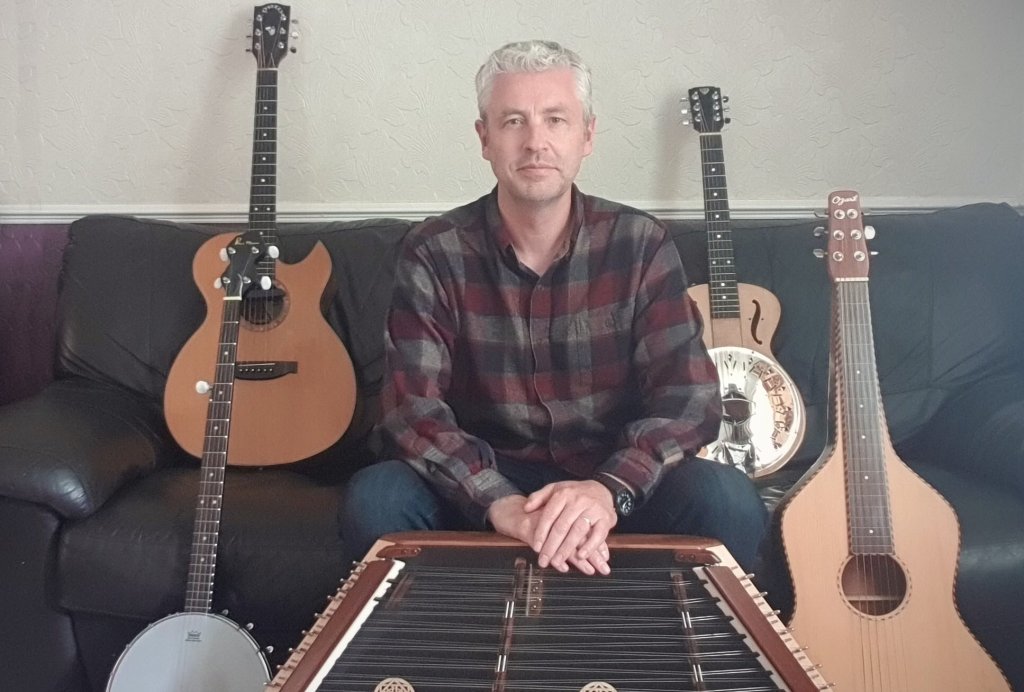
‘Family’ is the rather apt title of David Woodman’s latest album. The accomplished strings player opens up this theme to encompass all kinds of permutations on a record that feels both inclusive and encouraging. Whether relationships, friendships, acquaintances, or strangers together through circumstance, the songs here all speak back to a foundation of love on which these connections rest; without which the definition of family could not truly exist.
The title track opens up proceedings and borrows Christian images to disrupt the traditional notion of what the definition of family is. To “make room at the table… breaking bread and sharing wine” is most obviously a reference to the Eucharistic idea that all are welcome as brothers and sisters to partake in the same meal. Such a gathering does not in itself constitute the notion of family however. Woodman immediately diverts attention the other way for ‘Get Away’. Here, the emphasis is on breaking free of familiarity and close bonding because “when everyone knows your name / it’s hard to start again”. Family is as much an expression of release and letting go as it is that place of protection and safety. Love affords this sense of freedom in order to discover if “tomorrow can be better than you know”, while at the same time existing in the kind of stable and steady relationship talked about in ‘Seasons’. After two tracks where the strings flourish, the delicate simplicity of this arrangement offers a touching moment of reflection. Here, love is hard won and continues to grow in spite of the challenges which, even in the face of a more stereotypical family set-up, still exist.
‘One More Reason’ faces trials and difficulty head on from a different perspective. It offers support and encouragement on a very basic level, and with a great degree of relatability, becoming a friend in the face of anxiety. ‘Stay Strong Our Kid’ does similar, powerfully presenting its central point of defiance through playful piano and sympathetic guitar. In between, the gently sweeping Folk of ‘Flying Solo’ contrasts with the thrusting beat of Blues-based ‘Rolling Down This Road’. Only the romantics can relate to the former’s parting of ways for a period, whereas the latter speaks universally of life as a journey, which for most often feels like “rolling down… a narrow way”.
The Tim McGraw-esque ‘Be Human Be Kind’ draws beautifully on human fragility to inspire us to “be the reason someone smiles”. Such a gorgeous message deserves valued listening, and is followed by a banjo-busting double consisting of a hymn-like instrumental ‘Around the Fire’ and bluegrass ode to ‘A Simple Life’. The final track, ‘The First Step’, completes this uplifting collection, with a push to “walk the talk” after having “been too long standing still”. Its closing instrumental feels emblematic of the start of this journey towards action, motivated by a desire to stop being a passive spectator to hopes and dreams and begin chasing them instead. Such words might be spoken by David Woodman the musician but, if they become the reality by which we as listeners then live, he becomes to us a representation of the kind of family of which he speaks. A family to which we can all belong.
Never has an album title been so succinct in summing up what it’s all about.
You can order ‘Family’ by David Woodman on his BandCamp page here. It is set for release on June 28th 2024.
Like what you read? Support me in supporting the work of artists and creators by donating to my tip jar here.
Our Atlantic Roots have dug deep into the heritage of their Cornish home for ‘Memories Live On’. Their fourth EP is firmly rooted in the English Folk tradition, steering them away from Americana towards a homegrown sound. Opening track ‘Medhel an Gwyns’ epitomises the rootedness of this latest offering, famed for its inclusion in the BBC’s Poldark series. Unlike Eleanor Tomlinson’s version though, the duo present a far more wistful interpretation, captured particularly in Laura’s vocal and the lullabied strings. Such a gentle arrangement continues into ‘Can You Hold Me’, a genteel romance into which the seasons are descriptively weaved, and ‘The Place I Call Home’, a solemn ode to “the land where we belong”.
It is clear from the ethereal nature of these songs that Our Atlantic Roots have drawn from the deep well of their county’s past. The delicate strum of the acoustic guitar and pungent pressing on the fiddle are both effective in conjuring up a sound that evokes their South Coastal location. They also ensure that the title track is uplifting even as it is haunting. Both inject a sense of hope into its theme of timelessness; a theme that veers away from a sentimentality that could easily have clouded the idea that “memories live on / long after we’re gone”. Such heartfelt emotion echoes through to the final track ‘Cornwall My Home’. Written by Harry Glasson, it has been covered by many, but perhaps not with quite such soulful and tender intent. Their approach causes the chorus to be even more arresting than it already is; patriotic but without being pretentious. When they sing “this is my Eden… / this is my home”, it is evident that the landscape has carved itself into their hearts. This is where they belong, and the result is beautiful to hear. A love letter in musical form.
You can purchase ‘Memories Live On’, along with two of their previous EPs, from their online store.
Like what you read? Support me in supporting the work of artists and creators by donating to my tip jar here.
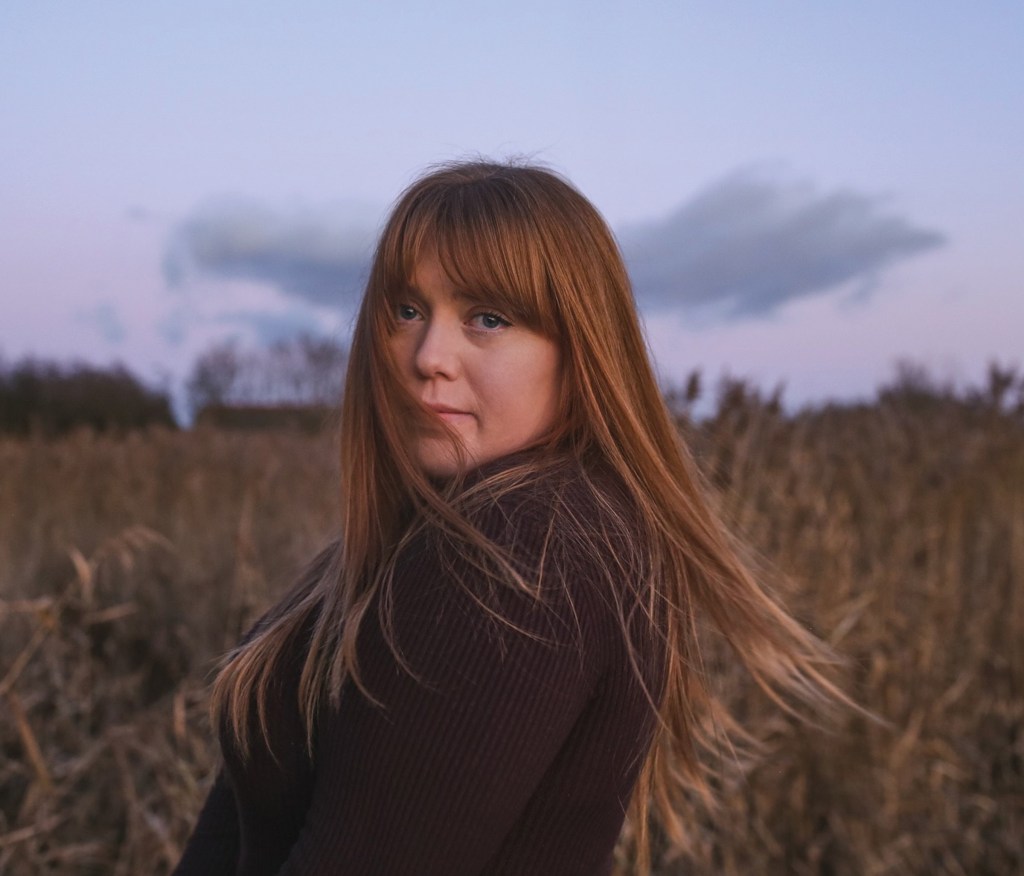
‘Brace for Impact’ is the slightly deceiving title of Rebecca Hurn’s debut album. For the Welsh singer-songwriter performs in a musical style so soft that any oncoming collision does not necessitate the kind of tense response usually reserved for such a warning. Not that the songs here are without emotional impact. But encased in mainly acoustic, guitar led Folk means that, when coupled with her mellifluous vocals, their lyrical content is delivered with a subversive punch.
Opening track ‘Gave Up Giving’ is a case in point. From its big, bold opening, Hurn presents a dramatic storyline tinged with melancholy and regret. “I grew up giving myself away” is the hinge from which a protectionist stance emerges, growing from lost friendships and broken relationships, which eventually leads to stolen happiness when a moment of hope shines through. It is a really tragic story but told through a tender composition that proffers easy listening over sympathy-inducing sentiment.
Even ‘Seventeen’ and ‘Constellations’ curb the capturing of perfect moments in idealism. The return to innocence is a longing for those “sunburnt summers” and “that gold rush” but without the mushiness that normally accompanies such wishes. This is deep and heartfelt for Hurn, whose steadfast presentation allows her songs to become genuine experiences instead of Disneyfied scenes. It means that the delicate expression in ‘Turbulence’, for instance, affords the literal a metaphorical slant, which in turn commentates on the mindset of the anxious in a really relatable way. All the while that signature Folk style remains unwavering.
It continues into ‘I Don’t Mind the Rain’, a gentle dance around words that soar with burgeoning love, and ‘I Just Don’t Love You Anymore’, where that love turns sour and truth is “screamed so loud till he’d listen”. Again, the irony is that even in rage Hurn remains level-headed; with vocals light as a feather though the lyrics weigh heavy with hurt. She has a similar style to ELERI on Earthbound: a South Walian wistfulness that is quietly captivating. None more so than on ‘The Night We Stole the Moon’, where the harmonising produces a very visual effect.
The album culminates, in my opinion, with ‘Paper Town’. I say this because the two “acoustic” versions that follow don’t really add anything substantially different to their original counterparts. And also, because the line “I’m nobody’s fool” is perhaps the most forthright and forceful on the whole record. If everything leading up to this has been the ‘brace’ then this song certainly feels like the ‘impact’. But in true Rebecca Hurn fashion, it’s transposed into a soothing soundtrack that belies its resolute message.
It may be her debut but Rebecca Hurn already sounds like a seasoned storyteller. ‘Brace for Impact’ is surely an indication of her inevitable rise onto the UK Country/Folk scene.
Like what you read? Support me in supporting the work of artists and creators by donating to my tip jar here.
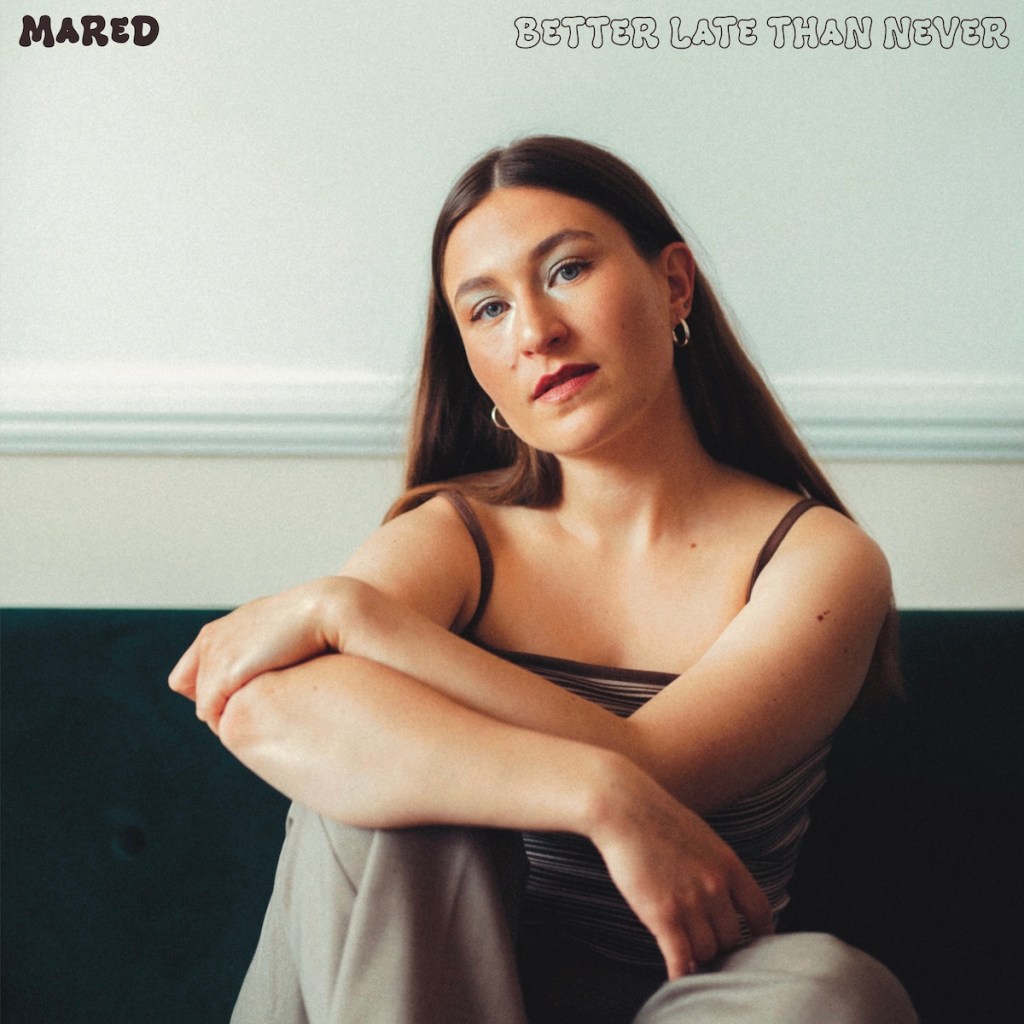
The release of ‘Better Late Than Never’ was ironically well timed. For there was no better sound to accompany the Northern Lights than Mared’s latest record. The Welsh singer-songwriter presents a suitably expansive soundscape; with sweeping melodies, soaring vocals and carefully-crafted rhythms running through a mix of pulsating electronica, fragile folk, and lightly-dusted pop. As with her single ‘December Blues’, there lies a combination of rural and urban influences: the acoustic guitar simultaneously elevated by an electro-pop production and matched by an intimate style of storytelling. Much like the colours of the Aurora Borealis, the five tracks here all blend into a beautiful array of honest and heartfelt moments, dancing across a sky of vulnerability. It is an EP grounded in reflection, ideal for looking up into a universe of possibility to try and make sense of broken friendships and passing love. In the midst of doing so, a dynamic energy surges through the music which, no doubt inspired by her musical theatre background, takes each song to the verge of a greater narrative. As such, ‘Better Late Than Never’ distils the experiences of Mared’s recent life into the kind of captivating display witnessed in the weekend of its release. An enchanting and entertaining record which deserves high praise.
Like what you read? Support me in supporting the work of artists and creators by donating to my tip jar here.
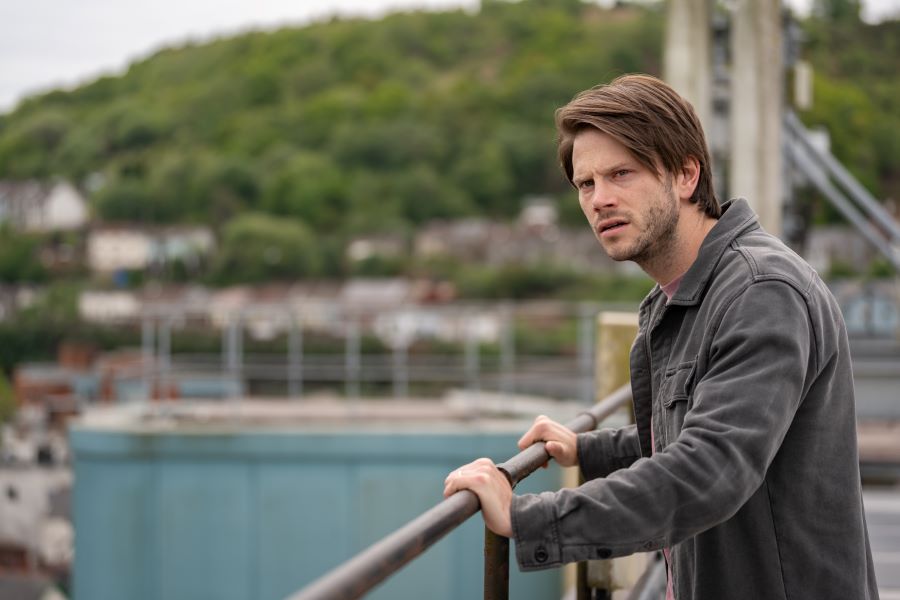
I can think of many television dramas which feature mental health as a theme or part of a storyline. But to have it at its core makes Creisis a rarity. The facts which appear at the end suggest that it’s grounded in real-world evidence. The complexity of the protagonist Jamie’s journey over the course of six episodes points to a verisimilitude that takes no shortcuts. This is public service broadcasting at its most powerful and important: informing and educating through entertainment to shed light on an experience in an authentic and engaging way.
Gwydion Rhys embodies his leading role with a stereotypical form of masculinity in which cracks are slowly exposed and the façade gradually crumbles. He confidently addresses the camera in a gracious nod to Anfamolin the opening episodes. But these become few and far between as he turns from explanatory narrator into observed patient. The subtlety with which the audience gaze changes to focus more intensely on his own mind forms part of the potency which gives Creisis its cutting edge. And as it does, the line between imagination and reality, truth and fiction, becomes cleverly blurred. Before this, there is a gradual but increasingly noticeable descent, with clear effects on his family, neighbours and colleagues. The glass shards which disseminate his body in the title sequence come to be prescient in more ways than one. This really is an examination of the ailing mind.
Wife Janette is clearly long-suffering but also devoted. Sara Gregory plays her with strong will entwined with compassion. Line manager Huw (Arwel Gruffydd) is mixed with similar: a serious exterior masking a soft inner soul. There is overwhelming concern from all his fellow staff members which dissipate their quirky mannerisms once Jamie is brought into the Mental Health Unit not as an equal but under their care. Head of Service Natalie (Hannah Daniel) is the only one who is close to being a two-dimensional character. Daniel displays a villainous intent that contributes to Jamie’s state of mind to the extent that she almost becomes a caricature. Even best friend Barry, who is not quite what he seems, is granted emotional versatility by Alex Harries in order to illicit both sympathy and anger from the viewer. Meanwhile, Melvyn and Mary offer light relief through their sweet relationship marked tragically by dementia. Wayne Cater and Rhian Morgan may be part of a subplot but contribute beautifully to the whole with performances that are suitably ordinary and, as a result, wonderfully apt.
What seems to drive Jamie is a desire to fix things, including people. He is chaotic, innovative, reckless and passionate in his attempts. But in the end, he must acknowledge that he is broken himself, in part because he believes that he could and should have fixed another. Grief is both the cause and effect here, revealed in such myriad ways within the context of everyday lives that it touches on some form of accuracy. Not that experience can be boiled down. But in the individual story lies something of the universal. This is what Creisis seeks to capture, and it does so rather well. Mental illness is taken seriously and is never curbed by expectation. Including in its finale, when instead of the usual heartwarming finish, it introduces an open-ended curveball that continues its commitment to realism.
There is much to learn and appreciate here. Creisis demonstrates the art of skilful and well-researched writing to make this one of the best explorations of mental illness in modern television.
The premise of Mammoth is far-fetched. But go along for the ride and this Welsh sitcom doesn’t disappoint. More funfair than theme park, its zaniness takes time to get used to. Once in the flow of Mike Bubbins’ world though, there emerges a strange empathy for his protagonist, resulting in a desire to return for more. It is a shame then that three episodes is all the BBC could muster.
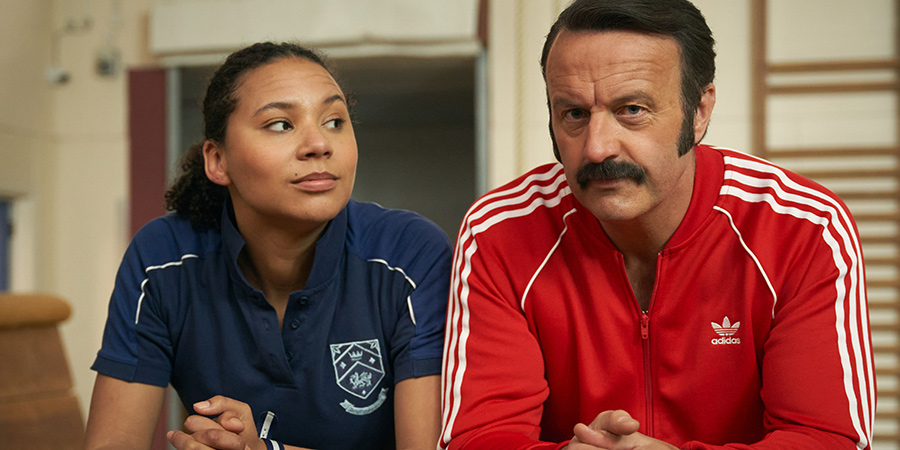
The first episode is a whirlwind narrative. If the task was to squeeze in the life and times of Tony Mammoth in 25 minutes then it succeeds. But not without its fast pace feeling like a rush job. We go from his resurrection on the side of a ski slope, after being buried for 40 years underneath an avalanche of snow, to his reappointment as a PE teacher at Nowlan High School in the blink of an eye. Add in the quirky comedy and it’s possible for all this to be taken with a pinch of salt. It is not until the revelation, at the end of the episode, of Sian Gibson’s doting and overprotective parent as his daughter, that the programme settles and gains traction. Episode two certainly feels more stable even as the humour remains offbeat.
Most of the laughs arise in the dissonance between Mammoth’s 1970s worldview and the liberalisation of a 2020s UK. He is a boozer, pipe-smoker and womaniser, in a world no longer chugging back beers or treating women as objects. He struggles to come to terms with the fact that his boss is not only a woman but a lesbian too. Mali Ann Rees is suitably dismissive as Lucy, despairing in his attempts to connect with out-of-date references and inappropriate behaviour. She is the straight woman to his not-so-wise guy, a partnership that works and even finds slight affection blossoming between them by the end of episode three. Gibson, for her part, delivers an enraged performance opposite Bubbins’ calm exterior which also leads to funny moments filled with fondness. One cannot help feeling for Mammoth even as his views verge from the baffling to the squeamish. In this regard, he follows in the footsteps of other self-absorbed but strangely-lovable male leads, from Glyn Tucker (The Tuckers) to Ben Harper (My Family) and Victor Meldrew (One Foot in the Grave).
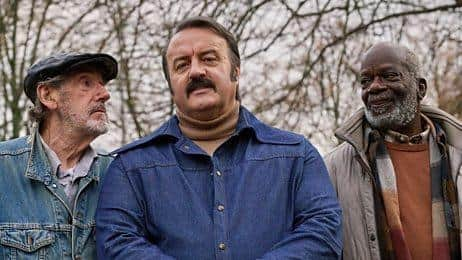
For so short a run, this sitcom is awash with verbal and visual tropes. Always playing with the generational difference, it is often the simple exchanges that invite the biggest smiles. The fact that he says “over” at the end of each correspondence at the drive-thru, he gives a pupil “10p [to get] a Marathon from the tuck shop”, and plays music to his class via a tape recorder all add to the ambience with charming effect. Then there’s the playing of “Burn Baby Burn” at his friend Barry’s funeral, giving a rabbit CPR on a wellness retreat, and riding into a café on a horse for daughter Mel’s birthday, that make his world peculiarly comical. It is not without its touching moments though. When fellow friend Roger (Joseph Marcell) poignantly sings the theme tune to Blankety Blank before he scatters Barry’s ashes, the tragedy of the situation is deeply felt, even as it remains absurd.
The ending is a good one, hopefully indicating at the promise of more. For most sitcoms take a while to get going and hit their stride. Mammoth is no different. Mike Bubbins has created a prime candidate for a great British sitcom character. There is enough here to warrant further. It may be odd but it is likably so. Hyperbole at its finest.
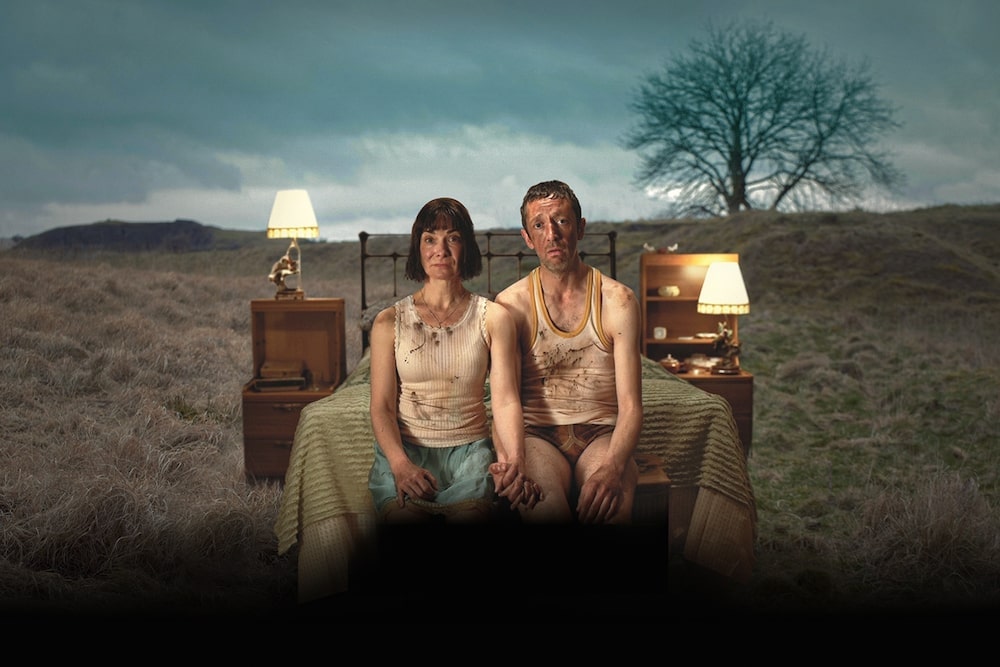
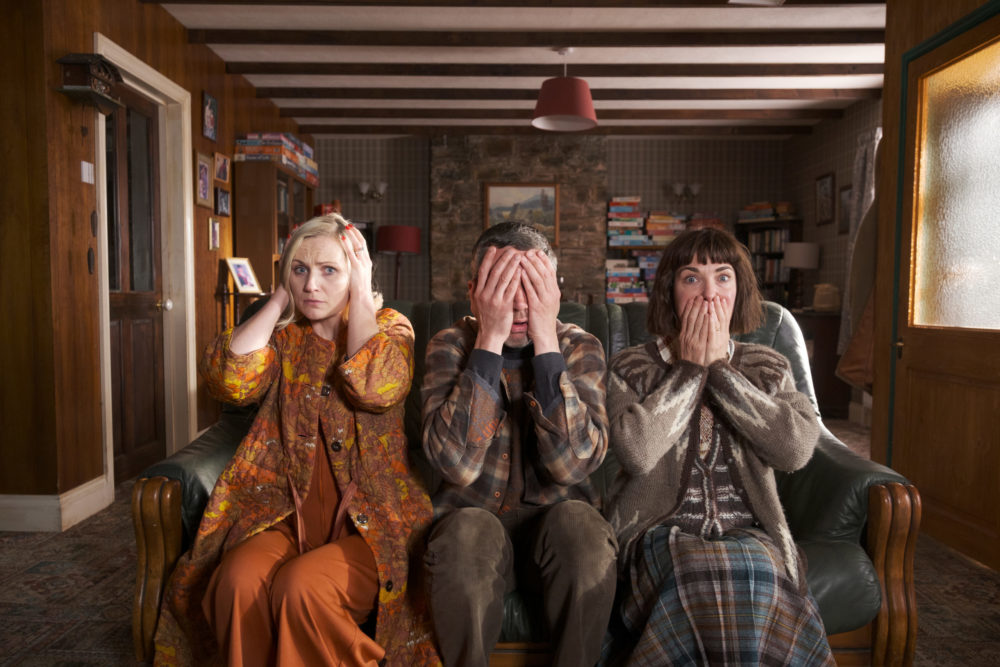
“Hell’s Bells” is the phrase that sticks from Pren ar y Bryn / Tree on a Hill. “Bingo” too. Both are utterances of Clive, a quirky character, played by Rhodri Meilir, who is representative of this offbeat drama. Filmed in Welsh and English, the former went out on S4C around Christmas whilst the latter appeared on BBC Wales from Easter. And though both are fairly similar, there is something about Cymraeg that offers an eccentricity not quite matched in its Saesneg counterpart.
Right from the start, the programme is off-piste. The presence of a model village is symbolic of a dream-like quality that permeates into the lives of Penwyllt’s real-life inhabitants. The brass and percussion instruments of the soundtrack, resembling arhythmic, improvised jazz, add to its oddness with their chaos. It is at once tragic and comic – a duality that runs through the series like a winding river. The titles are reminiscent of a B-movie; and indeed, complete with the music and faded colour palette, could have easily come from the 1950s. The addition of a rather outlandish murder plot and several strange occurrences mean that, in some ways, Pren ar y Bryn / Tree on a Hill is quite unique in the contemporary TV landscape.
Ed Thomas
It would be no surprise to find The Singing Detective as an influence upon the creators of this drama. It is certainly very different to the more serious and sombre work of producer Ed Thomas (Hinterland, Bregus). Here, he takes the elements of a classic whodunnit and turns them inside out. He borrows from the absurd of sitcom, the emotion of kitchen sink drama, the aesthetic of arthouse film, and even a little from the genre of horror, to create not just a narrative but a whole world that is strange and surprising, silly and sinister. Meilir, for his part, brings a wide-eyed innocence to his role. Deadpan, emotionally understated, yet physically expressive alongside Nia Roberts, who is beautifully awkward as his wife Margaret. Richard Harrington is perhaps the only straight-talking member of the cast as Glyn, the catalyst on which this fabulous yarn unravels. Yet even he is used in a subtle exploration of mental illness that comes to define most of the characters here. Themes of loneliness and change and liberation all feature in a drama that is both brilliantly barmy but with surprising emotional depth. A dead body in a basement freezer is the best description (without giving too much away) of its sliding scale between the ordinary and surreal.
Watch Enid a Lucy, Dal y Mellt and Y Sŵn, even The Way, and you will find a penchant for the off-kilter, ironic, and darkly comic in Welsh drama. The spectral and otherworldly nature of realist pieces like Parch, Yr Amgueddfa and Gwleddalso feel very representative of a certain aesthetic that continues into Pren ar y Bryn / Tree on a Hill. Such ingredients somehow work better when the Welsh language is weaved into them – something in its rhythm and pace and tone that differs from the English; that contains a sense of mystery and magic that forms part of the nation’s identity. In which case Pren ar y Bryn is recommended as the preferred watch. Though Tree on a Hill doesn’t miss out on so much that it can’t be just as enthralling.
Click here to watch either series (Welsh or English) on BBC iPlayer.
Originally written for and published on Get the Chance on 20th April 2024.
Everyone has a song that means something to them. And for me, ‘My Church’ by Maren Morris is one of those songs. It has followed me for the best part of almost ten years, and recently I have had cause to reflect on how its informed my relationship with faith, religion, spirituality, and music.
I remember where I was the first time I heard it: sat at my desk scrolling through iTunes. I can’t remember what songs I was downloading at the time but I noticed the title of this one and clicked to take a listen. I’m not sure what I was expecting but what I heard deeply impacted me in a moment. After that, I couldn’t get enough of it. I’ve always thought there’s something about stumbling across a song that you never intentionally searched for, but that speaks to you when you hear it, that makes it extra special. That was certainly the case with this song, which I’d discovered before it became a hit, so the idea of coming across it “by accident” is a phrase I can never quite believe.
‘My Church’ played into a melting pot of songs that I was discovering as part of a new wave of Country Music. ‘Nashville (Grey Skies)’ by The Shires had lifted the lid on what has become a passion for the genre back in 2014. At the same time, ‘Follow Your Arrow’ by Kacey Musgraves had become a song fueled with encouragement against a heart of low self-esteem. And ‘Something in the Water’ by Carrie Underwood gave fresh expression to a Pentecostal-soaked faith that had become burdensome and was in some ways without a home. Then came Radio 2‘s pop-up station, dedicated to Country and broadcasting live from C2C. That weekend, in March 2015, is self-described as “my Country Music conversion”. Even then, I was using religious language to describe my experience. So when I heard ‘My Church’ for the first time, it is perhaps no surprise that it struck a chord, and became both a lens through which to interpret and a place from which to dialogue with my own Christian faith.
Following its release as part of her debut album ‘Hero’, ‘My Church’ came to act as a lovely (perhaps even necessary) counterpoint to my relationship with the institution of the Church. I had for a long time found myself uncomfortable with the evangelical environment in which I had become and grown as a Christian. There was a black-and-white certainty, a conservative conformity, and a culturally-restraining cloud that hung over my spirituality when I was in a church environment. This was largely separate and disconnected from my lived spirituality outside of it, which on the one hand expressed much greater freedom but, on the other, I was having a different struggle with – namely to communicate and even name it as “Christian” for fear of rejection, mockery or fierce criticism.
Into this context dropped Maren‘s song, which seemed to be able to hold both facets of my spiritual person in tandem. It forged a sort of middle way that took the language of Christianity and the experience of listening to Country Music and melded them together to articulate a very personal perspective on faith. I could relate, for I too felt that there was a judgemental attitude in church in contrast to the liberating lyrics of Country Music’s emotional honesty. The Holy Spirit was present in my listening to ‘Wild Silence’ (The Wandering Hearts) as much as in the middle of worship during a Sunday service. Still today, my soul is sometimes revived in quiet contemplation; sometimes by putting on a Tenille Townes record. ‘My Church’ captured something of what was going on in my heart; some kind of answer to a question with which I’ve always wrestled: Is the power of art evidence of God at work?
This relationship between religion and spirituality, faith and music, art and God, would feed my interest to such an extent that, when the opportunity arose to write about it as part of my Masters degree, I chose to undertake a lyrical analysis of ‘My Church’. What I found, without going into too much fascinating detail, was a dynamic, fluid, yet coherent religious experience – a form of “lived religion” made up of “a specifically Christian morality and a sacramentally-functioning country music”, to use my exact words. I look back on that essay fondly and still think it has something important to say. It made me fall in love with the song even more, and I wonder whether there is some unfinished business in the realm of Country Music and contemporary faith to explore. Above all else, it gave legitimacy to my interactions with God through music, which in turn allowed my faith to retain some form of life at a time when it could have easily died such was my frustration with the institutional side of the Church.
By that point, in 2019, I had spent the best part of two years exploring a sense of vocation. This was initiated off the back of a few conversations with people who had seen in me a calling to ministry, which they had interpreted as priesthood. The problem was that I had never felt the same, and so I’d been grappling with what God might be saying, all the while fighting off those who just wanted me to fit into a neat conformist box, without ever throwing in the towel and walking away entirely from what was fast becoming an assured Anglican identity. The turning point for me was in my conversation with the Bishop in early 2020, when in his wisdom he identified, out of all this information and my passion for the arts, the role of a Deacon, a position that I had never heard of before. But the more I looked into after, the more it seemed to fit, as if made to measure, not only capturing everything that I had been thinking and saying but representing something of who I was as a person.
I’ve often thought that ‘My Church’ came to lie fallow during this period. But as I reflect on my journey towards becoming a Deacon, in those strange two years of COVID lockdowns, I wonder whether actually its influence had been implicit throughout. For a Deacon is described as being a bridge between church and the world: an in-between existence, if you like; residing in a liminal space where boundaries are blurred. And at the heart of ‘My Church’? A song that mentions the institution but opens up the possibility of faith beyond its walls. A third way, if you will, which is often the hardest to walk. Another reason why this song has been such an encouragement down the years. For not only in faith but life am I a person whose natural position is to sit on the fence, consider both sides, and then offer an invitation to “meet me in the middle”. I quote another of Maren‘s songs here deliberately. For though the context of ‘The Middle’ is a domestic dispute, the act of negotiation, or mediation, that it seeks in the aftermath is a loose metaphor for attempts to (re)connect and dialogue with typically-patriarchal institutions.
This thought crossed my mind recently whilst reading ‘Her Country‘ by Marissa R Moss. There is something in not only Maren‘s story but Kacey‘s too, about rebelling against the norms of Music Row in order to remain true to self, that inspires my own walk with God in the shadow of the Church. To those inside the institution, I am always having to justify myself as a Deacon. They don’t get it. They don’t understand it. And so their reaction is to ask that repetitive question, “Have you thought about going all the way?” A reference to becoming a priest, as if my current existence is somehow forever lacking. Or their response is more subliminal, assuming a priestly bias that leads them to utter phrases that homogenise and exclude. I’ve even had a run-in with one of the “old-guard” recently, for want of a better phrase, who tried to fit me into their own understanding and judge me accordingly. I was surprised by my own resilience in the face of their underhanded criticism. But sometimes, it feels like it would be a lot easier to simply follow the crowd.
This is why I love Maren Morris. It’s why I love Kacey Musgraves too. For despite the pressure to conform, they don’t. Not for the sake of it but because their wish to be authentic wins out. They are not willing to compromise if it means their ability to be honest will to some degree be curtailed. It strikes me that as I write this I’m also reminded that Jesus too refused to obey the rules. He was exasperated at religion that had become devoid of spirituality and consumed by power. Tradition used to control rather than serve. At present, I find the way of the world defines success by way of attaining positions that confer legitimacy; targets to be met that are quantifiable and meant to be publicly celebrated when achieved. In this context, ‘My Church’ has become part of a wider counter-cultural message for me. Because “I don’t want to be a part of the good ol’ boys club”, to quote Kacey. I just want to try and serve out of a place of love and creativity.
Not that I haven’t critiqued some of the lines in ‘My Church’ which don’t quite tally with my Christian belief. Most recently, “I’ve fallen down from grace / a few too many times” has been counteracted by those of ‘From the Inside Out’ by Hillsong. “A thousand times I’ve failed / still your mercy remains / and should I stumble again / still I’m caught in your grace” reminds me of God’s unconditional love and unrelenting grace in a way that matches my own rather than Maren‘s experience. Yet when frustrations bubble, my identity challenged, or temptation knocks at the door, “I [still] find my soul revival / singing every single verse” to songs often from the world of Country Music (and sometimes beyond) too. It may not be what the purists want to hear. But I find, at this complex intersection of faith, music, religion, creativity, and spirituality, that I am most fully alive. ‘My Church’ reflects something of that experience, and will continue to contribute and speak into it for many more years to come, I suspect. At the same time, it joins so many other influences that sometimes compliment, sometimes contradict it. But they all amalgamate into something, in the end, resembling my authentic, lived experience. “Can I get a hallelujah [and] amen” to that.









 desperatelylostcity.com