The new single from Helen Maw feels like a fitting companion piece to her debut album. The hinge on which she now pivots. For after “distilling her emotions” in ‘Growing Pains’, ‘The Moment’ is that decision to let go and move on. It continues her penchant for soulful storytelling. But it’s the guitar rather than piano that takes centre stage. Andy Down’s effective noodling creating a sense of closure that feels right. Maw has arrived at the end of one chapter and beginning of another, where “there is nothing left to say”. The point at which, on this Country-tinged track, she grasps the future with a quiet optimism. And continues, in her performance, to enchant.
Having come to associate Rebecca Richards with the Country ballad, ‘Aces are High’ shoots across to the other end of the spectrum. Her new single is more ‘Goodbye Earl’ than ‘Wide Open Spaces’. With plenty of electric guitar to boot. Telling the story of how one woman overcame a violent and abusive childhood, the song is as visceral in its narrative as it is harrowing. The theme of domestic abuse looms large. Its consequences sad and painful. But even as her mother and sister don’t make it out alive, “through sheer determination… I became the woman my daddy would hate”. In the end, the protagonist wins out in dramatic fashion. The impassioned music coming to represent a victorious cry without ever losing a sense of heartache. Her “retribution” undertaken with all of them in mind. ‘Aces are High’ is, by any standard, a classic Country revenge song. But it’s also, to give Rebecca Richards credit, a very well-written and executed one too.
‘Aces are High’ will be released on the 31st January 2025 and will be available to listen to via Spotify and other music streaming services.
Katy Hurt is becoming adept at soundscaping. Carving out a liminal space into which she deposits her emotive lyrics. In her new single ‘Seasons’, they set sail on a sea of frank honesty. Inviting the listener to explore feelings of change, uncertainty and inevitability, against a vivid backdrop of abstract Folk/Pop. As with ‘Oh Girl’, there is a complexity to the human condition which is captured not only in the words but the accompanying music. Katy lays out her experience with all the vulnerability of the acoustic guitar. Her self-expression open to identification whether in part or in full. Either way, life is no longer to be considered as a linear journey but, for better or worse, a cyclical process, in which “I go round and around and around… just like the seasons”. The song’s mystical ending capturing a dual sense of freedom and insecurity, acceptance and pondering. A more familiar state of being than we perhaps care to admit. But Katy does, and with genuine heart.
Demi Marriner is a consummate storyteller. Aptly titled ‘The Things I Said’, her latest EP offers up a coherent narrative of relationship breakdown and the complex road of building oneself back up. It is an emotional journey – of anger, heartbreak, turmoil, and freedom swirling in a controlled musical storm. The emphasis on acoustic guitar, the sparsity of accompaniment, and the use of highly-expressive vocals, feed in to a story in which the protagonist has reached the point of no return. It’s time to break the cycle. And the fallout is not without its wounds.
This is encapsulated in the opening track ‘Repeat Refrain’. A bit like ‘Patterns’ by Kelsea Ballerini, it offers up a deep awareness of the need to change. Not for its own sake but because the relationship, in this instance, has become problematic. Agency is lost and self-worth questioned as “You plant me like a flower / Watch me bloom / Then show me off / making out like it was all down to you”. The lines are clear and punchy throughout, combined with moments where the drums and strings ring out, to symbolise the reaching of a limit that then plays out in ‘Need to Know’. “A powerful ultimatum”, as I described it in a previous review.
Both tracks are full of sound that demands attention. Reflective of the need for an answer in the latter’s case. The foot is down and the cards are on the table. The result is an achingly heartfelt response. ‘Stop. Pause. Rewind’ captivates in a different way. With short, sharp lyrics in an acoustic setting that renders the fallout as tragic, hurtful and damaging. “What have you done to me?” is the piercing question, that has led to “six months in therapy” and more beside. No wonder there is an urgency to ‘Sound the Alarm’, before a return to the bittersweet with ‘Some People’. The cello of Isabel Williamson lifting the sadness like a sunset beneath grey cloud.
‘Seize the Day’ has much more of a punch. It comes with a certainty that what is lost has enabled what’s been found. The electric guitar of Joe Coombs deals up confidence in a decision to leave, mirrored in the lines “you’re the earthquake to my solid ground”. It may be a small detail, but the line “words unsaid / now look where we are” highlights a nice thread which connects this EP to her debut album, ‘The Things We Didn’t Say’. With closing track ‘Forgiveness’ leaving the door ajar for further exploration. Its delicacy proffers a delightful release. Its words honest. Its heart true. This is what makes Demi Marriner such a master of her craft. And why, as we enter into 2025, she is more in demand as an artist than ever.
You can purchase ‘The Things I Said’ via Demi’s online store, along with some very artistic pieces of merch, including prints and t-shirts, here.
Featured Image (C) Demi Marriner / Miles Myerscough-Harris
The scream of Noddy Holder is as synonymous with Christmas as mince pies and fairy lights. It is also emblematic of the chaotic and wild excitement of the whole song. So Katy Hurt‘s version of ‘Merry Christmas Everybody’ is a refreshing take on this British classic. Through the gentle meandering of an acoustic guitar and the soothing sound of the pedal steel,the tempo is brought right down. Vocals are lusciously brought to the fore to tell a story hitherto secondary on Slade‘s original. We might know the words but here Katy makes us feel them. The result is akin to her post-pandemic single Face to Face – the same intimacy, atmosphere, and elegance. With Two Ways Homeadding an extra layer of sophistication. The perfect soundtrack to a Winter’s evening.
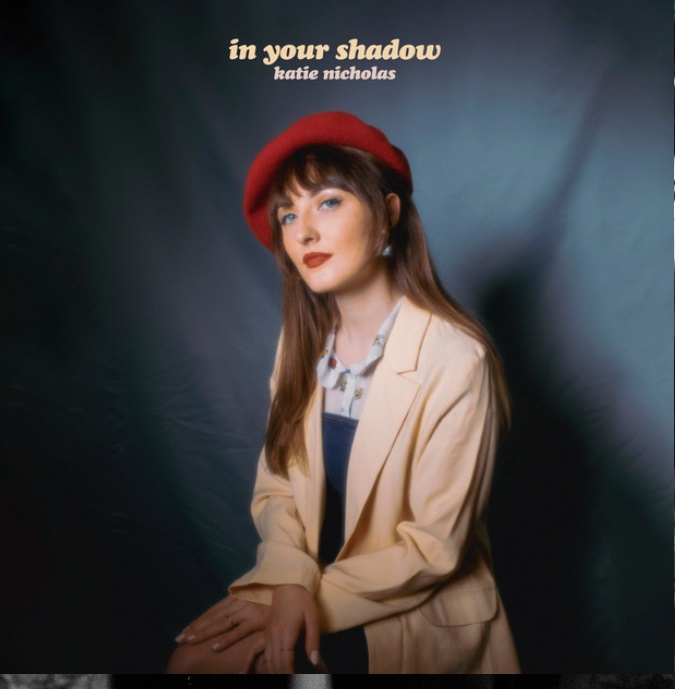
Ghosting, aloofness, deceit. All themes that spring from Katie Nicholas’, Katherine Priddy’, and Demi Marriner’s latest singles.
‘In Your Shadow’ is the first. A melancholic tune from Katie Nicholas that could easily have featured on her ‘Feather’ EP. With a heady mix of vibrant strings, they communicate the vulnerability of one who loves but is not loved in return. A narrative which expresses hurt in a very poetic way. None more so than in the line “My treasure left the map / and he went cold”. Heartbreaking in the most beautiful of ways. Not that sadness dominates, as Chris Hillman’s pedal steel and Isabella Baker’s violin crescendo to an emotional release tinged with freedom. Joined by a lovely la-la-la melody of such pleasant subtlety that Katie delivers the final chorus line with quiet confidence. No longer haunted by “the boy who doesn’t call”.
‘Close Season’ is the second. Here, Katherine Priddy prefers a potent collection of percussion to present the hurt and frustration felt at someone who is emotionally distant, even coercive. In a particularly evocative second verse, the drums come to symbolise the contempt of this person, whose disinterest in the other is damningly expressed in the understated lines, “He looks over my shoulder / if I pick up a book”. What follows is then the most rock-infused track of Katherine’s career. Anger and frustration at the revelation of an affair blow as hard as the bitingly cold north wind expressed at the song’s end. It is truly a whirlwind of a song. The words of Simon Armitage lifted from the page in dramatic fashion.
‘Need to Know’ is the third. Demi Marriner’s second release from her upcoming EP delivers a powerful ultimatum. Electric guitar and punchy drumbeats demand honesty from one whose suspicious words and behaviour can no longer be tolerated. “I need to know where you went / where you’ve been / who was there / who did you meet”, she states, in a chorus steeped in catchy Americana hooks. Once again, Demi demonstrates her unique ability to combine straight-talking lyricism with an infectious musical arrangement. The result is genuine emotional investment. Both in the narrative and the music. None more so than in the bridge, where the clever wordplay combines with a luscious melodic lift. An ecstatic moment in a track that underlines her extraordinary talent.
The songs on Eve Goodman’s debut album have accompanied her on the road of grief. Now, ‘Summer Sun, Winter Trees’ sees their release into the wider world. Catharsis is a word that comes to mind. Those who have experienced similar may find just that when they listen in.
The simplicity of Goodman’s arrangements contributes to such. It draws the poetic out while giving stability to emotion. Like watching ripples on the water after a stone has dropped in.
Each track is distinct. Yet there’s a journey through all ten. Bookended by the title track whose liminality stretches like a blanket across the other eight.
There are some which are obvious in their meaning. Others whose stream of consciousness’ requires more thought. Sometimes the lyrics take you deep into the action. Sometimes they carry you down a river of reflection. All are, in some way, a balm for the soul.
‘That Day’ feels like a pivot. The starkness of its opening line. “There are days when I think of joining you”. The qualification of the second. “Not in that way. Not from that place”. Grief running through a mind with a silver-lined sky.
‘Jay Feather’ is much the same. A very subtle change to produce something more uplifting. The discovery of a loved one still existing in creation.
From the heaviness of ‘Pellter’ to the lightness of ‘Pick Up All The Pieces’. The captive nature of ‘Burn’ to the proclamation of ‘Quiet Revolution’. This is Eve Goodman expressing something so intimate and affecting. Collating with such vulnerability. Sharing so freely.
‘Summer Sun, Winter Trees’ is an album of nuance. Of universality. Of humanity.
‘Summer Sun, Winter Trees’ can be purchased from Eve Goodman’s Bandcamp page here.
The music of Ellie Gowers always serves as a welcome breath. New EP ‘You, the Passenger’ is no different. Except it finds Ellie reaching beyond the bounds of Folk to incorporate Indie-Pop and Soft Rock. Whereas ‘Dwelling by the Weir’ was a gentle ramble across Warwickshire countryside, this latest record is a mountainous trek through the clouds of personal emotion. The result is not arduous at all but inviting. Introspection that serves to make the listener stop and reflect. Whether in ‘A Moment’, with its lilting desire for mindful escapism, or ‘Sorrow’, with its rich poetic metaphor (chief among them, “there’s only so much a magpie can take”), she invites us into an inner world that fans have rarely seen before. Her songwriting style and subsequent musicality draw comparisons with Gabrielle Aplin. ‘I Can Be Right for You’ certainly contains the same elongated vocals and swirling arrangements of piano and drums. Whilst ‘Love in a Park (on a Sunday Afternoon)’ reflects a positive diversion into pop-coated lyricism. This is not Ellie Gowers as we’ve known her. Neither is it a betrayal of her musical self. This is a progressive sound that fits the song’s setting perfectly. Just as the title track’s elevated strings and thumping drumbeats sit nicely alongside a narrative of strained relationship. The atmospheric Folk of contemporaries like Katherine Priddyensures she never strays too far from her generic familiarity. ‘Testing the Water’ is testament to that. But this is Ellie Gowers with an added dimension. Another string to her bow. And ‘You, the Passenger’ definitely hits the spot.
You can order ‘You, the Passenger’, Ellie’s latest EP, via her BandCamp page here.
Woven into the songs of April Moon, Amy-Jo and Vic Allen are aspects of love that intertwine. Released on the same day, they speak across the generations to form a picture of the dreams, desires and pressures of the everywoman.
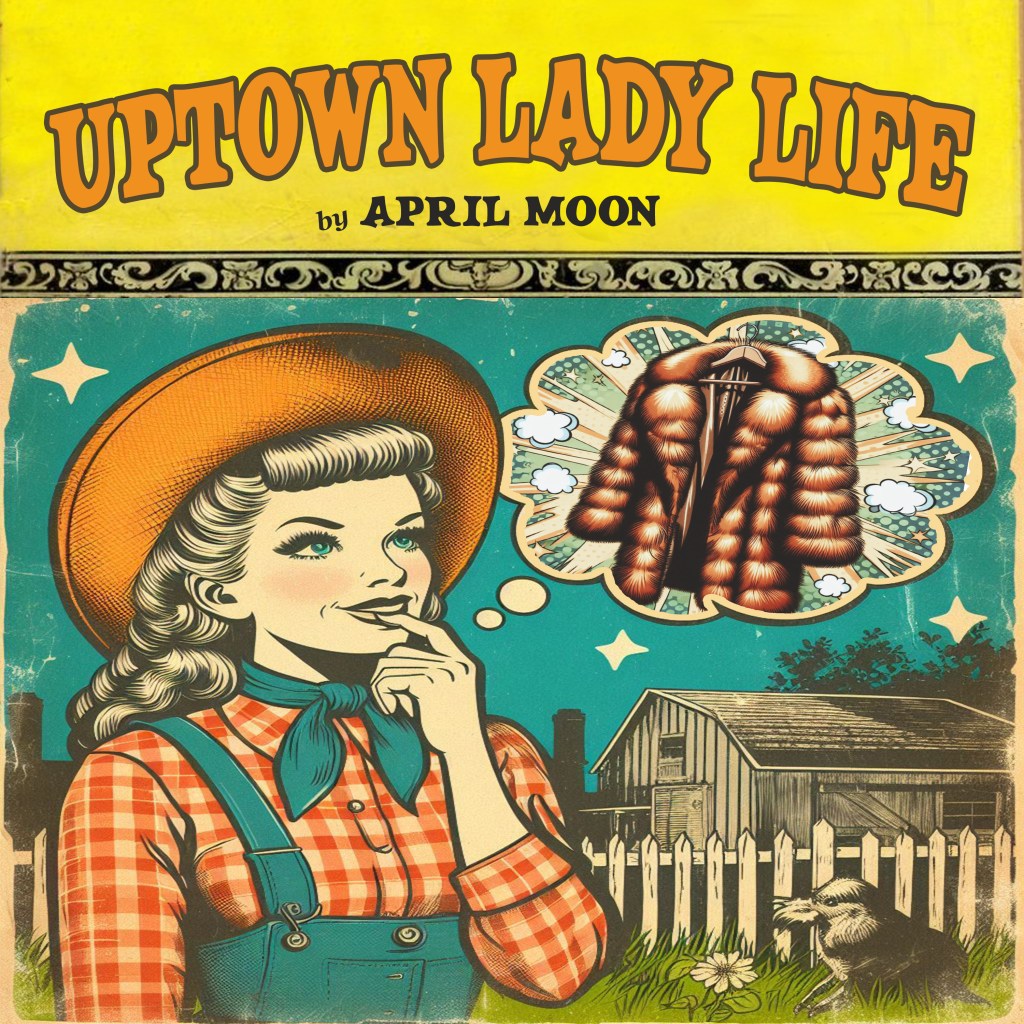
Starting on a Saskatchewan farm, ‘Uptown Lady Life’ tells the story of a young girl whose aspirations stretch to the simple but symbolic purchase of a fur coat. Inspired by Jaime from April Moon’s grandmother, this neotraditional country tune transports the listener right back to its rural life setting. We find the protagonist struggling to make ends meet, racking up the bills with successive poor harvests. It leads her and her husband with little choice but to sell up – an opportunity perhaps to move to the city for a better life. Needless to say, it doesn’t work out. But even against a backdrop of endless work (both in a factory and at home), the whimsical and upbeat guitar riffs represent her eternal optimism for social advancement. It is a really affectionate portrait that April Moon depict.
By her own admission, Amy-Jo offers a highly-romanticised version of this era in ‘Love Before the Internet’. It isn’t without its nod to economic insecurity but the girl’s “modest pay for part-time work in a village café” is mixed with contentment. Like her last single, ‘Young, In Love, and Broke’, the pressures of daily life can be overcome by the presence of love in a strong relationship. What’s more, this love seems to be enough, in contrast to the prayers of the protagonist in April Moon’s story for something more. Delivered in her typically-intimate and stripped back style, Amy-Jo still paints a colourful picture of pre-internet meet-ups and real-world interactions that were often limited to “the fifteen miles around their town”. Compare this to a plethora of dating apps now connecting us across the globe, and she succeeds in championing the supposed simplicity of a bygone era. The exhaustive exhale on the final word of the song’s bridge only adds to the irony of modern-day technology. Social media, as we’re finding out, is not always positively progressive.
Vic Allen highlights one of the problems of social media in today’s society. ‘Wake Up Pretty’ is a suitably poignant and relatable track which powerfully expresses the dark side of our image-conscious world. She outlines the “flawless” and “airbrushed” figures found whilst scrolling through ourfeeds and, against a backdrop of achingly emotional guitar strings, reveals their devastating impact. Idealism and comparison are the enemies. Low self-esteem and body consciousness their effects. The dream of a fur coat seems almost childlike in this context, even as it speaks back to fashion as a means of social validation. Here, the physical body too is at stake. “Too tall, too thin / we just can’t win”, says Allen, and “it makes me question who I should be”. It captures in all seriousness how unattainable perfection sets a standard that inevitably chips away at our own identity. But for all its brutal truth, the chorus remains hopeful of a day when “I’ll take off my make-up and wake up pretty”.
Welsh Country artist Caitlin Mae retains the rock and ratchets it up on her latest single. ‘Mr Moving On’ contains more than a streak of what has become her signature sound. This is a production with plenty of electric guitar and heavy drumbeat. Instruments that speak to a narrative of regret. This is a case of girl-meets-boy but true feelings are submerged until “He couldn’t wait any longer for me to admit it”. Contained within, in true Caitlin Mae fashion, is a positive spin. Whether it be knowledge, wisdom, or inspiration gained for “this song”, not all is lost even as love turns up too late. Not least musically, on a track which has much greater finesse than previous. No doubt a result of her re-location to Nashville. Further evidence that she continues to grow into an artist worth watching out for.