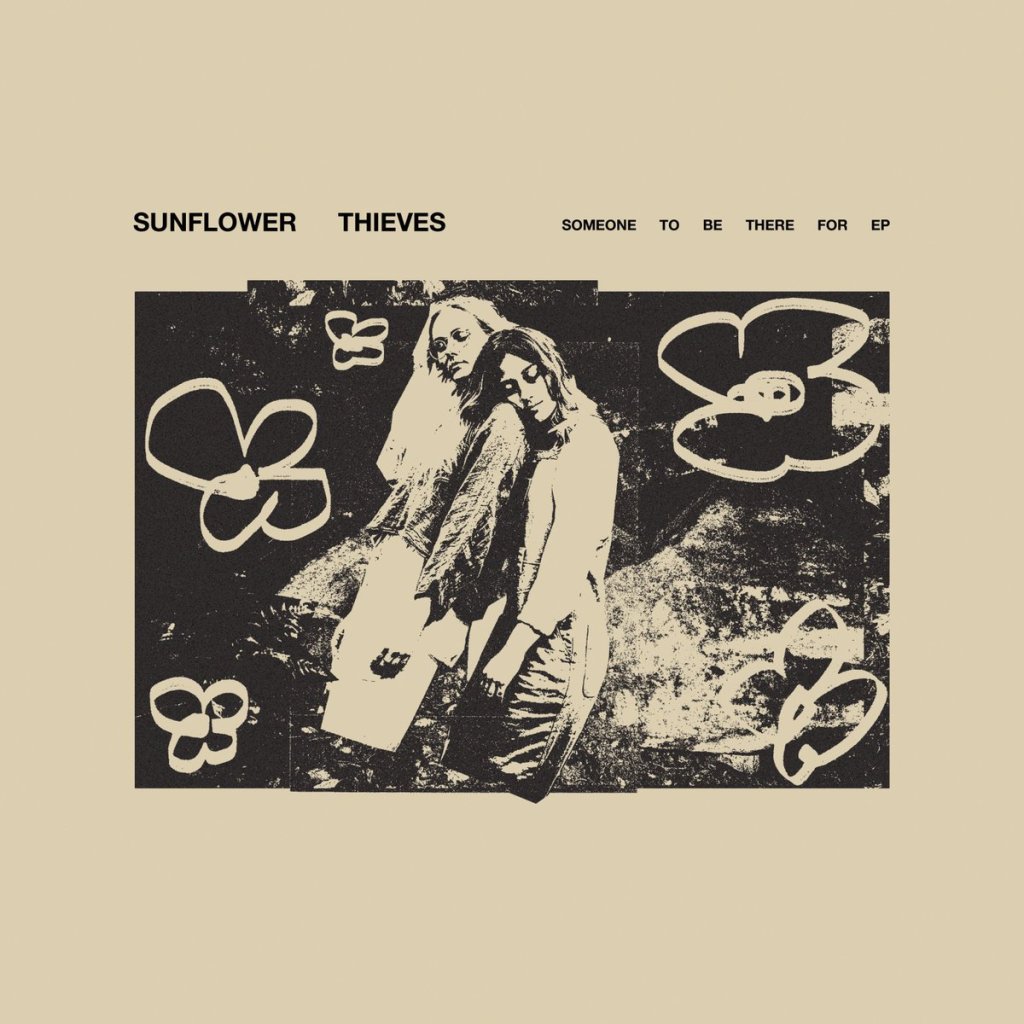
Sunflower Thieves are one of the best discoveries I’ve made in 2022 so far. Their lo-fi, indie-folk sound really is something to savour. It makes their debut EP ‘Someone to be there for’ a delectable delight to listen to. The five tracks carry you away into an almost dream-like state, floating on the duo’s soulful harmonies and drifting down the river of their gentle guitar-led sound. It is easy to get lost in the mystical atmosphere that surrounds their lyrics, the choruses of which in particular are exquisite.
I love the incongruity of “sirens” and “silence” in opening track ‘Sirens’; the mix of wonder and strangeness in ‘Lichtenberg Figures’; the simplicity and profundity of ‘I Don’t Know Why’. It is these thought-provoking lines from ‘34 Days’ that stand out for me though – “People have tried to be there for me, I know it’s kind/ But daffodils drown in the water if there is no sunlight” – and which mark them out as fantastically-talented songwriters.
The poetic quality of their observations alongside their luscious sounds has given them a winning formula for success, and places them firmly and deservedly among their contemporaries. These include Rona Mac, Wildwood Kin and First Aid Kit, fans of which will be highly amenable to the music of this Leeds-based band. Their impact is sure to stretch far wider than that with this EP however, which for me is simply stunning.
There is an argument that Megan O’Neill has changed direction with her new EP ‘Time (Thought You Were on My Side)’. Yet I prefer to think that she is simply building on what has gone before. This latest release may have far more electro-pop production than we have witnessed previously but she does not completely sidestep the eclectic nature of her last album, which had Americana running through its core. Storytelling is still the essence of her songs here, which also display similar themes to those on ‘Getting Comfortable with Uncertainty’.
For example, ‘Fail Better’ continues the positive take on failure of ‘Sometimes I Learn’; whilst her cover of Jim Croce’s ‘Time in a Bottle’ seems to have opened a path to explore the subject of time more with ‘Change Everything’ and ‘Time’. What may feel distinct about this EP in terms of its pop sensibility also has its roots in the past. I would argue that her shift sonically is not so much a new sound as bringing to the fore what was kept in the background on her debut album ‘Ghost of You’. The difference with this new record seems to be a more purposeful exploration of that which sat beneath and lent itself to the vocally-led performances of her early days. The effect of this sees O’Neill having more in common with someone like Mabel, as indie-pop comes to define her sound far more than country-pop or contemporary folk. This change shows an artist who is comfortable and more than capable of pushing the boundaries with her sound. ‘Time (Thought You Were on My Side)’ remains driven by her passion for story even as she chooses to tell them through a slightly different emphasis musically.
Originally written for and published on Belles & Gals on April 12th 2022.
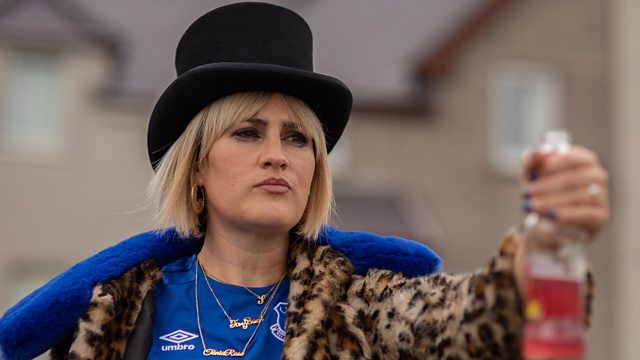
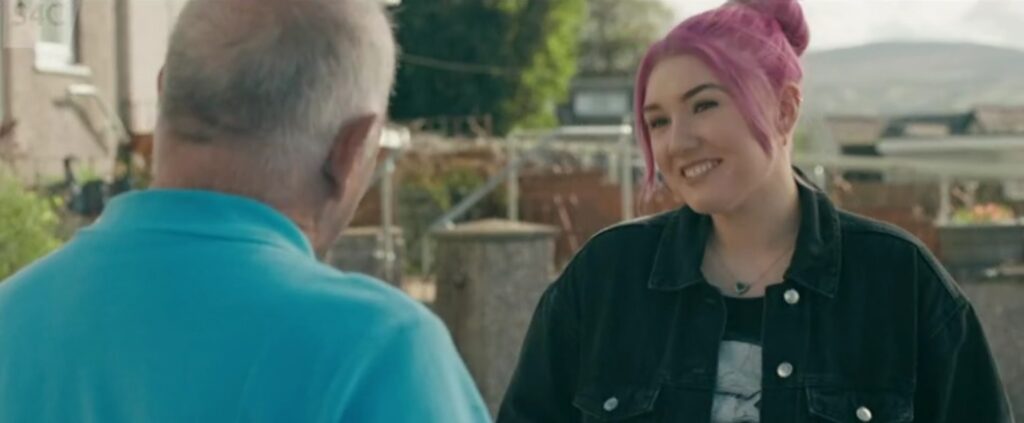
It is the North West that seems to be in the Welsh TV spotlight recently. The final series of Hiddenhas begun, Rybishhas returned, and a brand-new series called Stad has just completed its run. Set on a council estate near Caernarfon, it combines the drama and comedy of the aforementioned to create a slightly off-piste narrative similar to Enid a Lucy. This has made it lightly entertaining and surprisingly engrossing; a series that does not make you want to binge from the off but, by the time it reaches its final episode, leaves you desperate for more.
Stad is not strictly original, coming ten years after its highly-popular predecessor Tipyn o Stad ended on S4C. Viewers of that series will recognise the return of a few familiar characters, not least the Gurkha family. However, no prior knowledge is needed to enter this new chapter in the life of Maes Menai, described as “North Wales’ most colourful housing estate”. The opening scene might feel a bit overwhelming and thus confusing for those, like me, entering this world for the first time. But it does not take long to adjust to its tragi-comic genre and realise that the historic connections between some of these characters are no barrier to its accessibility. Instead, one becomes steadily intrigued by the issues, situations and circumstances that arise within the first episode and as the series progresses. Mental health is but one subject which is tackled with a surprising sensitivity, particularly in respect of trauma and loss. Elen Gwynne, for example, gives the most acute performance as Susan whose struggle with bereavement is portrayed onscreen in such a way as to be funny without being derisive.
The writers Manon Wyn Jones, Angharad Elen and Daf Palfrey have pitched the darkness and light of this drama to perfection. There is a bit of a Breaking Bad influence that seems to hang over it in more ways than one. There is the obvious connection to the selling of drugs for financial security, but it is also the hapless nature of the partnership between Ed Lovell (Bryn Fôn) and Dan (Sion Eifion) that strikes chords with the father-son relationship of Walter White and Jesse. The two also find themselves in sometimes absurd situations, like being held hostage by a crossbow-wielding farmer by the name of Iona Kebab (Janet Aethwy). Such wild, crazy scenarios end up contrasting nicely with the far more real-world dilemmas of other characters, like Alaw. Begw Rowlands ensures a real likability towards her character, playing her with a confidence that is tinged with a deeper, hidden vulnerability. It draws much sympathy when she discovers that she is pregnant, and makes her gently blossoming relationship with Kim (Gwenno Fôn) all-the-more sweeter.
Stad can feel a bit pedestrian at times, measured and paced, with no rush to excite or entice viewers into a suspenseful or twisting narrative. It prefers to operate at the most basic level of human drama even as some of its storylines take on a surrealist edge. This means that we get to know the characters themselves in the context of their ordinary lives and is what makes the final part of the series so unexpected and heightens the tension around it. We come to really care as Alaw attacks her dad Keith (Rhodri Meilir), with seemingly-terminal ramifications, and Ed Lovell finds himself trapped in the basement of a burning house. It ratchets up the anticipation before running into the closing credits to devasting effect. Suddenly, it is edge-of-your-seat stuff. A second series is demanded.
Stad becomes a series that gradually wins your heart and then has the power to break it.
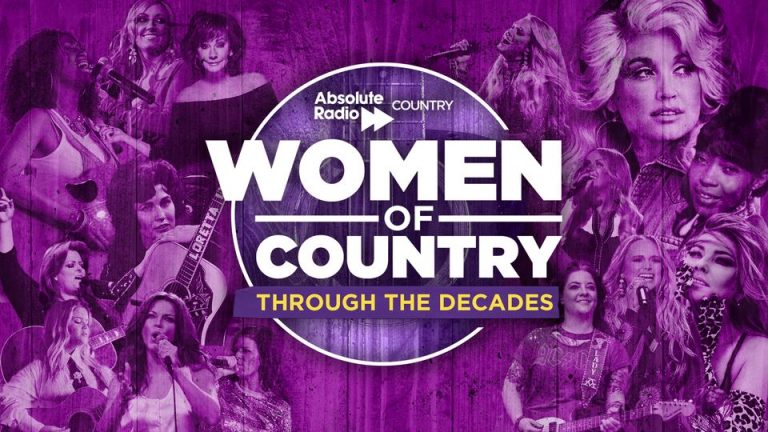
Whether you’re a relative newcomer to country music or have been an avid listener for decades, Absolute Radio’s documentary series Women of Country is a must-listen. Taking a journey through the history of the genre from the female perspective, it marks the infamous milestones of the greats whilst recounting the hidden stories of those often ignored in its retelling. This is what makes it more than simply a Beginners’ Guide to Country. The usual suspects may make an appearance but it is the history of Black artists and LGBT+ representation in the genre that makes this a documentary from which any Country music fan can learn.
Ashley McBryde is the perfect host to introduce listeners to the rich and diverse legacy of women in country music. She offers a warm and relaxed tone as she introduces her interviewees and their associated music, proving accessible and insightful as she explains key moments and events that led to certain artists and songs making an impact. What is most interesting across the six episodes is the way that seemingly contemporary issues are actually part of the tradition, McBryde’s measured delivery bringing clarity rather than surprise to this fact. It makes the call for change in the industry even more urgent, knowing simultaneously that progress can never be taken for granted. “We’ve come so far”, as Dolly Parton says in the final episode, “but we’ve still got far to go”.
It wouldn’t be a documentary on female country music if Dolly didn’t feature. Here, she turns up in pretty much every episode. From her church roots and getting her first single cut in the ‘60s to appearing on stage at Glastonbury in the 2010s, her trajectory is somewhat of a mirror to the history of women in country music. Therefore, it makes sense to reference her alongside other giants of the industry. Among them are Jeannie Seely, the first female host of the Grand Ole Opry, whose clothing choices helped liberalise the genre’s fashion; and Sylvia, who defied the supposed wisdom of male executives that “women don’t put butts on seats” by scoring a hit record with ‘Nobody’ that did just that in 1982. Alongside them are the usual suspects, like Patsy Cline, Bobbi Gentry and Tammy Wynette from the early days, Shania Twain and Carrie Underwood at the turn of the millennium, and Maren Morris in the present day. Each in their own way have made an impact on country music; and together, they represent an authenticity that has been forever challenged by the patriarchy.
Recent debates over radio play and genre-blending are exposed as nothing new in this series. Patsy Cline crossed over into pop way back in the 1960s, way before Taylor Swift arrived on the scene. Loretta Lynn was addressing taboo subjects before anyone had ever heard of Martina McBryde. And we hear songs from Crystal Gayle and Carrie Underwood as evidence that Cam’s mega-hit ‘Diane’ was by no means the first cheating song to be sung by a female in country music, despite the opinions of gaslighting male producers. What is new though is to hear the history of Black females in Country Music. From Linda Martell to Alice Randall, Frankie Staton to Rissi Palmer, these were women who had to fight doubly hard within a predominantly white industry to get themselves not only heard but recognised as legitimate Country artists. It uncovers the extent to which systemic racism has run through the genre, putting the challenges faced by Mickey Guyton in a long historical context that once more reveals the ongoing struggle for equality in country music.
Women of Country ends with a fascinating response to the question ‘What is Country?’ All of the interviewees give an eclectic and sometimes paradoxical reply. It turns out that there are as many definitions as there are women in country music. Such varied answers are not the basis for conflict however but solidarity, showing women to be the real trailblazers of the genre. From the Carter scratch to the Swift effect, if there was any doubt that women have been the ones driving innovation in country music through the decades, this six-part series has dispelled it. They are at the forefront of the country music scene. Always were, and always will be.
Click here to listen to the series.
Originally written for and published on Belles & Gals on March 31st 2022.
Welsh singer-songwriter Paige Wolfe has started how she means to go on. She has dug deep into her soul to co-produce her first release, ‘Why Can’t My Heart?’. Borne out of personal experience of domestic abuse, Wolfe acknowledges the part played by Millie Bloom in “digging right down to the furthest root, pulling it out, untangling it, and making a beautiful piece of art”. The result is not just that, but also an articulate expression of an often-taboo subject; a sincere telling of an emotionally-complex moment in which the heart grapples with its own deceit. The song dances on the edges of RnB while being firmly rooted in the acoustic guitar of Country. This allows the lyrics to gain an intensity without losing the earnestness of Paige’s quavering voice.
There are touches of Maren Morris, Dua Lipa and Louise Parker on a track that strives for honesty in both strength and brokenness, conveying a merry-go-round of emotion captured most acutely in the repetition of the bridge: “Why can’t my heart just give it a rest? I need my heart to give it a rest”. Despite the tangled nature of her situation here, there is a thread of hope that runs through the song. ‘Why Can’t My Heart?’ becomes as much a reflection as it is a representation, Paige giving voice to her feelings at the same time as finding freedom beyond them. Her raw and mature songwriting is to be much admired. As far as debut singles go, they don’t come much better than this.
Originally written for and published on Belles & Gals on March 20th 2022.
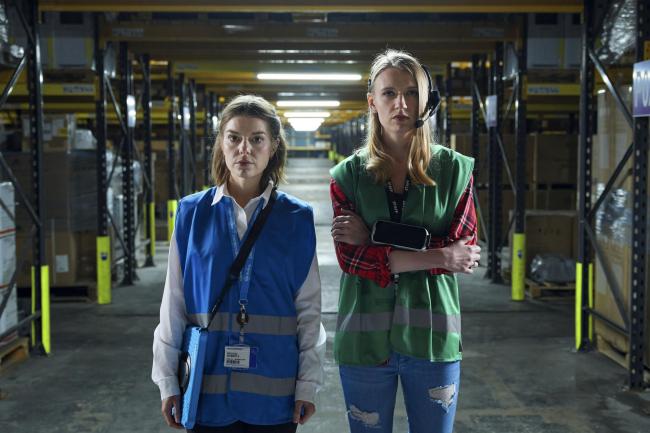
The first thing to say is that nobody dies. Yet that is hardly a ringing endorsement of the working practices on show in Life and Death in the Warehouse. The BBC Cymru drama lays bare the secret world of online distribution centres. And for anyone used to the quick and easy clicks of internet shopping, this is a must-see to make you think twice before placing your next order with Amazon. It makes for hard-hitting and eye-opening television. This is the worst of consumer capitalism.
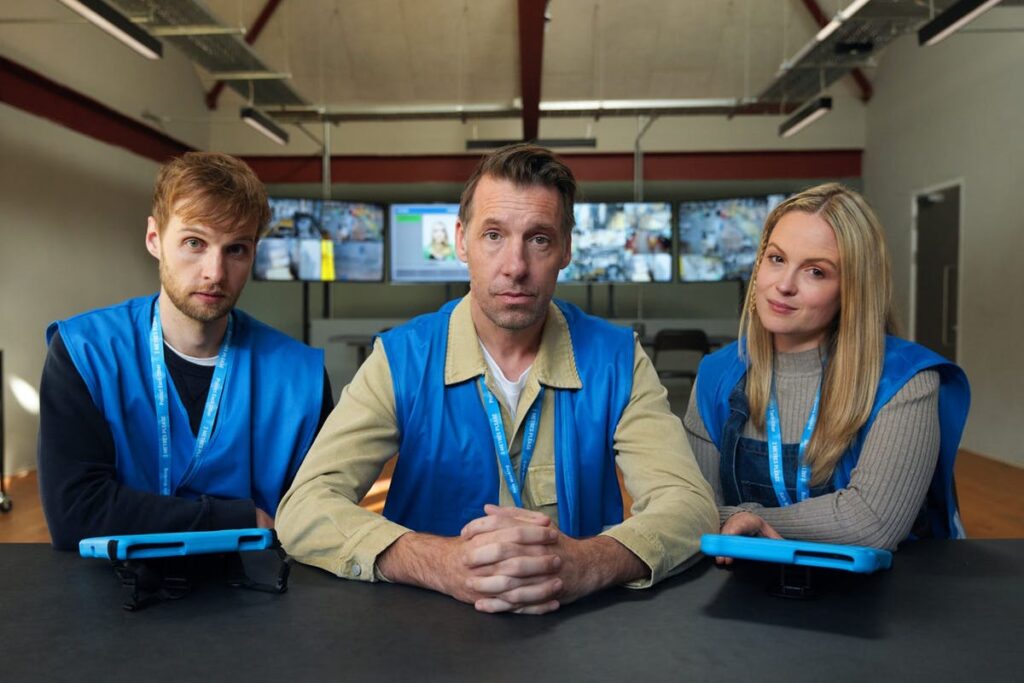
Megan (Aimee-Ffion Edwards) has been accepted on a fast-track graduate scheme at her local centre. Becoming a trainee manager, she is tasked with ensuring that her team of workers keep up to speed with their daily ‘pick rate’. She is required to monitor their movements constantly via CCTV, praising those who exceed the target and calling out the ones who fall behind. Childhood friend Alys (Poppy-Lee Friar) becomes one of the latter when she confines in Megan that she is pregnant. Instead of receiving assistance and the appropriate support however, Alys is subjected to a ‘personal enhancement plan’ that remains fixated on the numbers at the expense of her health and wellbeing. It is hard to believe that companies operating in 21st Century Britain would treat workers in this way. Yet as it declares from the outset, “This film is inspired by hundreds of real stories”. To say it is shocking then is an understatement.
Director Joseph Bullman ensures that there are plenty of close-ups, with the majority of shots trained on the faces of the actors to capture the intensity, pressure and emotional strain that their characters are under. It means that their environment is pushed right up against the screen. There is no getting away from it. We become embroiled in the ideology of this high-performance workplace, not only witnessing its effect on Megan and Alys but being subjected to it in some way ourselves such is the visceral nature of the storytelling. Edwards brings an incredible vulnerability to her role. She is at once very different from her infamous turn as Esme Shelby in Peaky Blinders. Yet in spite of her obvious nerves and eagerness to please, there is something of the steeliness of that character that seeps in as the drama progresses. It becomes a negative force in this instance however, used to block out a compassionate and caring side to Megan in keeping with the ‘customer-fixated’ culture that she finds herself trapped in. Friar, for her part, puts in a noteworthy performance as one who experiences the most extreme impact of that culture. The gradual decline in Alys’s physical ability to undertake the tasks at hand, and the increasing level of stress she finds herself under, is acutely felt, in part due to Friar’s concentrated effort to keep her character’s emotions in check against a backdrop of sustained bombardment under which the exhaustion, tears and pain slowly to show.
In a sense, both of these characters are subject to the injustices of a system that exploits, dehumanises, and almost kills them. The obsession with media PR over and above medical concern for an employee is but one unbelievable instance that breeds anger in the heart of the viewer. To understand this as reality takes some coming-to-terms-with, not least in the face of the preposterous responses of the management team. Yet Craig Parkinson (Danny) and Kimberley Nixon (Donna) play their roles with such deliberate ease that the manipulation and false empathy emanating from their characters’ intentions becomes entirely plausible. It makes one very aware of the insidious nature of language; and how it can creep unsuspectingly into relationships.
Life and Death in the Warehouse brings us the best in factual drama. It shines a daring light onto the unseen but now-necessary world of warehouse workers who are at the coalface of our online purchasing habits. It finds the companies who ‘employ’ them, “Some… you will know, others you won’t have heard of”, seriously wanting. Bullman directs in the same unrelenting way as he did with its predecessor, The Left Behind. Meanwhile, Aimee-Ffion Edwards and Poppy Lee Friar lead a superb majority-Welsh cast in depicting the dark side to our unrelenting consumerism. It should make us pause a moment and take note. It should even make us turn to look for something better. It shows that the rights fought so hard for in the past are in danger of so easily slipping away.
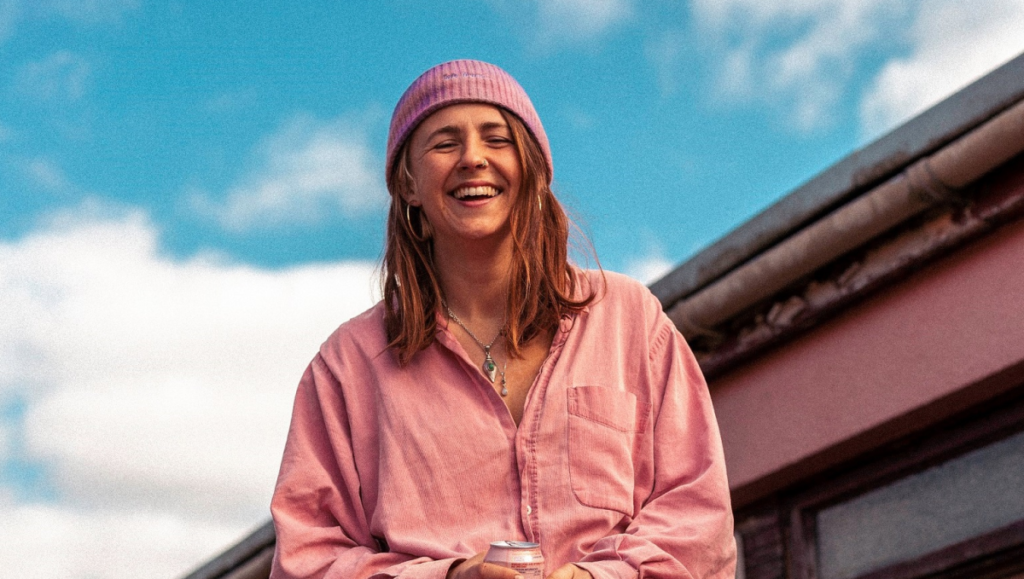
Rona Mac describes the pink cover of her latest EP ‘Shades of Ham’ as a dichotomy. It is a colour, she says, that is both “fierce, bold and strong as well as delicate, floral and soft”. It seems a particularly fitting description for an artist who finds strength in vulnerability. But it also captures something of the sharp contrasts that imbue this record. The Welsh singer-songwriter is perfectly capable of packing a punch one minute and tenderly caressing the next. Not only is she inspired by the Pembrokeshire landscape in which she lives, but the rugged cliffs and sloping green fields seem to represent her music too.
Opening track ‘Something Good’ oozes intimacy. There is something about those ambling guitar loops and sauntering vocals, carried over from her debut album ‘Sheelah’, that transfix, and traverse the line between light and shade that defines her work. Unvarnished truth-telling mixes with splashes of colour that speak of hope, not only on a personal level but a political one too. ‘Polidics’ is a well-versed dig at those in power. The pounding beats as Rona speaks of the privileged “men in jackets sit[ting] importantly… pouring port in front of me” contribute to a deeply-held frustration at the way the country is currently run. Add into the mix a damning critique of consumerism, with its “money wrapped in lights so take it”, and you get a sense of the raw honesty and unbounded personality of this quietly-countercultural artist.
‘Polidics’ does not remain in a state of anger. Rather, it is a song of two halves, the second of which moves on “to where they cannot find me”, amidst “the flowers and the grasses”, from which “we’ll rise, a bunch of honest creatures fill the skies”. Combined with a more free-flowing alt-pop sound, it makes for a track that is ultimately casting toward a better, brighter vision of the world. On a more practical level, it also prepares the way for the softer sound of ‘The Road to Your House’. Here, the usual shimmering soundscape is stilled by the clarity of the acoustic guitar. Suddenly, we are witness to a beautifully-told story through folk music that feels miles away from the frustration of a few minutes ago. Sadness and regret still seep into its reflection but there is also a sprightliness contained within. The guitar solo in the middle echoes such sentiment, and is easy to get lost in. ‘Smoke’ has a similar ruminating quality. It reminds me a lot of Georgia Ruth’s album ‘Mai’: soothing and affecting; complex, even in its simplicity.
Final track ‘Paper’ has the same two-toned substance as ‘Polidics’. On the one hand a love-letter, on the other a seething criticism, it mixes alt-pop beats with acoustic reflection padded with the sound of waves. Similar to ‘Carageen’ by Jodie Marie, it suggests that Rona Mac’s Pembrokeshire location offers a kind of grounding, a place to which she escapes as well as from where she writes her songs. It certainly seems to have offered her the freedom to not be bound by conventions. ‘Shades of Ham’ continues to showcase this genre-fusing approach. It is a record that is undeniably Rona Mac. May she never compromise on that.
Originally written for and published on Get the Chance on March 6th 2022.
Elles Bailey’s latest album, ‘Shining in the Half Light’, has been forged in the fire of the last few years. It is a record that speaks to the experience and perspective of the independent musician over a particularly turbulent period. There are hints and nods to both Brexit and Covid without ever being explicit about either subject. Feelings of anger, pain and frustration beat palpably through a hard Blues sound and typically-raspy vocals. Yet as the Bristol singer-songwriter notes, “this is an album inspired by those who spread love in a time of heartbreak, happiness in a time of fear & connection in a time of isolation”. There is hope and solidarity to be found in its lyrics, a place where the Gothic and the Gospel intertwine.
Elles has admitted at live gigs that the opening track, ‘Cheats and Liars’, was written in response to the woeful support given to musicians by the Westminster Government during the pandemic. It is the most direct shot at power on the album, its early firing signalling an intention that is sharp, uncompromising and full of emotion. Fans have come to expect nothing less from the UK Blues Artist of the Year, with the darkly-expressive drumbeats, electric guitar and bass billowing a smoke signal that makes it hard for those in glass houses to ignore. And even when they do, the message of third track ‘Stones’ makes clear that “all the while/ the sun shines through…/ the truth’s rising”. Hope springs eternal, as they say. Justice, in the end, will be done.
The rock-heavy edge of the first couple of tracks is tempered by more soulful numbers in the album’s centre. ‘Colours Start to Run’ is a reminiscent combination of the homeliness of ‘Little Piece of Heaven’ and the longing ache of ‘Miss Me When I’m Gone’, two songs from her second album, ‘Road I Call Home’. ‘Different Kind of Love’ brings a reflective edge to this section of soft Blues, captured beautifully in moments of simplicity – “lay your head down next to mine/ and we’ll listen to the rain” – and routine – “every day I sing the blues/ every night I say a prayer/ when my troubles weigh me down/ oh you always find me there”. ‘Who’s That’ then adds a drop of darkness back into the mix. Its psalm-like plea for help in troubled times evokes flashes of JP Cooper’s ‘Holy Water’ but with far more spectral qualities. The music haunts the lines delivered by the smoky vocals of Elles such that mystery and uncertainty reign. There is a brooding uneasiness around this track. It’s enough to ask along with her, “Lord tell me who’s that?”
By far the most critically-acclaimed track on the album, if radio play is anything to go by, is ‘Sunshine City’. And it is Elles’ long-time collaborator Joe Wilkins who deserves special mention here. For it is his infectious guitar riff that makes this song such a hit. The groove and rhythm that is produced ensures that this will be a real crowd-pleaser at gigs and festivals alike. Its four-and-half minutes could well go on indefinitely such is the pure joy that emanates from it. ‘Halfway House’ should have its own distinct plaudits too but for different reasons. It is sorrowful yet touching, broken yet undefeated, the final chorus line, to “take it one day at a time”, melting the heart with hope; and pulling it back from the overwhelming brink. It plants a seed of perseverance, the first fruits of which can be glimpsed in ‘Riding Out the Storm’. “I can’t let this refrain be the last” captures perfectly this need to continue in spite of circumstance or situation. It speaks of the grit and determination that mark both her music and her character.
‘Shining in the Half Light’ is an album that further cements Elles Bailey as a musical force to be reckoned with. It deserves to shine far more brightly that its title would suggest.
Originally written for and published on Belles & Gals on February 27th 2022.
The latest single from Nia Nicholls cements her growing reputation as a British Taylor Swift. It is no exaggeration to say that in both her vocals and subject matter, the Welsh singer-songwriter displays the kind of Swiftian vibes that reverberate back to the American’s earlier canon of hits. ‘If You Want a Sign’ stands on the edge of pop, with Nicholls injecting a huge amount of emotion into this balladeering lovesong. It is a gushing declaration about wanting to be with someone but not make the first move; hoping that “if you feel it too/ and you’re scared to make a move/ and you’re waiting for a hint/ well if you want a sign this is it”. It is a neat follow-up to previous single ‘Forever Hold My Peace’, to which there is a cheeky reference in the final chorus, suggesting that the two songs are close companions. Indeed, the guy at the centre of both seems unaware of the singer’s feelings toward him, such ignorance reflected in Taylor’s own single ‘You Belong to Me’, from 2009. ‘If You Want a Sign’ has a much slower tempo than her guitar-led bop however, with the piano taking prominence on an arrangement that fluctuates between all-out instrumentation and stripped back performance. It conveys well the sense of angst and longing that strain from Nicholls’ voice for the one “I’ve loved… since I met you three years ago”. And by the end, the listener sure feels it too. It is another reason why comparisons with the ‘Fearless’ and ‘Red’ singer are dutifully made. For Nia Nicholls has the ability to tell a story and make it as if it were your own.
Clara Bond may have her roots in British Country but she has grown far beyond its borders. The Exeter-based singer-songwriter has embraced a confident pop sound mixed with RnB and rock sensibilities to make her a truly cross-genre artist. It means her latest EP, ‘Backtalker’, is that wonderful blend of atmospheric soundscape and affective lyrics. The music always serves to tell the story of the song with such precision as to envelope the listener fully into its world. In the case of opening track ‘Misbehaving’, this means Clara’s very own mind.
She says of the EP as a whole that it is “like an honest reflection of what was going on in my brain at the time”. This first song gives an almost-detailed analysis of her innermost thoughts in a time of lockdown. Yet in spite of its contextual origin, anyone who has experienced poor mental health will recognise its central theme, as it touches on universal feelings of fear, anxiety, depression and loss of identity. It is extremely raw, with music that threatens to drown the words at times such is the overwhelming sea of emotions contained within it.
‘Wish You Were Her’ seemingly breaks the “endless circle/ downward spiral” with a punchier beat that reflects a strength of mind unseen in the first track. It takes as its subject the guy who has not got over his ex-girlfriend yet, and the character in the song will be familiar to fans of Catherine McGrath and her hit song ‘Wild’. Whilst there, “she always comes up in conversation”, here, “You talk about her like she’s magic”. In both cases, the guy is distracted, not yet ready to move on; absent in the moment except in his attempt to see his ex in the eyes of the girl now in front of him. But just like he’s not fooling Catherine – “I knew you wanted her when you looked in my eyes” – so it is with Clara, as she declares, “You think I don’t see/ you looking at me / thinking to yourself/ I wish you were her”.
‘White Confetti’ then adopts something of the fragility and brokenness found in the first track in its sonic, almost folk-like sound. There is an air of Gabrielle Aplin in this slightly off-piste piece, in both the music and the lyrics. There is a vulnerability unveiled, containing real sadness, that is really relatable. It is like being caught between a dream, a memory, and reality; not quite an embodied experience but a viscerally-observed recollection nevertheless, of “You and me, the city, white confetti trees… everything hung up like a dream… falling at my feet”.
‘Backtalker’ causes the EP to change gear again as it returns to the heavier vibes of the second track. It finds Clara back to her damned best as she takes on the patriarchal culture of the music industry. Drawing on her own experiences of being shunned and ignored by producers et al, the harsh chords of the electric guitar in the chorus especially reverberate with the rejection of the narrative that men are responsible for making her music. There is even what could be described as a tongue-in-cheek reference to her own ‘Pink Wine’, whether intentional or not, in the chorus’ refrain, as if any evidence were needed of her ability to write superb songs.
They don’t come much better than ‘You’, the final song on the EP. It is by far the most classic of Clara Bond songs, harking back to her earlier releases, with a greater emphasis on the words, which take primary place here. They convey the story of how her parents got together, undercut with a simple drumbeat and occasional guitar that serve to add a sense of wonder and beauty to its romantic nature. It is even better when listened to alongside the accompanying video; and is a track that becomes especially poignant when performed acoustically, as can be found on YouTube. It is a reminder that, at heart, Clara remains committed to the storytelling principles of country music, even as she has successfully ventured outside of the genre to find her own particular sound.
Originally written for and published on Belles & Gals on January 21st 2022.







 desperatelylostcity.com