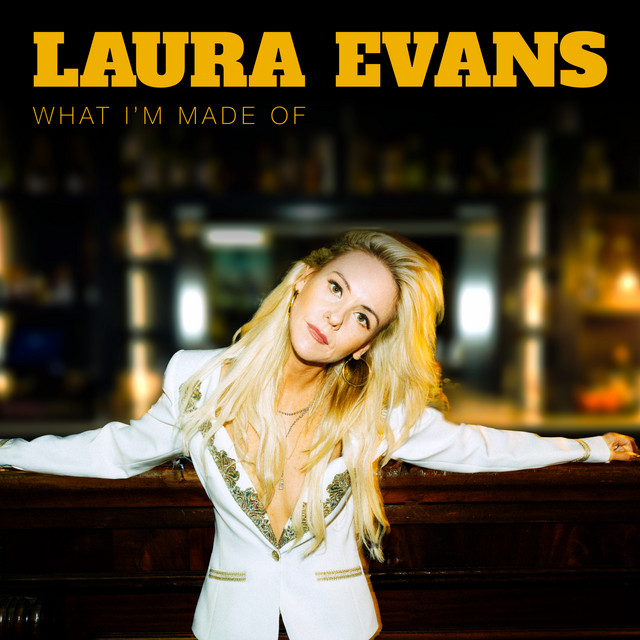
We already know what Laura Evans is made of. But her latest EP firmly underlines her credentials. Through her signature combo of Blues/Rock, she creates an empowering message of confidence and self-belief. None more so than in the title track, ‘What I’m Made Of’. “When they think I’m too weak / and there’s no fight left in me / I’ll come back swinging”. Perseverance and defiance are a winning measure. ‘Heartbreaker’ and ‘Reputation’ feature them too. The latter adds a bit of noughties pop in an almost playful nod to girl power. It feels much more agentic than most songs from the era, with a fierce chorus that unapologetically states that “I defy my reputation… / I decide… / Make my own rules so I can break them”. She is definitely an artist moving forward with determination. But even as ‘Back into my Life’ brushes off any possibility of a former lover entering back onto the scene, its balladeering style in the Country Music vein reveals that Laura Evans still alludes to her past in some form. The piano version of the title track further illustrates her songwriting roots in Country even as she forges her path in the Blues. It makes ‘What I’m Made Of’ a perfect companion to what has come before. And like ‘State of Mind’, her last album, it is a record full of verve.
You can purchase ‘What I’m Made Of’, as well as other releases by Laura Evans, through her online store here.
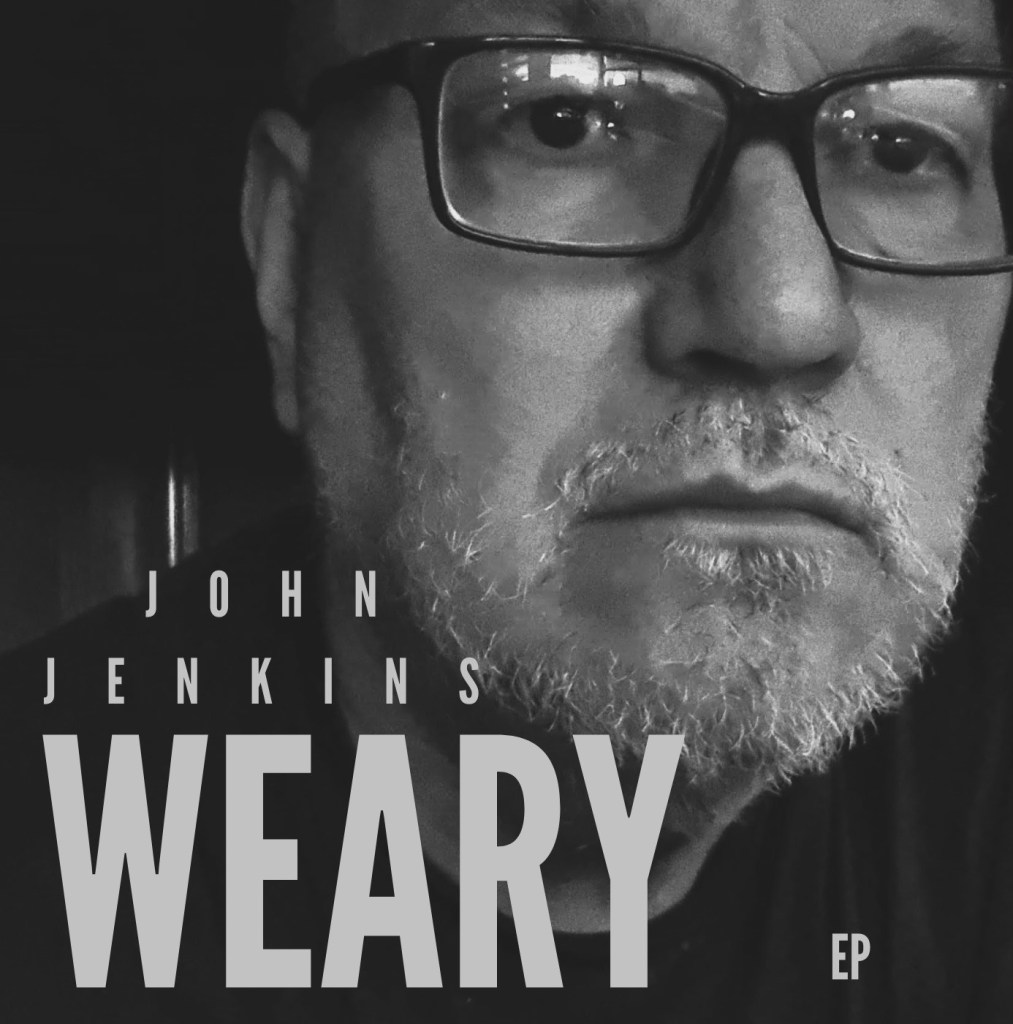
‘Weary’, the title track of John Jenkins’ new EP, aptly reflects how I’ve felt today. Which is why the Liverpool singer-songwriter was most welcome into my home. In the space of that one song, I had gone from feeling down and drained to suitably uplifted. The way it builds from acoustic guitar to keyboard and drums to Gospel-soaked harmonies. It is anything but what its name suggests.
I soon found myself smiling and being carried along by the whimsical folk-pop of second track ‘Do You Ever Think of Me?’ The line “don’t let me fade away / like a letter caught in the sun” is a pleasing piece of poetry, complimented by sunset-perfect trumpets at the song’s end. Their inclusion seams nicely with their entrance into ‘Bury Myself in the Sand’, a musical arrangement that in one sense defies the lyrical content, yet in another fits well with its melancholic musing. This is jazz as a reflection of the dissonance between desire and reality – “I wish I could bury myself in the sand”, says Jenkins, but he can’t.
By the time I reach ‘I Don’t Want to be That Guy Anymore’, the heaviness of the day has been washed away and replaced by the defiant tones of this song. With more bass, guitars and percussion than we’ve perhaps become accustomed to on a John Jenkins record, the effect feels deliberate and therefore deeply personal. His whimsical vocal does remain to prevent it jarring from the tracks either side though. This includes the final song on the EP, ‘Dressing Up the Truth’. Its cheery nostalgia is a throwback to the essence of ‘Tuebrook’, his last album. Here, it serves as a question as much as a throwback – “maybe I’m just dressing up the truth?”, he thinks, which is something to ponder, perhaps. On this occasion, if it offers a bit of escapism in the face of weariness then one need not give it too much thought. I’m just going to enjoy the moment.
‘Weary’ is released on September 13th 2024. You can find out more about John Jenkins and his music here.
Jess Thristan has been drip-feeding its songs over the last couple of months. Now ‘Constellations II’ is complete, and what a stunning piece it is. With music arranged by producer Christian Reindl, the six cover songs on this EP all shine with fresh originality. Like stars in the night sky, they are presented tenderly and delicately. The soft touch of the violin, the gentle hold of the piano, and the sensitive caress of Jess’s vocal create an atmosphere of great intimacy. The usual expanse of ‘One Day Like This’ is tightened to speak direct to the heart. ‘Hold On Tight’ is made to be written as a love letter rather than rousing speech. The result sees the heartfelt nature of their lyrics brought front-and-centre. Reindl turns off the crescendo and instead paces the music evenly throughout. What could become underwhelming or anticlimactic doesn’t. Instead, the commitment voiced in ‘I’ll Stand by You’ becomes more evident. The strength of friendship in ‘Count on Me’ more keenly felt. As has become Jess Thristan’s trademark, such well-known songs are stripped back to their core before she rewraps their story in the kind of emotive delivery that enables them to be so affective. So adept is she at doing this that the importance of Christian Reindl’s contribution here can be easily missed. He perfects what has come to be her definitive sound. This makes them one hell of a partnership, and ensures that ‘Constellations II’ shines very, very bright.
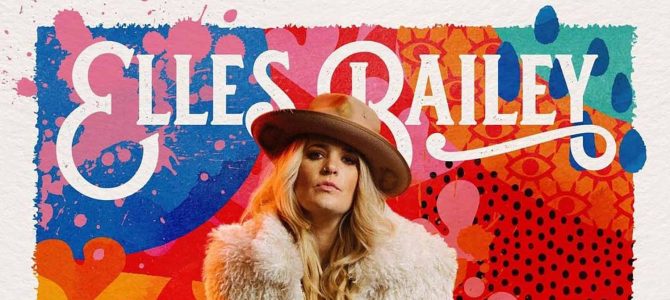
After shining in the half light at the end of the pandemic, Elles Bailey is now standing beneath a neon glow. Her latest album is borne less from anger at lockdown inequality; more from a spirit at ease with life as an independent musician. She is one of the trailblazers in pursuit of this calling. Her new release makes reference to such, and shares wisdom learnt along the way. For seasoned fans, there is nothing new here. Just a sound that has become perfectly honed through what has come before.
‘Beneath the Neon Glow’ opens with a typically uplifting message. ‘Enjoy the Ride’ is testament to the lived experience of Bailey as an artist. Here is someone with confidence in their own ability and artistic vision. Not chasing the industry’s definition of success but realising dreams whatever the outcome. “I’m pretty sure there’s not a pot of gold where the colours end” is not the first line by accident, I propose. Rather, it is a metaphor for music as a journey, shaped not by “the men in suits” but by the paintbrush in Bailey’s own hand: “I’ll blend up all the pigments and paint a picture [myself]”. The result is songs like ‘Ballad of a Broken Dream’, a heartrending story wrapped in a deceptively upbeat sound; ‘Leave the Light On’, a touching tribute to the unconditional love of home; and ‘1972’, an example of how she traverses the boundaries of genre even as she is rooted in the Blues.
‘1972’ is particularly striking in its embrace of disco/funk. It is to this album what ‘Sunshine City’ was to the last: a moment of real out-and-out fun amidst the more soulful fare of tracks such as ‘Silhouette in the Sunset’ and ‘Truth Ain’t Gonna Save Us’. The former is characteristic of Elles’ penchant for stripped-back storytelling. For as good as her musicians are, this is a reminder of how well she can hold the listener with very little around her. Not that they’re to be forgotten of course, as Katey Brooks demonstrates on ‘If This is Love’ and ‘Love Yourself’. Her superb backing vocals emboss them with a golden sheen that makes the poetic lyrics of the first sing, and the 70s vibe of the second ring out with pure delight.
‘Love Yourself’ contains an important message in a sometimes-understated chorus. Its composition works however, in the same way as ‘Help Somebody’ (from the album ‘Road I Call Home’) remains grounded in its call. As a result, the lyrics don’t get lost beneath a pile of electric guitar riffs and banging drums. Instead, they are able to breathe into the mind of the listener and offer comfort and encouragement. This is, I want to suggest, Elles Bailey’s passion, because she wouldn’t be here herself without them.
It means that album closer ‘Turn Off the News’ plumbs depths otherwise untouched if the heart was absent from her words. It allows her to explore the incongruous privilege of being able to “Set down the weight of the world / and just for a moment pretend it’s okay” with a conflicted honesty. She has a deft emotional touch which has been there from the beginning. As a result, ‘Beneath the Neon Glow’, though not breaking new ground, nevertheless recognises her steadfastness in an industry that often demands change and conformity. Elles Bailey remains true to herself. We love her for it. The chart success of ‘Beneath the Neon Glow’ is simply a bonus.
You can purchase ‘Beneath the Neon Glow’ from Elles Bailey’s online store, along with associated merch, here. Her tour begins in September, UK dates for which can be found here.
There is a lovely ambience for April Moon’s show at the Arts Bar in Liverpool. After a mountainous climb up the stairs to reach Studio 3, my anxious mind is put at ease by mixed seating – a choice of table or row – in a space that exudes friendly and welcoming. Their support act, Kirzy, adds to the chilled atmosphere, opening with a summer mix of pop-heavy Country and cool-sounding Folk. ‘Cappuccino Girl’ and ‘Island Life’ both match his beach-ready look, while ‘Visiting Soon’ and ‘Feeling Blue’ reveal a more serious and heartfelt side. He is joined by his travelling companion Becky Gilmanon fiddle for the final two songs, bringing an extra layer of emotionality to ‘Beautiful People’. Comparisons with Noah Kahan cannot help but be made, not least with ‘Bucket List’. His set illustrates something of the variety that is to come.
It is a barnstorming start from April Moon. They are a high-octane act, with a set-list that crosses a number of genres on the musical spectrum. ‘Days Go By’ is a great example of their penchant for classic rock, on this occasion mixing with Blues in a nod to the Rolling Stones. Then ‘Part of the Game’ draws out their Saskatchewan roots, combining with an Irish influence and channelling (given it’s played pre-match at Anfield) a dextrous roar. A twist on Bluegrass that is followed by more traditional Country fare (though funk and rock feed themselves in regularly to maintain an entertainingly eclectic sound).
‘Long May We Roam’, their latest single, offers a different side to them again. Its bright and cheery Americana is a lovely contrast to the angst and anger of ‘My List of Living Things’. The audacity in the electric guitar here is dutifully menacing, with grunge and metal weaving their way in to strengthen the narrative voice. ‘One of Us was Lying’ features similar but far more subtle sounds, sandwiched in between a more classic Country style. As-yet unreleased ‘Uptown Lady’ showcases Jaime April’s storytelling prowess while ‘The Lord Hath Taken Away’ could be a modern take on The Carter Family songbook. And if there weren’t enough styles already in their musical repertoire, ‘Robert Cane’ contains some remnants of psychedelic pop that seems to perforate into the songs of most Liverpool-based artists.
Kirzy and Becky Gilman join April Moon for an extended finale featuring three covers learnt in double-quick time. It is the final of those, ‘Wagon Wheel’, that is most special, revealing the friendship that exists between the four. Having met in Fuerteventura, they undoubtedly carry that life with them into what becomes a moment of genuine pleasure. They cannot hide the fun they’re having, and neither should they. The audience call for a second encore tells them that they have had just as much fun too.
You can find April Moon on BandCamp. For upcoming gigs, visit MusicGlue.
There is nothing like a solo trip across the Deep South to reignite a passion for music. Emily Ireland’s fire had seemingly died due her experiences of sexism and misogyny in the industry. But now she’s back with a blaze of alt-country swagger, starting with new single ‘Yoko One is Seven Years Older Than John’. Under her pseudonym See Emily Play, the Sheffield-born singer-songwriter has slotted plenty of references to Country Music’s heartlands in a wonderfully-constructed narrative tale of unexpected love. From being “alone in the Jungle Room” at Graceland to “when I woke with you in a motel room” in Nashville, she takes us on a rock-fuelled journey through a whirlwind romance. The rather strange title offers context for what seems to be a defining characteristic of a relationship which is also serenaded by the traditional twang of guitars. “I did not know… yet / [but] I was at the start of something new” capture, in words, the reason for the track’s liveliness. These lines also feel representative of the arc to her own personal story. With an EP on the way very soon, if this single is a sign of what is to come, then it will surely have been the right decision to return.
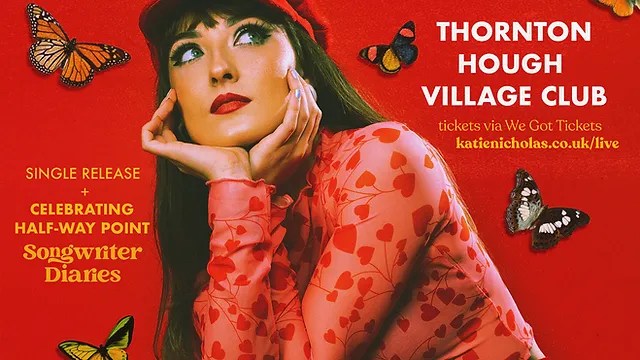
Whilst the city that is Glastonbury was partying to the sound of Coldplay, the village of Thornton Hough was celebrating the songwriting talent of Katie Nicholas. To mark the halfway point in her ‘Songwriter Diaries’, a year-long YouTube series charting her musical journey so far, this headline gig saw those nestled in the cosy and accommodating venue treated to a set far removed from the glossy pyrotechnics of the Pyramid Stage. Despite the lack of sleek spectacle, it was a lovely reminder from the Liverpudlian of the power of music at the grassroots level. Its magic isn’t just reserved for the big festivals.
She was joined here by Astles whose support slot was the ideal warm-up given his wonderfully reflective style of songwriting. Peppered in between with dry humour, his songs were suitably mellow for a crowd listening intently; shot through with a melancholic vocal that made ‘In the Rain’ and ‘Little Boat’ heartrending yet hopeful. Katie then subtly transformed the atmosphere with her opening track without losing any of the emotional depth he had carved out. In fact, the lovely, bubbly Folk of ‘Space and Time’, when combined with the pensive thoughts of ‘Sitting Ducks’, ensured a like-minded continuum between the two artists. They complimented each other well.
Katie admitted that the reason for her current project was to try and say goodbye to her past songs whilst also honouring them. She has talked previously about shedding her skin in order to begin a new chapter, but in trying to “stop gabbing” in between songs is to lose part of her charm in live performance. The moments when her dad blows a kazoo from the front row, she admits “I’m nervous” before playing ‘I Love You Cause I Hate You’, and the reason why ‘Jolene’ by Ray LaMontagne means so much to her, provide the humour, vulnerability and circumspection that help her, as both an artist and a person, make a connection to her audience. The result is both a more affecting set and a noticeable level of comfort on her part.
As the light fades outside, the stage illuminates an intimate red that wraps her solo performance of ‘I Love You Cause I Hate You’ in the fragility of the song’s tragic tale. An impromptu reading of her recently-written poem ‘Afraid of the Flame’ leads to eyes becoming unexpectedly tearstained. The technical difficulties that accompany the start of ‘Dizzy’ are dealt with so calmly as to lift this fun song to another level of enjoyment. And as Robert Vincent joins her and Ana Corcoran on stage to sing his song ‘You’re Standing Right Before Me’, one last burst of natural light brightens the back of the room, as if to encapsulate visibly the energy pulsating from the trio, such is their connection to each other. All are moments that, in this context, produce a different but no less special kind of experience to that found on the hallowed turf of Worthy Farm.
The high point in my experience of seeing Katie Nicholas live remains that night in the Nordic Church. Her appearance at the Royal Philharmonic at the end of last year comes a close second. Meanwhile, this latest episode seems to find her at the end of some sort of beginning. The page is turning. But first, time to give credence to what has been. For it will likely become the foundation for what is to come.
Click here to find out more about the ‘Songwriter Diaries’.
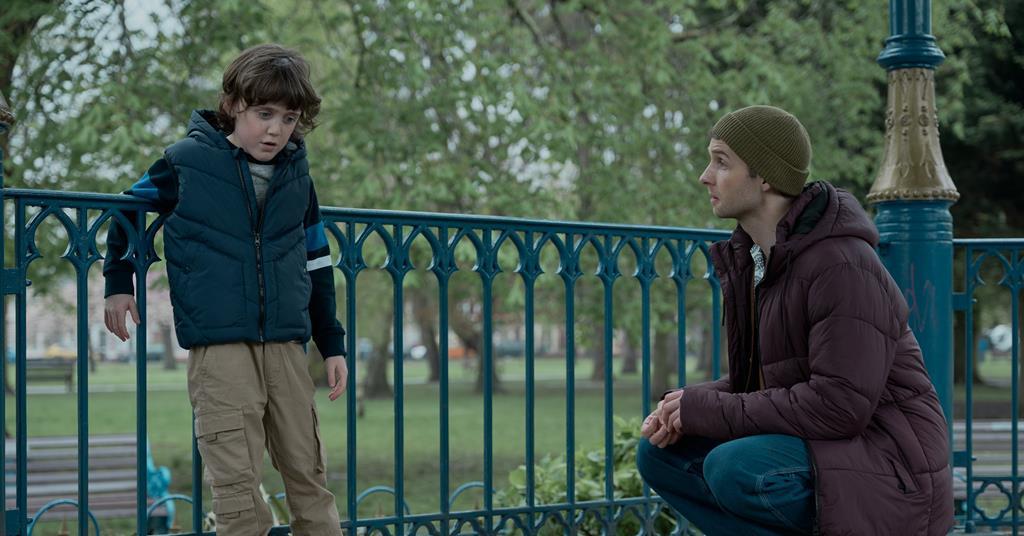
Lost Boys and Fairies is a very moving piece of television. Created and written by Daf James, it is both heartwarming and heart-wrenching. He draws on his own experience of the adoption process to tell the story of Gabe (Sion Daniel Young) and Andy (Fra Fee) who, as potential parents to a little boy called Jake (Leo Harris), journey through the highs and lows of what is an illuminating and very affecting narrative. So much so that it sometimes hits a little too close to home.
Daf James
One of the reasons for its potency lies in the performances of the cast. Young and Fee are suitably matched as the central couple, bringing charm and warmth to their characters but in very different ways. Through their initial meetings with social worker Jackie (played with effervescent forbearance by Elizabeth Berrington), Andy appears easy-going and comfortable whilst Gabe is defensive, with an assurance that suppresses a very dark backstory. The latter becomes the protagonist in many ways, through an arc that forces him to face his demons and accept himself. His relationship with his father is key here. William Thomas portrays the emotionally-restrained, chapel-going Emrys with understated gentleness. It is the tiny cues in his body language and softness of voice that unearth a kind and considerate man whose attempts to interact with his son are compassionately flawed. The contrast between the grey skies above his drearily-decorated farmhouse in rural Wales and the vibrant colour inside the Cardiff nightclub where Gabe works could not be more marked. Yet they remain in touch, conversing in Welsh in a way that feels natural, unlike the deliberately inclusive bilingualism of a Hinterland or Hidden.
For all its verisimilitude, the series makes clever use of magical realism. The inclusion of musical elements at once hyperbolises, celebrates and subverts its subject matters. It leads to flashbacks being presented in a fresh and surprisingly non-superficial way. It adds a touch of the absurd to make emotionally intelligible what might otherwise be elaborate or nihilistic. It queers the conventional to emboss the dramatic nature of the storyline with pensive irony. Ultimately, its contribution makes moments like Gabe and Andy’s first meeting with Jake all the more emotive; Gabe’s answers to the adoption panel, particularly the second time around, more revealing; and his meeting with Jake’s mother all the more tear-jerking. Gwyneth Keyworth may only appear in this penultimate scene of the series but her presentation of a boisterous but broken single parent is spellbinding. Specifically, how she encapsulates the range of attitudes and emotions across the length of their encounter, going from garrulous and domineering to kind and caring, fragile and vulnerable and deeply loving toward her son. It is heartbreaking but also, in the context of her interaction with Gabe, strangely uplifting.
Given that Leo Harris is starring in his first major role here, his portrayal of Jake is fantastically well-rounded and hugely empathetic. Opposite Young and Fee he embodies a mischievous yet lovable child with realistic aplomb. Which makes Jake and Gabe’s connection over a dressing table simply wonderful. In addition to the silence and diegetic sound of birdsong, and the sunlight creeping into the room with them, it makes for one of the most beautiful pieces of television. Contrast it with the second episode’s unexpected ending and the description of Lost Boys and Fairies becomes ‘deeply moving’. It is a hard watch at times but also life-affirming. Prepare to laugh and cry and be fearfully and wonderfully broken.
Every single that Katy Hurt puts out simply heightens the anticipation for her album. ‘Oh Girl’ is no different even as it invites reflection. There is a calmness to its delivery and a softness to its touch. It treads carefully, gently probing feelings and emotions to unearth an unnamed experience. It’s ambiguous insomuch as its message could be to another or to self. But the allusion to mental health is potent.
“From where I see it /
you should be on top of the world /
but I can’t help you /
if you don’t want to help yourself”
Such lines call us to pause and ponder. Through its simplicity the song carries us on a journey towards new possibility but stops short of getting carried away. There is no neat or simple resolution. The result is a poignant and relatable truth, captured in the aching vocals and cry of the pedal steel. ‘Oh Girl’ is a work of tearful beauty of which Katy Hurt should be rightfully proud.
Amy-Jo’s new single ushers in a more multi-instrumental sound. ‘Young, In Love and Broke’ contains a gamut of genres to tell a story of love that, without getting too political, is set on the wrong side of the tracks. References to finance, housing and wellbeing read a little like the experience of many in a cost-of-living crisis, with the message here being that love overcomes. For “what use are possessions / if we’re each other’s obsession”, she asks, amidst a blues-style soundtrack that simultaneously relates to and elevates above the narrative. Circumstance becomes celebratory and conditions sacrificial in pursuit of a relationship that seems only to grow stronger, thanks in part to a very empathetic electric guitar. Her trusty acoustic combines with tinkling piano and heartfelt pedal steel to create a positive mood in the face of a trying situation. It all makes the central line “funny how it scares some folk / when you’re young, in love and broke” rather ironic. Yet the final word, spoken so plainly at the song’s end, which jars on a first listen, actually adds a sense of realism which means that, for all its whimsical musicality, there lies a real-world scenario at its heart. Amy-Jo as usual strikes the right balance between the two, as any accomplished singer-songwriter would, especially in the world of Country Music.





 desperatelylostcity.com