Tenille Townes continues to bear her beautiful soul with her latest single ‘When’s It Gonna Happen’. Honesty has always been the Canadian singer-songwriter’s best policy, and here she reveals how she feels sometimes about being single. Delivered in her own inimitable style, she discloses a part of herself usually hidden behind the “laughing… smiling face” that was her mask in previous track ‘Villain in Me’. In this instance, it is the struggle between sharing in the happiness of married friends whilst longing for a relationship of one’s own. The opening chords reverberate with a kind of angst that expresses this tension. It builds through verses caught between contentment and yearning before bursting out in a guitar-led chorus of country-pop that express perfectly how so many in the same position feel. There is something immensely relatable to those with a certain relationship status about the fact that “Sometimes I feel like I’m the last one standing/ I look around and all my friends are falling in love”. The mixed emotions in having “received your invitation” but “there’s no plus one, just me” are captured brilliantly by Tenille; her wrestling with delight and desire acutely portrayed. She manages to convey a state of being in the world that doesn’t invite sympathy or wallow in mushy lament but simply expresses a hope that even the most fiercely independent of people can sometimes feel. She gives credence to the notion that self-improvement and romantic dependence do not have to be mutually exclusive, “working on myself” in a “little house that I can’t wait to share with someone else”. Neither does the romantic paradigm have to be rejected, as the classic boy-meets-girl-in-café scene is unashamedly depicted. Yet even as she admits to being “scared to death I’ll end up empty handed / Can’t be the only one thinking when’s it gonna happen”, Tenille Townes stops short of selling coupledom as the ultimate goal of life. Instead, she simply expresses an emotion, being vulnerable enough to open up about a personal struggle that doesn’t define her but is nevertheless a part of her. It is this which enables ‘When’s It Gonna Happen’ to connect with those in a similar situation; to draw comfort and realise that they are not alone.
Originally written for and published on Belles & Gals on January 21st 2022.
In this end-of-year review, one of our writers*, Gareth Williams, shares his personal favourites from 2021.
Song of the Year – ‘Next Girl’ by Carly Pearce
If there is one song that has been going around in my head this year, it is the insanely catchy chorus to ‘Next Girl’, part of Carly Pearce’s CMA-winning album. It is the combination of bluegrass and pop, banjo and drums, acoustic and percussive, that give it both a feel-good vibe and make its message – of the smooth-talking guy that’s only after one thing – memorable. Her lyrics manage to capture a kind of zeitgeist that speaks to a 21st Century feminism which, in this case, expertly deconstructs the chauvinistic male, told through a toe-tapping tune in the process. It is empowering and energetic; a song for our times that, though emerging from real heartbreak, becomes a source of collective strength.
Not strictly a country album, as Katherine Priddy resides in the world of British folk, but her debut offering, ‘The Eternal Rocks Beneath’, has been my go-to record of the year. I have had to return to it again and again such is the captivating quality of its mysterious soundscape, poetic depth, and reflective tone. It is like diving into a cool pool of water and finding refreshment in its hidden depths. It is no surprise that the album has garnered critical acclaim. It is a work of beauty; storytelling with a mythic edge arising from personal experience.
There is such a maturity to the music of Welsh singer-songwriter Caitlin Mae. She has the wonderful ability to reflect on her own experience and turn it into something of real wisdom for one so young. It is this that left its mark on me after listening to her debut EP ‘Perspective’. I said originally that “She tells her story, her truth, so honestly and unapologetically that her experience has the power to positively affect the listener”. I can certainly testify to that a few months on. I love the resilience and acceptance contained in this record. Bigger things are surely to come.
Gig of the Year – ‘‘My Saviour’ Easter Concert’ from Carrie Underwood
Actual in-person concerts may have made a welcome return a couple of months ago, but it is this special livestream from Carrie Underwood on Easter Sunday that was a highlight of my year. Coming from the Ryman Auditorium, Carrie managed to transform its hallowed empty space into an intimate hour-long set, performing songs from her gospel album that were at once uplifting but also reduced me to tears. The context of a second lockdown, looking out of the window over a garden showing the first signs of spring, provided space for reflection and hope that made this show even more impacting than it may otherwise have been. Her performance of ‘Something in the Water’ was a fitting ending, a moment that I still cherish from a concert that hit all the right notes at the right time.
The British Country Music Festival in Blackpool may have served up my dream line-up of Katy Hurt, Elles Bailey and Wildwood Kin on the Saturday night. But it was an acoustic set from Candi Carpenter on the Sunday morning that was a real treat. She managed to make the expansive space of the Winter Gardens ballroom feel like an intimate downtown bar. As I wrote at the time, “Her honesty and vulnerability shone through in songs as diverse in their subject matter as ‘Sex, Drugs and Country Music’, ‘Exorcist’, and ‘Skinny’. Such deeply personal experiences, introduced in good humour, and told with such passion and poignancy, seemed to strike a chord with those listening”. The long queue to meet her after the set was testament to the incredible impact she made, and definitely goes down as my moment of the year.
Originally written for and published on Belles & Gals on December 28th 2021.
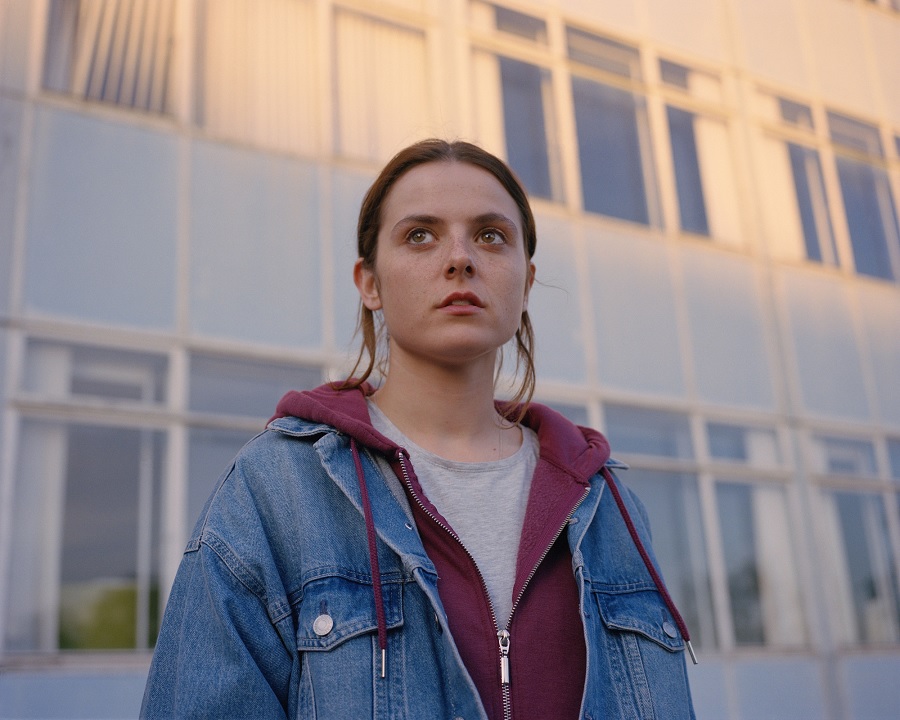
The second series of In My Skin has really got under my skin these past few days. Content simply to watch at first, I’ve found myself itching to write something in response after a final episode in which the emotional pull of this award-winning drama really tugged at the heartstrings. I laughed. I cried. I smiled at the poignancy and hope with which this coming-of-age story signed off. Writer Kayleigh Llewelyn has really captured something special with this semi-autobiographical series. And actor Gabrielle Creevy and crew have brought it beautifully to life.
Kayleigh Llewelyn
From the continued subtlety with which sexuality is explored and presented, to its unashamed yet understated presentation of Welshness, the second series of In My Skin matches the achievements of the first. It does come across as much more arthouse in both pace and aesthetic than its predecessor. Yet this slow burn, highly-polished look only gives it a gravitas that adds to the verisimilitude which made it so relatable and ruinous to begin with. Bethan (Creevy) is still living out a compartmentalised existence, where her efforts to keep family and friends separate are increasingly tested this time around. Her mum Trina (Jo Hartley), in recovery from bipolar, is found to be working at the bingo by best friends Travis (James Wilbraham) and Lydia (Poppy Lee Friar). Her father (Rhod Meilir), still an abusive alcoholic, becomes the subject of taunts by class clown Priest (Aled ap Steffan) after his devastating actions toward his wife’s secret lover are found out. Meanwhile, her blossoming relationship with Cam (Rebekah Murrell) sees the roots of shame surfacing from beneath her steely exterior. All this forces Bethan to face up to who she is and where she comes from.
Gabrielle Creevy (Bethan)
This emergence and gradual acceptance of personal identity is both beautiful and heartrending to watch. The scenes between Bethan and Cam become increasingly delicate as their relationship develops. More artistic shots, close-ups, movements, and softer conversations bring to mind the craftsmanship of Normal People. They help to convey a vulnerability in Bethan that has so far been hidden but that Cam gently draws into the light. Such tender compassion is matched only by Trina, whose fragility may lead to a relapse in the wake of husband Dylan’s actions, but is also a source of strength in her daughter’s time of need. In one of the most grace-filled scenes of dialogue, in the final episode, within the space of a few minutes, I found myself reduced to tears as she responds to Bethan’s brokenness with a touching recollection of love, failure, and hope. Creevy and Hartley are simply sublime in this incredible mother-daughter exchange. Their conversation is painted onto the camera lens with such gentle brushstrokes as to form the most exquisite piece of sacrificial art. It begins a chain of events which, though numerous and rich enough to warrant a further episode, nevertheless see Bethan find her wings and set off via coach for a new life in London town. The look-to-camera right at the end, complete with a modest, appreciative smile, only adds to the positive vitality which imbues these final moments of a series that will be sorely missed but has ended on a high.
In My Skin is an extraordinary piece of television. It has made stars of Gabrielle Creevy and Jo Hartley. Kayleigh Llewelyn has brought something magical to the screen. I thought I’d said everything that there was to say about this wonderful drama. Turns out, in light of series two, I needed to say a little bit more.
Welsh singer-songwriter Eleri Angharad is ending a successful 2021 on a suitably festive note. A Merry Eleri Christmas is a pleasant four-track EP that returns to her folk roots whilst retaining an element of that experimental pop that worked so well on her debut EP, Nightclub Floor. Opening track ‘Homemade Christmas’ certainly evokes the feel of her 2019 album Earthbound, with a ballad-like piano and subtle sleigh bells contributing to a romantic story told with Eleri’s soft and harmonious vocals front and centre. The stripped back nature of her music means that her cover of Justin Bieber’s ‘Mistletoe’ is much slower, less boppier than the original. The effect is a version suitably forged in rural Wales rather urban Tennessee. Not that Celtic folk defines this EP. ‘Santa’s Little Helper’ retains the sultry pop of ‘New Sin’, speaking to an independence that is the opposite of the first track. There is an appropriately bluesy guitar in the bridge that adds to an overall sense of self-empowerment, expressed perfectly in the lyrics “Santa’s little helper I was never gonna be/ or a pretty little angel sitting on your Christmas tree”. The production here is far from that found on final track ‘Santa Baby’. It is surprisingly acoustic, offering none of the seductiveness found in some other versions; instead, returning to the playfulness of Eartha Kitt’s original but with much more innocence infused into the fun. It ends an EP that is sweetly festive without being too sickly; is easy listening but not saccharine.
Originally written for and published on Get the Chance on December 3rd 2021.
Critics of the ‘Nashville/ Taylor Swift effect’ often argue that it has led to an identity crisis in country music. Debates over the last few years have centred around the idea that the genre has moved so far toward pop that it has somehow lost its soul. Songs such as ‘Meant to Be’ by Florida Georgia Line ft. Bebe Rexha and ‘Old Town Road’ by Lil Nas X ft. Billy Rae Cyrus have only added fuel to the fire. Maren Morris is often accused of not being a country artist. And Kacey Musgraves’ latest release was declared ineligible for Best Country Album at this year’s Grammys.
Far from being a unique event in its history, however, the incorporation of pop elements into country music actually forms part of its tradition. Go back to the 1960s, for example, and what is known as “The Nashville Sound” was akin to that which is happening today. Back then, it was a virtuoso guitar player by the name of Chet Atkins who was leading the charge. Described by one author as “a formidable solo performer whose polished country licks were abetted by his interest in classical, Latin, and pop guitar”, Atkins’ openness to orchestral sounds, vocal choruses and smooth tempos saw him make an indelible mark on the industry*. By introducing these elements into the songs of people like Eddy Arnold, Jim Reeves and Charley Pride, as primary producer at RCA Nashville, he made a conscious choice to appeal to the mainstream market. By also taking the “twang” out of it, as Atkins described it, the effect was to usher in a new era in country music.
“The Nashville Sound” was famously described by Atkins through the jangling of coins in his pocket. Some would argue that this belies a genre famed for its authenticity and rural Southern roots. Yet this trend toward commercial appeal, both then and now, is as much a part of country music’s identity. Nashville’s undisputed place today as “Music City”, for example, owes a huge debt to the likes of Chet Atkins and fellow producer Owen Bradley who, by recording country songs as though they were standards, made country music big business in the process.
*quote from ‘In the Country of Country: A Journey to the Roots of American Music’ (1997) by Nicholas Dawidoff
Originally written for and published on Belles & Gals on December 3rd 2021.
Fresh from winning Song of the Year at the ARC awards for ‘Take My Demons’, Welsh singer-songwriter Caitlin Mae releases her brand-new single ‘Tunnel Vision’. It posits much of the same heady mixture of attitude and vulnerability as her prize-winning track whilst conveying a strength and confidence that were only just emerging in the former. The two sets of piano notes that make up the intro speak directly to this sense of self-assurance, the song proceeding with a ballad-like quality that takes the form of light country-rock. There are echoes of Charlotte Young in its punkish mood but with vocals that are highly-strained to reflect the push-and-pull of a rebel heart. The lines “a part of me thinks you’ll come back/ but I know way better than that” are an example of the contradictions in human emotion that Caitlin manages to express once more with such a deft simplicity, having already done so on her debut EP. She can only be speaking from a place of deep self-reflection, and though one can hear the pain of the past in her experience, the listener also benefits from the wisdom that she has gleaned from it. It makes ‘Tunnel Vision’ relatable as a result, as well as tantalising as we await with yet more excitement for her next EP.
Originally written for and published on Belles & Gals on November 18th 2021.
It may have been a feast of fireworks in and around Liverpool on Friday night, but there was a different kind of bonfire blazing inside the Royal Philharmonic Hall. The venue’s Music Room was set alight with a blistering performance from Elles Bailey, who is fast becoming the queen of UK Blues. On this, the latest night of her ‘Sunshine City’ tour, she made sure that the music filled the room with an awesome presence that was more dazzling than any Catherine Wheel. It was a feast for both the eyes and the ears as some effective lighting combined with the accomplished playing of the band created an immersive set, made all the more emotive by the gig’s intimate setting.
Before this gloriously colourful presentation from Elles however, there was a sparkling display of humour from Country singer-songwriter Demi Marriner. The winner of Bob Harris’ Emerging Artist at this year’s AMA UK, Marriner entertained the crowd as much with her anecdotes and self-confessed “waffle” as her songs. There were plenty of nodding heads and tapping of feet as she worked her way through a set that included the instant classic ‘Cold Coffee’ and the emotionally-touching ‘Don’t You Worry’. By the time she got to ‘Distorted Desires’, any notion of initial nerves had well and truly gone, with some confident guitar playing and strong vocals reflecting a comfortable stage presence. It was certainly not just her effervescent personality that won over the crowd, who were mightily impressed with her penchant for songwriting, overheard in conversations during the interval, which began after Demi had ended with an aptly Bailey-esque song called ‘Sins’.
This final number set the tone nicely for the main event, Elles bouncing onto the stage after her band to open with a couple of songs from her new, as-yet untitled album. The first, ‘The Game’, is already an earworm, while ‘Stones’ contains some of that wonderfully-Southern drawl that continued into ‘Help Somebody’. Here was the first notable mention for James Henderson on the Hammond organ, hammering away on the keys with a veracity that brought an added dimension to this well-loved track. It brought a real intensity to the room that was then suitably mellowed by a cover of Levon Helm’s ‘When I Go Away’, a faint rainbow emerging on the back-of-stage wall from the unimposing lights fading into view. Beautiful.
It is that blend of smoke and grit in her vocals that allows Elles Bailey to be a powerhouse one minute and offer a smoother sound the next. Such a transition occurred between ‘Riding Out the Storm’ and an acoustic section, in which ‘Walk Away’ and ‘I Remember Everything’ were played as poignantly as the applause that echoed around the room after each. It was then time to get justifiably angry at those in power, ‘Cheats & Liars’ containing that trademark low bass, heavy guitar and pounding drum that, once stirred, perfectly conveyed the emotion, which was then ironically followed by the heartfelt ‘Miss Me When I’m Gone’. It created an ideal Segway into ‘Halfway House’, with Henderson’s Hammond bringing an almost hallowed sound to a song that, as Elles explained, could either be about a break-up or Brexit. The organ made it suitably reflective in any case.
Elles then performed a cover version of Wilson Picket’s ‘Don’t Let the Green Grass Fool You’, a hit during lockdown that got a live airing here in the Music Room. It was accompanied by some rather appropriate lighting, the green as deep as the Soul emanating from the stage. ‘Medicine Man’ added a touch of grit to a performance that ended with current hit single ‘Sunshine City’. And having now heard it live, it is no wonder that the likes of Planet Rock and Radio 2 are picking it up to give it a spin. This song is as good a combination of blues and rock as they come, and was a fantastic way to end a show that demanded an encore from the audience. Having obliged, Elles allowed her band to showcase their impressive skills in a series of solos encased within ‘Howlin’ Wolf’. As well as marvelling once more at Jonny Henderson and Matthew Ware on organ and bass respectively, one can’t help but smile at the brilliance of Joe Wilkins on guitar, and be satisfied by Matthew Jones’ section on drums. They are as much the stars of the show as Elles Bailey, who returned to Liverpool with the same verve and veracity that is slowly turning her into a star. She certainly shone brightly here with a fire that rivalled any other on a fifth of November night.
Originally written for and publishedon Belles & Gals on November 8th 2021.
It is a clique to say that I laughed and cried at Channel 4’s anthology series, On the Edge, but it’s true. The three films, devised by new and emerging writers, are stirring, disturbing, entertaining and gripping. Each of them explores the impact of mental health in families through parent-child relationships in ways that are innovative, empowering, and unapologetic. They make for exceptional viewing in their own right; shown together, they become an unmissable 90-minutes of superb drama. I devoured them in a single sitting.
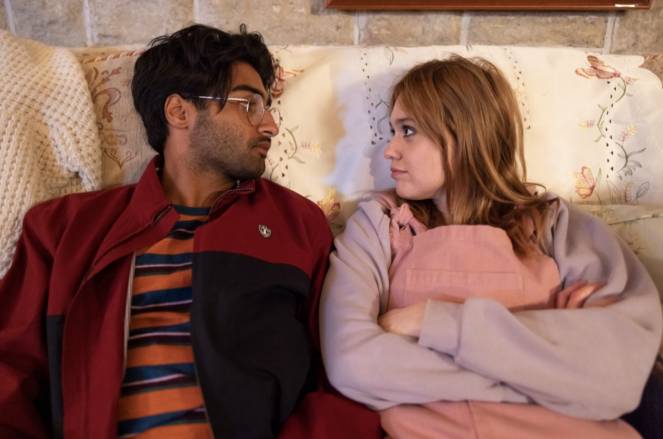
The first, ‘Mincemeat’, by Samantha O’Rourke, is a funny and moving tale starring Aimee Lou Wood. Jane is fresh out of school, working in a shoe shop, trying her best to be a good daughter to her controlling mum (Rosie Cavaliero). When she meets Nish, a boy she had a crush on in school, a sweet romance blossoms between them. However, the far-right views of Jane’s mum cause an irreparable rift that sees the lovers separate but, ultimately, leads Jane to find a sense of purpose. Nikhil Palmer (Nish) and Wood are perfectly suited, portraying the social awkwardness, first-kiss innocence, and gentle encouragement of a developing relationship with rich plausibility. Palmer’s kindness is in direct contrast to the harshness of Cavaliero, who plays Jane’s mother with a good deal of unconscious irony whilst injecting a slight empathy that reveals the pain behind much of her behaviour. She uses the death of her husband, Jane’s father, to guilt trip her children when it suits her, creating a distorted view of him that is blown apart in a moment of revelation that brings Jane freedom. What O’Rourke manages to do so deftly is to work through the underlying issues and motivations behind these characters with a delightful touch of humour. It ensures their humanity is not lost to a dark political underbelly that can otherwise lead to simplistic caricatures. The soundtrack only contributes to the wealth of emotion that exudes through the screen.
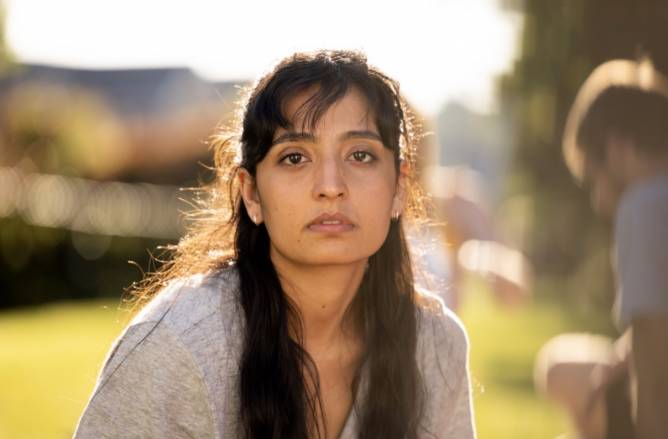
The emotion is no less pronounced in the second film, ‘Cradled’, by Nessah Muthy. Here, it is the extraordinary performance of Ellora Torchia as new mum Maia that makes for a compelling watch. She has a seemingly comfortable and ideal life. However, underneath the surface, something more sinister is stirring. She begins to hear a voice, and thinks her baby is in danger. What is witnessed over an enthralling and gut-wrenching half-hour is a descent into mental illness that creates real fear. That fear is so palpably felt through the screen that the tension becomes unbearable at times. Torchia really does embody her character, achieving a verisimilitude that causes genuine terror for its audience. It is not so much the effective horror tropes used in the telling of this story that contribute to this real anxiety as the fact that it involves a little child who appears to be actually at risk such is Torchia’s ability in conveying the awful experience of Maia. Muthy writes in such a way as to give her protagonist a sense of agency whilst simultaneously losing some of that agency to darker forces. The supporting characters are all culpable to some degree of ignoring or belittling her awareness that something is not right. The drama thus becomes a kind of rallying cry to all of us to take mental health seriously. It is, in part, a depiction of the consequences of failing to do so adequately. I breathed a huge sigh of relief at the optimism of its final scenes.
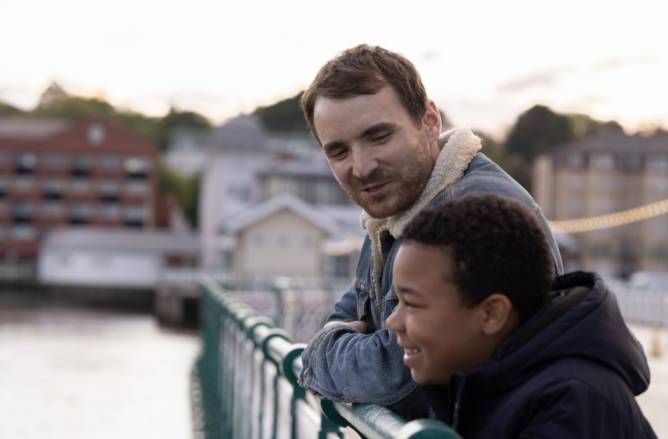
Optimism also marks the final film, ‘Superdad’, by Daniel Rusteau. Not before an incredible amount of nerves have been shredded however. When Keon (Martin McCann) turns up at his ex-partner’s house to wish his son a happy birthday, he gets the door slammed shut in his face. He is determined to make Wesley’s day special though, so he waits until he is walking to school to take him on a road trip that, slowly but surely, is not all it’s crept up to be. Rusteau drip-feeds information that gradually causes unease both for the viewer and Wesley (Joseph Obasohan). First about the car; then a quick dash away from a café; and then, finally, a confrontation at a petrol station. The interaction between the characters at this final point cause the façade of Keon to fall to such an extent as to give rise to worry. Obasohan is so adept at portraying the doubt clearly arising in his character’s mind that, coupled with the juddery movements of the handheld camera accompanying McCann, it is difficult not to be immersed in the tension of the situation. Similarly, his strength at resisting his dad’s calls to get back in the car when he realises the facile nature of his explanations is deeply felt. It conveys a maturity that, like Wood’s Jane, surpasses that of the adult parent, revealing a wisdom and thirst for emotional honesty in young people that can too often be ignored or go unappreciated by their elders. It is the recognition of this at the film’s end that makes it all the more beautiful and heartfelt.
Together, these films express the effects of mental health within modern British families. They are stories told with sensitivity; thrilling yet heartfelt. Filmed across Wales, and made with the support of Creative Wales, they offer the opportunity for new and emerging talent both on and off camera to gain experience working on a production that is on the cutting-edge of storytelling and broadcast on a mainstream channel. This is what public-service broadcasting is for. The three writers that have had the opportunity to showcase their work on such a platform are all deserving of further commissions. If their future stories are as veracious and enjoyable as these half-hourly instalments have been then their future looks bright. Go check them out if you haven’t already. They are simply excellent.
‘You & Me’, the latest EP from Rachel Jane, is a much lighter affair than her last. This is perhaps not surprising given its themes of love and romance. She manages to avoid the schmaltziness associated with such topics however, particularly at this time of year, by retaining an essential RnB sound which, when coupled with neo-soul, made 2020s ‘Hustle & Hope’ such a relatable record. This grounding-in-reality is evident again here, not just in the immersive vibes of the music but in the honesty of the lyrics too.
I love how the smoothness of ‘Falling For You’ acts as a slide from the blossoming of young love down towards the depths of committed relationship. I like how the chilled atmosphere created on ‘More Than Friends’ represents the ease with which a friendship transitions into a relationship. And I appreciate the continuation of that combination of frustration and expectation in ‘Made for Something’ and ‘Mondays’ that mirror previous songs like ‘Get Up’ and ‘Working Hard’. The former’s chorus, “We’re made for something / but why have we got to wait… / come on and make a way”,echoes a universal exasperation with that great virtue, patience, whose reward is found in the latter’s lines, “by Friday the grey clouds will part / and the sun will shine through”.
This is the message that comes through from Rachel Jane time and again; that inspires and resonates in such a way as to make the ‘You’ of the EP’s title hold a double-meaning. It becomes not just about husband Joel but about us, the listeners, too – particularly those for whom chasing after dreams becomes a hard slog amidst the hustle and bustle of life. It is a reminder that those hard times might be real and felt but they don’t have to have the last word. Between you and me (and Rachel Jane), there is always hope.
It wouldn’t be a Pistol Annies album without a little bit of gospel – though the surprise here, for a Christmas album, is perhaps that ‘Leanin’ on Jesus’ contains no references to the most wonderful time of the year. Instead, it offers a diversion into the purely devotional, avoiding any mention of snow, sleighs, or Santa Claus. The quiet whispers of people beneath the slowly rising instrumentation, at the song’s beginning, could be taken for the hushed chatter in the pews before the start of a church carol service. Beyond this, however, the focus is on the girls’ experience of being unburdened and unchained by their Saviour, in a general nod to Christian faith that has no particular seasonal affiliation to the rest of the album. Its ballad-like piano and simple drumbeat, followed by some fabulous electric organ after the second verse, is more akin to your standard gospel track. Its final change of pace, into the quick-fingered playing of keys, up-tempo beats, and a flurry of hallelujahs, is more readily associated with their last album and its title track, ‘Interstate Gospel’, than the festive feel on the remainder of this record. Take nothing away though from the Pistol Annies. ‘Leanin’ on Jesus’ is still a track worth savouring, marked by their usual foray into poignancy, this time with a reflective nod to the person who, for some, Christmas is all about.





 desperatelylostcity.com