Eleanor Nelly – ‘Circles’ Gig @ Leaf, Liverpool

The effervescent Eleanor Nelly put on quite the show on Saturday night. With support from Harry Miller and Ellis Murphy, the Liverpool trio brought quite the eclectic Country mix to Leaf on Bold Street. Performing to a mixed crowd of eager listeners and good-time Saturday nighters, their music split nicely between the reflective and the pulsating to offer something for everyone, regardless of taste.

Harry Miller stepped up to the mic first, standing on the Folk end of Rock; producing a sound reminiscent of Oasis but with a distinct Kelly Jones vocal; touching the edges of Americana, as per the Stereophonics-frontman’s new band Far From Saints. With a self-confessed set of “sad songs” nevertheless demonstrating Miller’s super songwriting, his was an opening set of heart-on-sleeve, melodiously-melancholic stuff.

Ellis Murphy, to some contrast, grounded himself more firmly in Folk, clearly influenced by Bob Dylan but displaying a wizened voice of youth. Think Jake Bugg but less of the Pop, as he played old Irish tunes and early Country songs, complete with harmonica to accompany the guitar. It was a fine display of contemporising classics without straying too far from their roots.

The two male artists laid the ground well for the aforementioned Nelly, whose headline set protruded into the crowd with rock star swagger whilst retaining Country’s vulnerability for “three chords and the truth”. After an opening section which defiantly announced her arrival on stage, including a tub-thumping rendition of ‘Colour Blind’, the set proceeded to showcase the breadth of her sound. It ranged from the modern Country-pop of ‘Eventually’ (with Kelsea Ballerini overtones) to the classic sound of Americana-infused ‘Takes a Fool’. To go from the tongue-in-cheek humour of ‘Good Guy’ to the heartfelt ‘Polaroid’, via the anthemic ‘The Best is Yet to Come’, demonstrated the extent of her musical intuition. She is not bound by genre but, like the best songwriters, knows what serves the song best. It is how she skipped from filling ‘Goodbye’ with plaintive attitude to giving ‘Seventeen’ the acoustic space it needed to emotionally breathe.

To end the set with ‘Circles’, thus making reference to the neon curve acting as the backdrop behind, and ‘Time to be Alive’, with its full-on Country-rock, meant a fitting finale to an energetic and at times electrifying show. It evidenced Country’s ability to speak across divides, affording opportunities to listen deeply to the lyrics whilst being able to dance away to the music’s infectious beats. This is what makes Eleanor Nelly such a great artist. She knows how to speak into your heart whilst making sure you have a damn good time.


Originally written for and published on Belles & Gals on April 6th 2023.

Featured Image (C) Eleanor Nelly

Trouble in Butetown – Donmar Warehouse

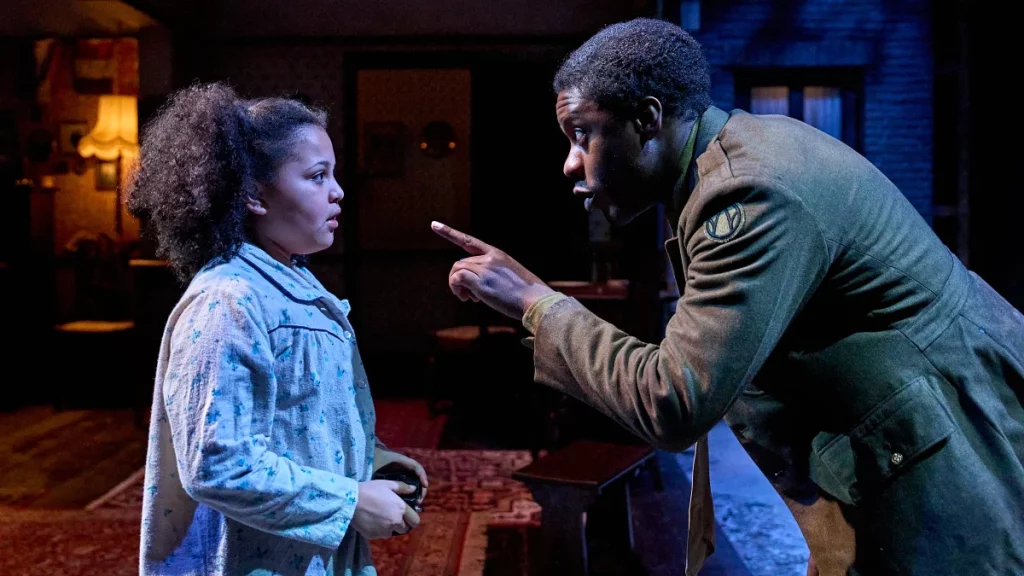
To see the Wales-based play Trouble in Butetown performed on a London stage was a tantalising experience. This was a rare example of accent and language reverberating around a place not situated within the confines of its nation. To hear Welsh being spoken miles from home in front of a multicultural audience where English was the common denominator was both a surprise and a delight. When coupled with the intimacy of the Donmar, where the audience are immersed right in the action, the familiar phrases, said without translation or explanation, made for an authentic performance that was unexpected but welcome.

The scenery and costume added well to the verisimilitude, transporting us all into the living room of an illegal boarding house in wartime Cardiff. Credit must also go to the dialect coaches who have worked wonders with a cast of mixed nationalities, Sarah Parish among them who, as the matriarch Gwyneth, delivers a voice of which those in the Valleys would be proud. She may be the star name in this production but the star performance goes to young Rosie Ekenna as Georgie. Making her debut on stage, her confident and agile performance belies her nine years of age. She produces a character that is full of attitude and vigour; tough as nails, and a quick wit which is keenly delivered. Her relationship with Samuel Adewunmi, who plays American GI Nate, wanted for the murder of a fellow soldier, is especially wonderful, the two bouncing off one another as equals in both their dialogue and action.

Rita Bernard-Shaw also shines as Connie, an aspiring singer, whose stirring renditions of jazz standards and blues numbers mark her as a real talent vocally. Meanwhile, Zephryn Taitte brings a much harder edge to Norman than Call the Midwife fans are used to seeing (he plays pastor Cyril Robinson in the long-running series). His presence on stage is always evident though never dominant; a character of compassion borne of struggle and hardship. His inclusion, alongside fellow immigrant worker Dullah (Zaqi Ismail), means that Trouble in Butetown portrays what the programme calls the “cosmopolitan community with seafarers from all around the world making Cardiff their home”. In doing so, it cannot help but include racial tensions which, though localised, speak to universal issues, giving voice not only to past generations but present struggles too. This is a story not only of Tiger Bay but contemporary Britain too.

There is a feeling at the end of the play that what has been witnessed is a celebration of diversity. It presents Wales’ capital city as a place of welcome and integration that belies the historical notion of a homogenously white population. It also presents the cultural importance not only of BAME identities but the native language of the nation, included here not as statement or stereotype but as real expression of lived experience both then and now. It challenges the notion, still prevalent in wider society, that Welsh is a ‘dead’ language. Trouble in Butetown plays a small part in taking it beyond the border, and in doing so, communicates cultural inclusion on several fronts.

Trouble in Butetown premiered at the Donmar Warehouse between 10th February & 25th March 2023.


Originally written for and published on Get the Chance on 28th March 2023.

Featured Images (C) Donmar Warehouse

Y Sŵn – A Swnllyd/Joio/S4C Co-production

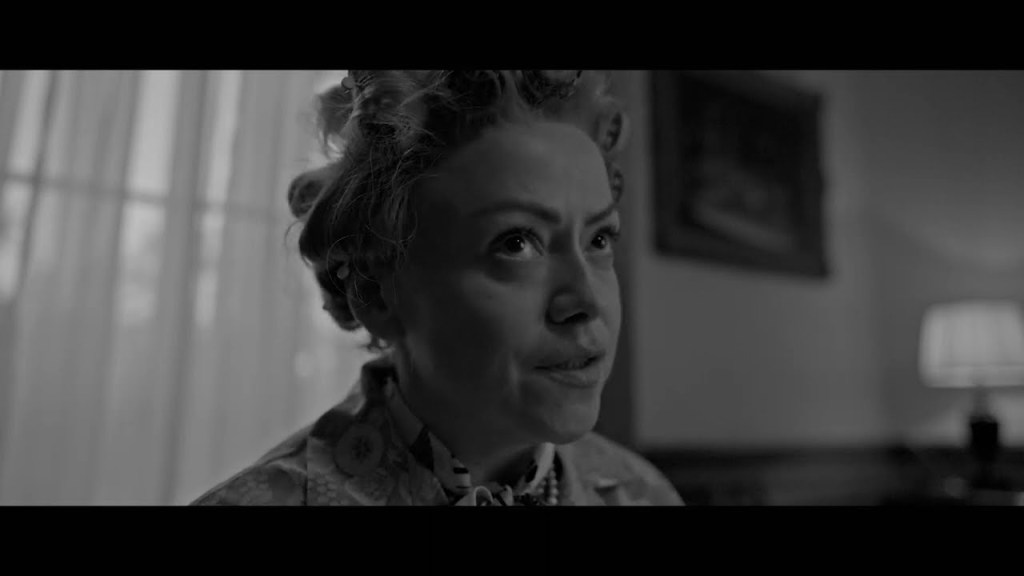
What a fascinating film Y Sŵn is. No sooner has its writer, Roger Williams, struck gold with cult horror Y Gwledd than his Midas touch turns to the marking of forty years of S4C with this: a striking production that is as offbeat and realist, telling the story of how the Welsh TV channel came into being. Featuring an all-star cast of Welsh natives who perfectly attune themselves to playing key public figures of the time, it successfully immerses itself in the optimism and rancour of Margaret Thatcher’s first-term as Prime Minister. Full of energy and a bursting palette of colour, it truly marks itself as a distinctly British yet uniquely Welsh film.

The aesthetic right from the get-go resembles that of Killing Eve. In big bold letters, we are introduced to CARDIFF. The year is 1979 and there is a rich seam of colour which paints a positive picture of urban Welsh life. Ceri Samuel (Lily Beau) works at the Welsh Office, taking us into a shiny Mad Men-style series of corridors and meeting rooms where we are also introduced to key players in the civil service and government. The clever contrast between the ebullient colour of the former and monochrome presentation of the latter quickly marks out the heroes and villains of the piece. It also represents the vitality and strength of a nation against a stuffy and outmoded political leadership. Other forms of pop art appear throughout to give the film a slightly off-kilter, comedic edge. This sets it apart from the more fictionalised social realism of films like Pride to become a self-referential melodrama that nevertheless manages to maintain a sense of seriousness in respect of the story it wishes to tell.

The fine balance between dramatic and comedic forms is supremely kept by the onscreen talent. Assisted by the magnificent make-up and wardrobe departments, each character stands at an acute junction between verisimilitude and caricature. Willie Whitelaw is perfectly realised in the bushy eyebrows pinned and preened on Mark Lewis-Jones’ face. Sian Reese-Williams ensures a finely-pouted, drably-accented portrait of a scruffy-haired Iron Lady. Rhodri Meilir could turn up his pristine English act no more as Welsh Secretary, Nicholas Edwards. They play the part of authority figures straight enough to make them believable whilst subtly exaggerating them to undermine the abuse of power which leads to their attempts to back down on a manifesto pledge to establish a Welsh language television channel. In contrast, Carys Eleri plays Ceri’s superior with an effervescent humour that makes her a sympathetic character. Eiry Thomas plays devoted wife Rhiannon with enough emotional heart that belies her stereotypical dress. And Rhodri Evan brings a warm smile and gentle demeanour to troubled protagonist Gwynfor Evans to ensure his battle against the political might of Downing Street and Whitehall is portrayed with sufficient weight so as not to become a trivial matter. This is an important story albeit told in a highly imaginative way.

Y Sŵn represents the very best of Welsh filmmaking, in both its content and production. The ending is a surprising yet interesting one, paying homage as well as subverting an oft-derided formula. Its effect is heart-warming, in such a way as to instil a sense of pride in Welsh identity, complete with self-deprecation and humour. It also speaks to the small budget with which it was made, creatively used and referenced in the 4:3 home-movie ratio. You wouldn’t know it though from its professional and glossy finish. Y Sŵn is a real labour of love which stands among the best in contemporary British cinema.

Y Sŵn is showing in selected cinemas throughout March 2023. Click here to find out more.


Originally written for and published on Get the Chance on 16th March 2023.

Ward Thomas – Music in the Madness

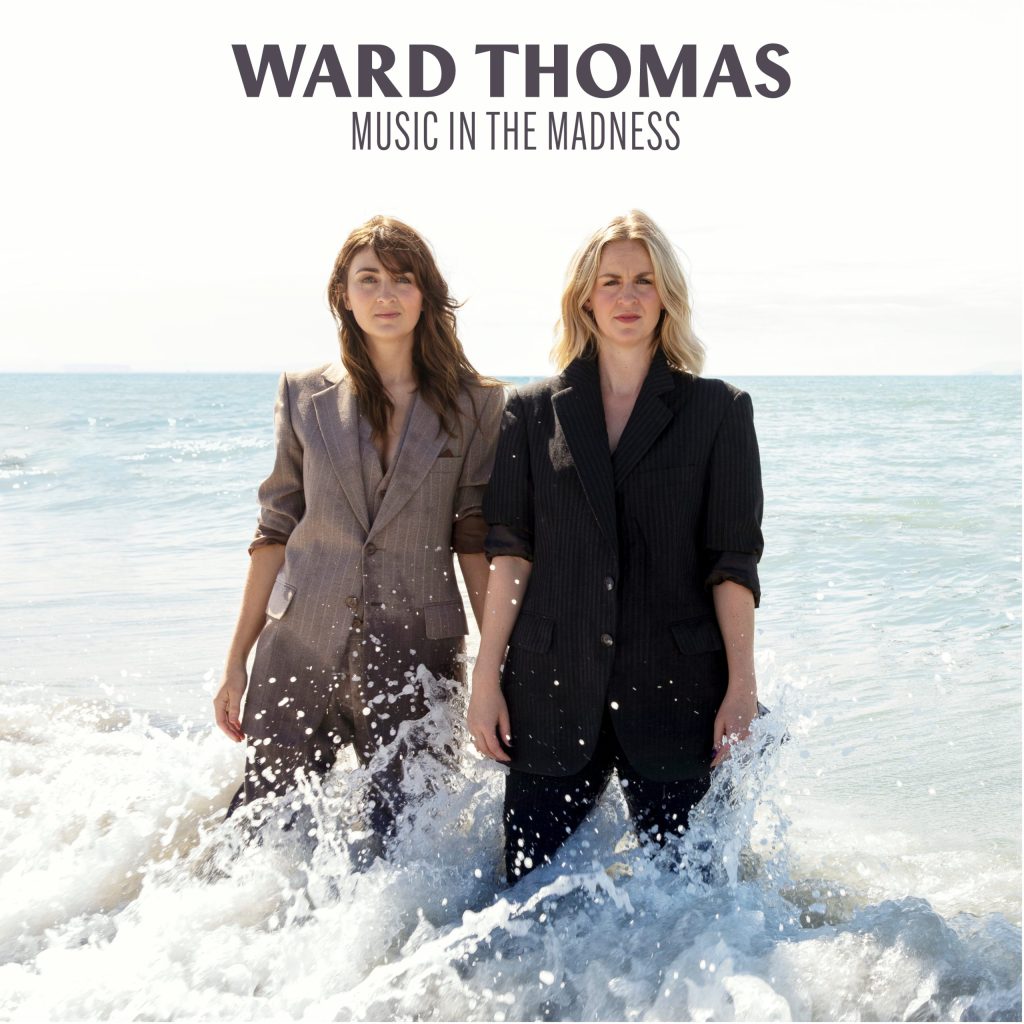
Ward Thomas are back with their signature sound and a familiar theme. ‘Music in the Madness’ is the fifth album from Catherine and Lizzy, and showcases the best of all that has gone before. The girls have really found their voice now, like flowers blossoming and blooming from the seeds of ‘From Where We Stand’ with the sweet fragrance of ‘Cartwheels’ and opulent petals of ‘Restless Minds’. Theirs is an authentic voice, with lyrics sharp and succulent, refreshing and embalming heart and soul with hope and love. Encased in a tender blend of country, folk and pop, it is as much an antidote to the uncertainty of present times as it is a celebration of the best of humanity.

This is expressed no better than in the title track, which opens the album. Inspired by the resilience of Ukrainians in the face of war twelve months ago, it is packed with wisdom. An uplifting anthem for our times, it calls us to “talk about the light in the dark… peace in the chaos… love in the anger… freedom in fear”. In typical Ward Thomas style, they turn an aching world upside down, courageously digging deep in order to find the gold. There is plenty of it glistening here, revealing itself most readily in a number of lovesongs, chief among them being ‘Next to You’. This relates the best of relationship, companionship and/or friendship (or all three) through an infectiously light brand of country-pop that has become their staple. It works so effectively with their harmonious vocals and heartening stories, continuing through ‘All Over Again’ and ‘Love Does’ which both mark love as a journey as much as a destination.

There are some more steely songs on the album too. ‘Justice and Mercy’ adopts a more distinct trad-country style to offer a sharp critique of contemporary debate. The concluding chorus line “half the town cried Mercy / half the town cried Justice / and nobody got their way” is cutting in its semblance of the ongoing culture wars and political stand-offs played out most readily in today’s media. Similarly, their acoustically-driven cover of Razorlight’s hit song ‘America’ subtly draws out the prescient lines “There’s panic in America… trouble in America” whilst keeping to an overarching theme of the album: of being held by love in unsettled times. Not that there isn’t room for an individualistic voice-cry, which comes courtesy here of ‘Joan of Arc’. A symbol of female empowerment at its finest, there is a steely determination that acts as the armour for this battle-hardened song, which takes its sword and wields it on ‘I Think I Hate You’ to cut-throat effect.

The atmosphere changes dramatically as the album approaches its end. ‘Unravel’ is made of a gentle folk-pop which beautifully expresses the sisters’ advocacy of mental health and wellbeing. It encapsulates the same restorative nature of ‘Where the Sky Is’ from their ‘Cartwheels’ album, encouraging an honesty and vulnerability to unravel a la ‘Hold Space’ from ‘Invitation’. This opening up of emotion and winding down of tempo continues into ‘Loved by You’ before the album closes with the sombre yet serene ‘Flower Crowns’. A touching tribute by Ward Thomas to one another, it references their growing up and growing old together; the fear of change from childhood to adulthood; and the letting go as part of life’s events and the passing of time. It appears mournful in its hummed melody but in such a way that breathes a reality which permeates this whole album. That is to say that ‘Music in the Madness’ embraces the fullness of human existence, inviting us, wherever we’re at, and however we feel, to “Sing it out, full voice, stand up, make noise, / Hey, hey, hey, we’re alive”.

Music in the Madness is out now, and can be purchased online from their website, where information about their upcoming tour, including dates and tickets, can also be found.


Originally written for and published on Belles & Gals on March 15th 2023.

Amy-Jo – Shoulder Pads

With the release of her third single, ‘Shoulder Pads’, Amy-Jo is proving herself to be a shrewd marketer as well as writer of her own material. This is because each new song proves to be a step up in quality from the last, and her debut offering already provided a high point for which to aim. The Morecambe-based artist now turns up the decibels as well as the tempo on this latest track, which is infused with soul and dabbles with blues and rock. Comparisons with Laura Evans are inevitable. The opening bars chime with those of ‘Mercy’ by Duffy. But these only serve to illustrate how supremely-talented Amy-Jo is, whose originality is marked here by the creative application of her various influences, including that of the ‘After’ film series. Referenced in the line “You’re my Hardin to my Tessa”, Amy-Jo subtly takes the characteristics of its female lead and blends it with her own, producing a semi-autobiographical second verse that belies the attitude that punches through the song’s strong beats. The underlying message: underestimate this “squeaky clean prom queen… [who] don’t swear, and I haven’t pierced my ears” at your peril. ‘Shoulder Pads’ is a real anthem, heralding her upcoming EP, ‘Songs from the Bay’, as a must-listen.

Originally written for and published on Belles & Gals on March 14th 2023.

Pijin / Pigeon – Theatr Genedlaethol Cymru / Theatr Iolo

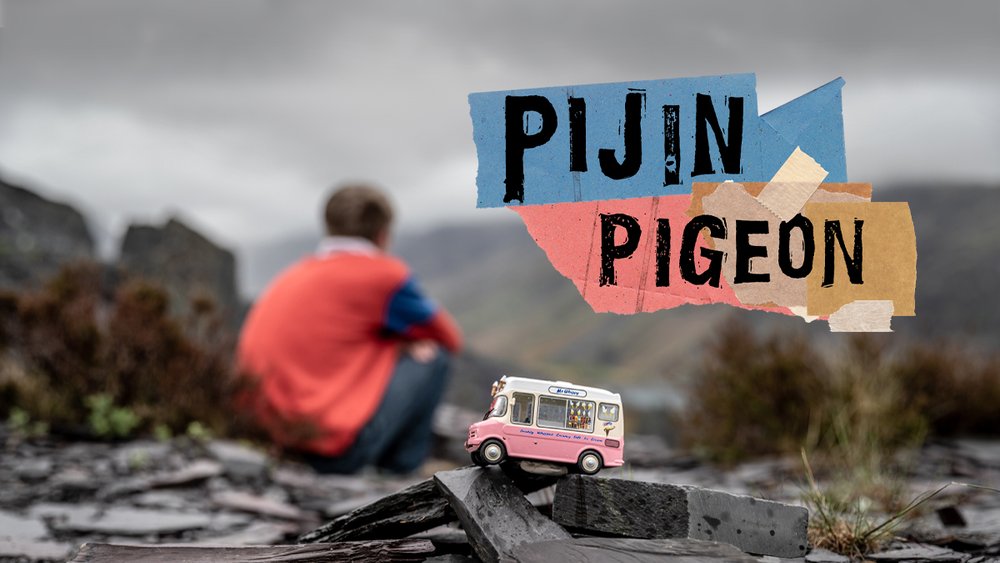
Based on the best-selling novel Pigeon by author Alys Conran, this stage adaptation by Bethan Marlow sees Welsh and English subtly woven together, with every performance using integrated captioning in such a creative way as to lead me to undertake an experimental review in its honour:

The show is currently on tour. Dates and tickets can be found here.


Originally written for and published on Get the Chance on 3rd March 2023.

Featured Image (C) Theatr Gen/Theatr Iolo

Falling Out of Love with Radio 2

I don’t know what Helen Thomas thinks she’s doing. The current Head of Radio 2 is not so much making a mark as scribbling over a largely successful blueprint. Taking over in lockdown and realising how much the station and its presenters meant to the millions of people listening should have been enough evidence to suggest that even tinkering with the formula would be enough to rub salt in the wounds. For loyal listeners like myself still bear the scars of the ill-fated decision a few years ago to merge the doyens of radio, Simon Mayo and Jo Whiley, to create a show that no one wanted or asked for, simply to fulfil a gender quota that would have rectified itself anyway, if only they had waited a few months more, as Chris Evans moved to pastures new and was replaced by Zoe Ball in the primetime breakfast slot. This enforced decision, by the then Head, Lewis Carnie, and his predecessor, Bob Shennan, was made all the worse by the fact that neither recognised nor apologised for their mistake. Instead, it was left to Mayo to finally put us all out of our misery, in the face of particularly unwarranted criticism of Whiley, by resigning from his beloved Drivetime slot, Sara Cox admirably picking up the pieces from a saga that could have so easily been avoided if those at the top had just left alone what was unbroken.

With Jo Whiley returned to her preferred evening slot, albeit slightly earlier, in a move that subtly revealed the unrepentant nature of Carnie and Shennan, pushing the specialist music shows to the later time of 9pm, things did seem to settle down. There has always been a bitterness bubbling under the surface though; an unresolved hurt from the Mayo/Whiley saga that has cast a shadow on the long-promoted idea of ‘the Radio 2 family’. There was a time when this rang so true, and was no better expressed than in the highly-acclaimed 2Day back in 2011/12, when the station gathered together all its presenters for a 12-hour showcase of its many varied shows. Back then, it really could do no wrong. One of the reasons behind this popularity, I suspect, was the fact that presenters had been able to ebb and flow of their own accord. When Terry Wogan stepped down from the breakfast show, for example, it was on his own terms. Chris Evans may not have been everyone’s cup of tea, but at least his appointment was not enforced at the expense of Sir Tel. Similarly, Evans himself chose to finish of his own accord. Zoe Ball remains a marmite replacement but at least there was no acrimony over Evans’ departure. The difference between then and now is that recent changes have the whiff of a top-down strategy. Is it any wonder then, given what happened last time, that trust between the Radio 2 listeners and its hierarchy has reached a new low?

The catalyst for this most recent crisis of faith in its leadership was the baffling decision to force Paul O’Grady to share his slot with the comedian-turned-presenter Rob Beckett. O’Grady’s show was one of the most beloved on the station, perfectly situated in the Sunday teatime slot, entertaining older listeners whilst being accessible across the board. His partnership with producer Malcolm Prince, responsible for many of the brilliant features which made up the show, was a huge hit; a winning formula honed across its 10+ year history. The old adage, if it ain’t broke, don’t fix it, did not seem to apply here though. Much like Steve Wright’s removal from the weekday afternoon show, it appears that the hierarchy wished to gently push the old-guard aside in favour of creating a station which is fast resembling Radio 1 from 30 years ago. And whilst one can understand the pretext, it completely misses the reason for Radio 2’s longstanding success. For the point is not that Radio 2 is for a particular demographic, or a particular kind of music lover, or anything else. Instead, Radio 2 is the definition of eclecticism: playing the music of then and now, from every genre, interspersed with talk and conversation, and documenting the best of music history. Yet this identity is slowly being set aside, pushed to the margins, along with many loyal listeners, in favour of a ‘90s nostalgia boom which bosses seem to think will win over younger listeners simply because it happens to be of their time. But for those like me in the 18-35 age bracket, who have grown up listening to Radio 2, they have completely missed the point of why we tuned into the station. And now that notion of family has been diluted still further by the departure of Ken Bruce, whose time came to an abrupt end at the end of last week.

Of course, the decision to leave after 30-odd years was Ken’s alone. I cannot help but feel that it has been hastened though by the way in which some of his colleagues have been treated. Bosses may have been lining up a contract extension for the presenter of one of BBC Radio’s most popular shows, but one cannot help feeling that this decision was out of step somehow with the broader direction of travel. One of the reasons Ken’s show was adored by millions, I’d like to suggest, is because it was one of the last bastions of Radio 2’s core identity. And whilst one could argue that this is retained by the likes of Tony Blackburn and Liza Tarbuck, their location on the outskirts of the schedule points to the fact that this is a fading reality. Radio 2 is changing, and not for the better. Hence the reason for audience dissatisfaction, and why there was such a backlash to the baffling pronouncement that Ken would be leaving a couple of weeks earlier than his contract’s end. This may have been for quite sound reasons, in order to detract from his promotion of Greatest Hits Radio, but to those on the outside listening in, it looked and sounded like spite. Its appearance was that of an offended hierarchy looking to get one over on a well-respected presenter who had told no one of his plans to leave before his shock on-air announcement. As a result, their top-down decision added fuel to an already smouldering fire of discontent that has been waiting to rage again ever since the Whiley/Mayo debacle. The problem is, this time, it comes with irreparable consequence.

It is not that I won’t listen to Radio 2 ever again. I happen to prefer Scott Mills to Steve Wright. I really like Sara Cox. I still tune in to Jeremy Vine when I can at lunchtime. The specialist music shows will always win out over everything else at 9pm. But my commitment to the station, unwavering a few years ago, has now well-and-truly waned. One could argue that this is a result of naturally evolving habits and changes to listening patterns. To some extent, they may be right. But my tuning over to Absolute Radio Country, BBC Radio Wales of a morning, and 606 on 5 Live on a Sunday evening, is predominantly because I have fallen out of love with a station that I thought cared about its listeners. Instead, an erosion of trust has taken place over the last few years, starting with Mayo/Whiley and ending with Bruce, that has resulted in the loss of that sense of family that the station was known for. It is no longer the station I fell in love with, and that makes me sad. I don’t want to become bitter about it though. Just express how I feel about the choices that have been made and the result that they have had on this particular listener, and I’m sure many others too.

Good luck to Helen Thomas. If her approach wins new listeners then I hope, one day, they will experience the same joy and pleasure that I got from Radio 2 for a time. But know this: to market the station on the basis of a simple, single demographic is to underestimate the complexity of their listening experience. Music is far more universal than that.
Reya Jayne – Bet She Doesn’t Know

Reya Jayne returns with a brand new single to kick off 2023, and it’s a real belter. ‘Bet She Doesn’t Know’ opens with a strong beat that has more and more of an impact as the song progresses. Borrowing from Carrie Underwood’s rockier back catalogue, it delivers a real punch in the gut to any guy who thinks he can get away with cheating on his girl with another. The killer line “I don’t want to be… your last kiss before you go and get on one knee” is but one example from the excellent set of story-led lyrics that Reya Jayne delivers to help create a short, sharp and punchy track. The final bridge, including the line “I didn’t know… but I hope she knows I didn’t know”, adds a touch of vulnerability to sure up the female solidarity at the heart of this well-written song.

Originally written for and published on Belles & Gals on February 2 2023.

Featured Image (C) Reya Jayne

Vic Allen – Some Place I’d Rather Be

Vic Allen has been tantalising listeners with single releases over the last year or two. Now is the moment they come together on a debut album that promises much and delivers more. ‘Some Place I’d Rather Be’ is a title that perfectly summarises its theme. The final line of the final song proves an apt description for its contents: “My heart lives in a suitcase”. It is not only in the stories she tells that echo a penchant for travel but the genres she spans too. This is a record that has “everything I need”, to quote the opening song, yet still “it ain’t enough for me”. There is always another musical angle for Vic Allen to explore, and we are more than happy to go along for the ride.

The album starts where her 2019 EP left off. This proves to be a shrewd decision as the title track from ‘Enough’ expresses a yearning which is expanded on and somewhat fulfilled in the songs that follow. Subsequent tracks are as much a journey through relationships as geography however, the two intertwining to convey a narrative of fleeting romance, passing acquaintance, and fragile love on the road. These stories are told in various ways, be it the contemporary country ballad of ‘Pictures Of Us’ or the country-pop beats of ‘Drive Thru’. Both display a simple and uncomplicated composition which serve to promote the quality of Allen’s lyrics. She has this enviable talent for distilling emotions into sharp observations which are never lost to the music. Her words are always perfectly matched to the instruments used, be it the piano on ‘Confetti’ or the banjo on ‘I Can’. The latter is particularly striking in its subtle ability to add texture to a track already brimming with elements. By far the most fascinating on the album, its mixture of Americana/Folk, Country/Bluegrass, and Alt-Pop echo with the faint spirit of Fleetwood Mac.

‘Barcelona’ combines an 80s vibe with late-90s folk/pop, and is a sort of answer to the dilemma posed in previous track ‘Confetti’. By this point, the reply to the question, “I leave in the morning / where does that leave us?’ has turned from one of sadness and longing to acceptance and personal advancement: “I won’t see you in Barcelona… I ain’t gonna call… I’m already gone”. Not that the heart doesn’t break in the course of separation, as the spectral sonic of ‘Ghost Town’ conveys. But there is always hope, as ‘Healing’ makes clear. The line “I noticed the sun / the first time in months / it seems that it’s actually shining” is the most powerfully poignant on the album. It is a beautiful description that captures the fragility of life and love, particularly in relation to mental health. This is Allen at her most vulnerable, plunging the depths of emotion and rising into a complex reality in which the lack of clarity conveyed in the line “I still can’t place this feeling / but I think I’m finally healing” is wonderfully frank. It prepares the way for the album’s ender, ‘Suitcase’, an uplifting track whose rising refrain is bursting with potential. The yearning expressed right at the beginning feels like it has and is coming to fruition, captured elegantly in the line “I’m restless when my world’s stuck in the same place / I think my heart lives in a suitcase”.

To listen and/or purchase the album, click here.


Originally written for and published on Belles & Gals on 27th January 2023.

Featured Image (C) Vic Allen

Amy-Jo – Valentine’s Day

Amy-Jo is both celebrating and breaking stereotypes in her latest single ‘February 14th’. She puts Valentine’s Day firmly under the microscope by way of some astute storytelling. Observations range from the traditional guy ready to woo his girl with roses to the plucky man taking a risk on another who may actually be straight. Amy-Jo explores the full spectrum of love through a series of colourful vignettes, showcasing young romance and faithful longevity with such precise description that beautifully marks the happiness and sadness, joy and pain, that comes with lives intertwined. The twist is that all of these romantic notions are no longer Amy-Jo’s own, as the chorus goes on to reveal that “it’s my first time spending Valentine’s alone”. There is no despondency at this fact however, the subtle change of gear in the largely-acoustic track making it clear that she is grateful “that it is only me [this year]”. In a similar way to Tenille Townes (‘When’s It Gonna Happen?’), Amy-Jo finds strength in her singleness, focusing on self-care and content that, at this moment, she’s “exactly where I’m s’pose to be”. Such words make for a refreshing take on the ideology of coupledom usually associated with February 14th. A great antidote for those dreading this time of year.

Originally written for and published on Belles & Gals on 10th January 2023.

Featured Image (C) Amy-Jo Clough