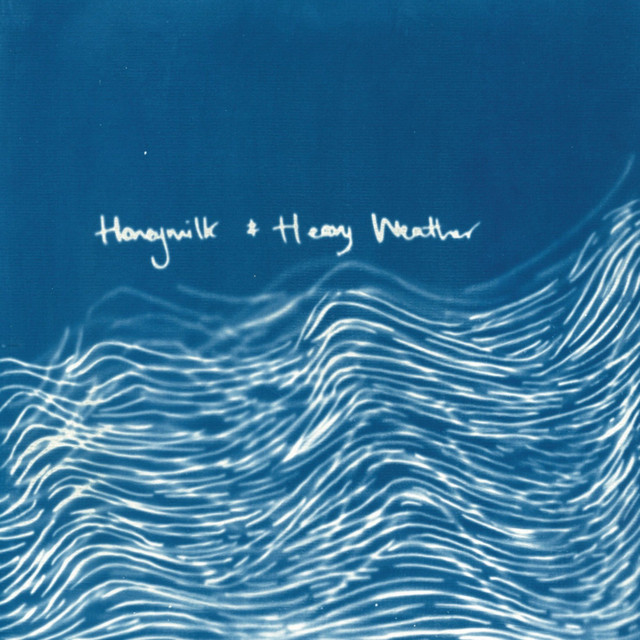
‘Honeymilk and Heavy Weather’ are two facets that deftly describe the light and dark of Rona Mac’s latest collection of work. Hers is an album written from the depths of a soul versed in the tragic grief and fragile beauty of life. Dedicated to a friend who took her own – Emily Victoria Hemingway – a few years ago, Rona unashamedly explores the complexity of emotions that arise whilst weaving them into a larger tapestry of friendships. The result is tear-stained, arresting, and life-affirming.
The theme of water runs throughout. It is a rushing river that opens the record which slowly gives way, on ‘Seafront Room’, to voice-notes atop a Latinised guitar. It is an understated piece in both its music and lyricism. A sense of foreboding becomes increasingly present. “It’s about time we talked” represents the pivot upon which a conversation around mental health starts.
‘Afon Cleddau’, with its playful Rootsy twang, seems to present its waters in a healing way. The song invites them to “come on close / you’re what she needed the most”. Words which take on a far more complex meaning later on. For now, the touch of water on skin echoes the sensuality of ‘Body’, caught lovingly in the line “I’m seeing with my eyes shut”. The delicacy of the piano keys also captures an intimacy that speaks to something bigger than oneself. Such expansive contemplation is continued into ‘Brothers in Mud’, a song so good as to offer multiple interpretations even as a sense of unity in communal love underpins it. It is the first in a series of moments when tears emerge, as Rona gives the ordinary an affecting power. “This table was an island / your garden was freedom” speak to a safety and security that slowly slip away with the harsh realities of life. Not that they disappear completely, as the happiness and joy in the verbatim recordings of its final 30-seconds illustrate. But they mix to give a far more intricate picture of what it means to be human.
‘Wdig’, a town in Pembrokeshire where “the streets are just ghosts / and I find myself in the dark”, transposes this human element into a sense of place. It captures brilliantly how geography can influence our stories and memory. At the same time, how music is shaped by the landscape that surrounds. Akin to the likes of Georgia Ruth and Jodie Marie, there is something ethereal that sweeps in from the West coast of Wales to become embodied in the musicality of Rona Mac’s sound. Add the pain prevalent in the best of Country Music’s songwriting simplicity and what comes across is another poignant moment, perhaps summed up in the lines “friendships… remind me that life gets hard… / I just wish we could all sit round the table and go back to the start”.
It is here that the album cranks up the pathos. A single line in ‘Sense’ – “when you chose a world without you in it” – is enough to bring me to tears and draw afresh my own grief. Meanwhile, ‘And Then They Found Her’ presents a more matter-of-fact but no less visceral take on mental health. A fierce polemic underwritten by an understated soundtrack, it takes aim at a broken and dehumanising system much like ‘The Poet’ by Katie Nicholas. It is Mac at her quietly seething best – sorrow and despair mixing with dark irony, like in W.O.M.A.N and Polidics. In between, ‘showmehowyoumourn’ places an emphasis on the spoken word, which through an endearing acoustic arrangement gleans a series of fascinating questions and thoughts to give yet another dimension to the album’s primary topic.
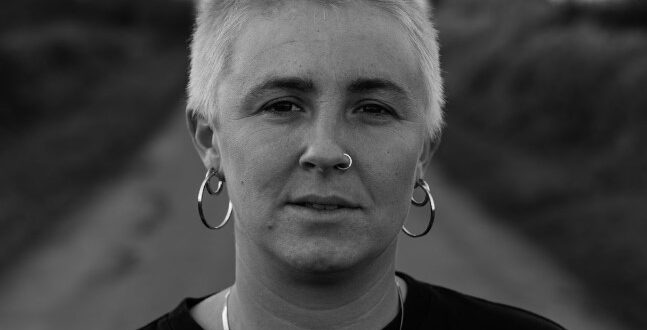
To end, Rona Mac chooses a suitably Folksy arrangement. ‘Buttercup’ is a sign of hope as much as acceptance of the temporal nature of our relationships. The two sides of the human coin remain present – life and death “cruelly entwined” – but there is a quiet appreciation of what the one can bring to the other. There is a sense of release that does not make light of that from which Honeymilk and Heavy Weather springs. Rather, it pays tribute, in the most honest and openly vulnerable way, to those who are no longer with us, whose lives can lead us to a place where, in time, we can come to appreciate our own.
Featured Image (C) Rona Mac
 desperatelylostcity.com